Russia’s latest ballistic missile attack on Kyiv has demonstrated the limits of defending a large country principally by intercepting weapons after they have been launched.
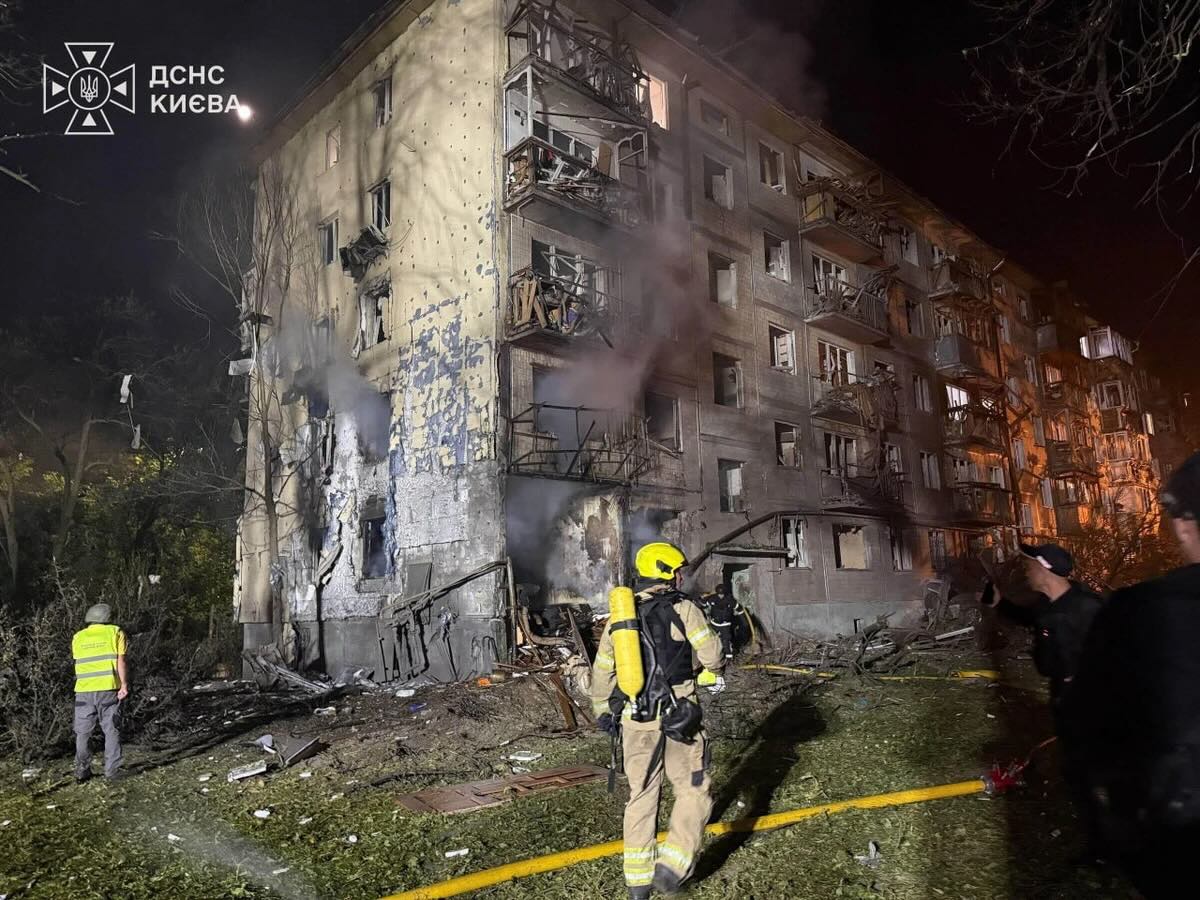
At least nine people were killed and 28 wounded, including four children, during several waves of attacks overnight into Saturday, according to Ukrainian officials cited by Reuters. More than a dozen explosions were heard across the capital, while fires, structural damage and power cuts were reported in seven districts.
Seven deaths were recorded in Darnytskyi district and two in Solomianskyi. Residential buildings, vehicles, commercial premises and other structures were damaged. Russia’s defence ministry said its forces had attacked Ukrainian military-industrial facilities and logistics centres in Kyiv. Moscow maintains that it does not deliberately target civilians.
The immediate military question is not whether Ukraine can intercept some Russian missiles. It is whether it can sustain sufficient protection against repeated ballistic attacks when the necessary interceptors remain in limited supply.
Ukraine can engage drones and cruise missiles with a growing range of systems, including mobile gun teams, electronic warfare, Soviet-designed surface-to-air missiles and Western systems such as IRIS-T and NASAMS.
Ballistic missiles present a narrower problem. Patriot remains the only weapon currently in Ukraine’s arsenal capable of intercepting them, according to reporting on the continuing US-Ukraine negotiations. Russia can therefore place disproportionate pressure on a small number of batteries and a finite stock of PAC-3 interceptors.
The shortage concerns more than missile numbers. A functioning Patriot capability requires launchers, radars, command equipment, trained crews, maintenance, spare parts and secure resupply.
As Defence Matters previously examined, a planned European PAC-3 maintenance and sustainment facility could improve availability by reducing the time needed to inspect and repair missiles. It would not, however, manufacture the motors, seekers, guidance units and other components needed to increase interceptor stocks substantially.
President Donald Trump said during the NATO summit in Ankara that the United States would grant Ukraine a licence to manufacture Patriot interceptors. He subsequently said Washington had not agreed to the arrangement and that negotiations were continuing, citing concerns about sharing advanced missile technology.
The uncertainty matters for long-term planning, but even an immediate agreement would not protect Kyiv during the next Russian barrage.
Defence Matters has already assessed why licensed Patriot production cannot close Ukraine’s immediate missile-defence gap. Production requires specialised components, certified facilities, testing infrastructure, skilled personnel and protected supply chains. Initial output would take time and could remain dependent on critical American-made components.
Ukraine therefore still needs transfers from existing Western inventories. Those inventories are also under pressure as the United States deploys missile defences to protect its forces and allies in the Middle East.
This produces a difficult allocation problem. Missiles transferred to Ukraine are unavailable for other operational theatres, while missiles retained for contingencies cannot defend Ukrainian cities. Expanding production is the only durable answer, but industrial output cannot be increased at the speed with which Russia can plan another strike package.
The operational alternative is not to abandon interception, but to combine it with attacks on the system that enables Russian launches.
President Volodymyr Zelenskyy has asked Trump to help secure Elon Musk’s permission for Ukraine to use Starlink to guide attacks inside Russia. Starlink is available to Ukrainian forces within Ukraine, including Russian-occupied Ukrainian territory, but its use inside Russia has been restricted. Trump had not committed to the request.
Satellite connectivity could support reconnaissance, targeting and command links during operations against mobile launchers, missile depots, airfields, command posts and communications infrastructure.
It would not provide a simple solution. Russia disperses and moves its launch systems, while successful suppression depends on persistent surveillance, rapid intelligence processing and strike weapons capable of reaching a target before it relocates.
Satellite communications are also becoming a contested part of the war. Defence Matters has reported on Ukraine’s attacks against Russian military satellite communications infrastructure, illustrating how communications nodes, ground stations and data links are increasingly treated as operational targets rather than civilian support systems.
The latest attack reinforces the need for a layered response: immediate transfers of Patriot interceptors, expanded PAC-3 production, investment in European anti-ballistic systems and greater capacity to attack Russian launch infrastructure.
Ukraine has already asked its partners to develop a European capacity to respond to ballistic threats. That requires more than buying batteries. Europe needs interceptor production, sensors, command networks, maintenance facilities and stockpiles large enough to withstand a prolonged missile campaign.
Air defence will remain essential, but interception alone gives the attacker the initiative. Unless Ukraine can also disrupt the launch, targeting and logistical chain, Russia can continue forcing Kyiv to expend scarce defensive missiles on terms largely chosen by Moscow.