

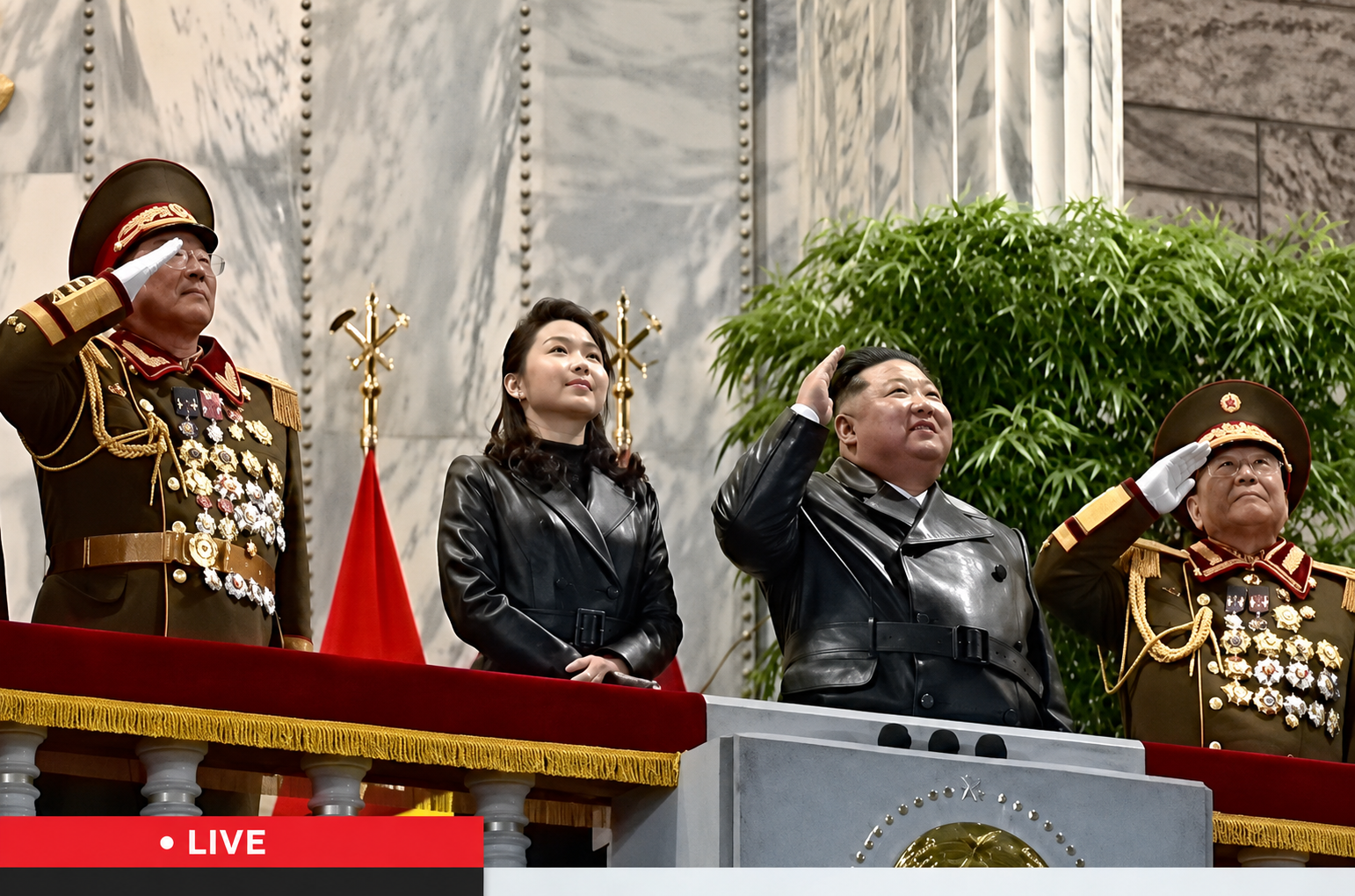
Unification Minister Chung Dong-young has highlighted a private-sector range far above many public assessments, but South Korea’s military has not verified it and the North does not disclose its stockpile.
Chung Dong-young referred to the range during a discussion of North Korea’s expanding nuclear capability. South Korea’s military subsequently said it had not verified the estimate. That qualification is essential: the figure was not announced as a new intelligence finding by the defence ministry or Joint Chiefs of Staff.
North Korea does not publish an inventory of assembled warheads, fissile-material stocks or operationally deployed weapons. Outside estimates are consequently built from indirect evidence: the assessed output of plutonium reactors and uranium-enrichment facilities, assumptions about the quantity of material required per weapon, nuclear-test data, satellite imagery and statements by North Korean officials.
Small changes in those assumptions can produce a wide range. Estimating how much highly enriched uranium North Korea has produced is particularly difficult because centrifuge facilities can be concealed and their efficiency is not visible from satellite imagery. Analysts must also decide how much fissile material has been allocated to weapons, held in reserve, lost during processing or used in tests.
This is why public assessments differ. The Congressional Research Service said in April that North Korea could have enough fissile material for as many as 90 weapons while citing an estimate of roughly 50 assembled warheads. Other research organisations have produced higher or lower totals depending on their methodology and the date of assessment.
Warhead count is only one measure of capability. A state may possess fissile material without having converted all of it into weapons. An assembled device may not be sufficiently compact or robust for delivery by every missile in the inventory. Operational deterrence also depends on launchers, trained units, command and control, storage, maintenance, accuracy and confidence that a warhead will survive flight and detonate as intended.
North Korea nevertheless has made visible progress in several of those areas. It has tested intercontinental ballistic missiles, fielded solid-fuel systems that can be prepared more quickly than liquid-fuel predecessors and displayed tactical nuclear concepts intended for shorter-range use. It is also developing submarine-launched and cruise-missile options designed to complicate allied detection and defence.
The result is an arsenal that may be becoming more diverse even if its exact size remains unknowable. Defence Matters has previously examined the contrast between Kim Jong Un’s increasingly formidable missile display and the less certain reality behind it. The same caution applies to any precise warhead total.
The political setting adds another layer. Chung has advocated a “peace first” approach intended to restore contact and reduce military tension without abandoning the long-term objective of denuclearisation. Publicly citing a high estimate can support the argument that waiting for complete disarmament before engagement is unrealistic. It can also alarm the South Korean public and strengthen demands for an indigenous nuclear deterrent.
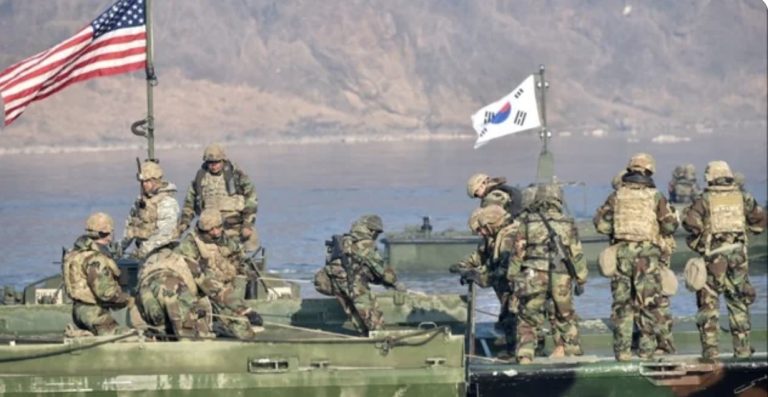
Seoul remains under the US extended-deterrence umbrella. Washington has sought to reinforce confidence through strategic consultations, deployments and exercises. Any reduction in those visible commitments is therefore closely watched, particularly after changes to US–South Korean military drills raised questions about deterrence signalling.
President Donald Trump recently said North Korea had 57 “very powerful” nuclear weapons and reiterated his intention to meet Kim. That number, too, should not be treated as a transparent intelligence estimate without supporting methodology. The variation between 57, approximately 50 and 80–120 illustrates the uncertainty rather than proving that one figure is definitive.
For defence planners, the operational response cannot depend on knowing the exact total. Missile warning, hardened command systems, dispersal, air and missile defence, counterforce options and continuity of government must be designed for a range of plausible arsenals. A larger stockpile could allow North Korea to retain a strategic reserve while assigning more weapons to theatre targets in South Korea and Japan.
It could also make arms control more difficult. The larger and more diverse an arsenal becomes, the more intrusive any verification regime would need to be. Facilities, material, assembled weapons and delivery systems would all have to be declared and monitored—an undertaking for which there is presently no agreed negotiating framework.
South Korea is meanwhile pursuing more autonomous capabilities, including plans for a nuclear-powered submarine, a strategic shift analysed by Defence Matters. Those programmes are influenced by Pyongyang’s growing missile and submarine forces, but they also change regional threat perceptions in China and Japan.
The 80–120 range is therefore newsworthy as an indication of what some specialists believe possible. It is not proof that North Korea has deployed 120 usable weapons, nor is it a verified South Korean military estimate. The most defensible conclusion is narrower: Pyongyang’s stockpile is growing, its delivery options are becoming more varied, and the uncertainty surrounding the arsenal is itself a strategic problem.

Stars and Stripes must remain a newspaper, not become a Pentagon mouthpiece