


Mr Maduro and his wife, Cilia Flores, were captured in or near a Caracas safe house and moved via a US Navy ship offshore before being flown to New York, where US officials say he will face an initial appearance in federal court on Monday, 5 January. President Donald Trump has framed the operation as a decisive blow against a “narco-terrorist” leadership, announcing that the United States will “run” Venezuela until a “safe, proper and judicious transition”.
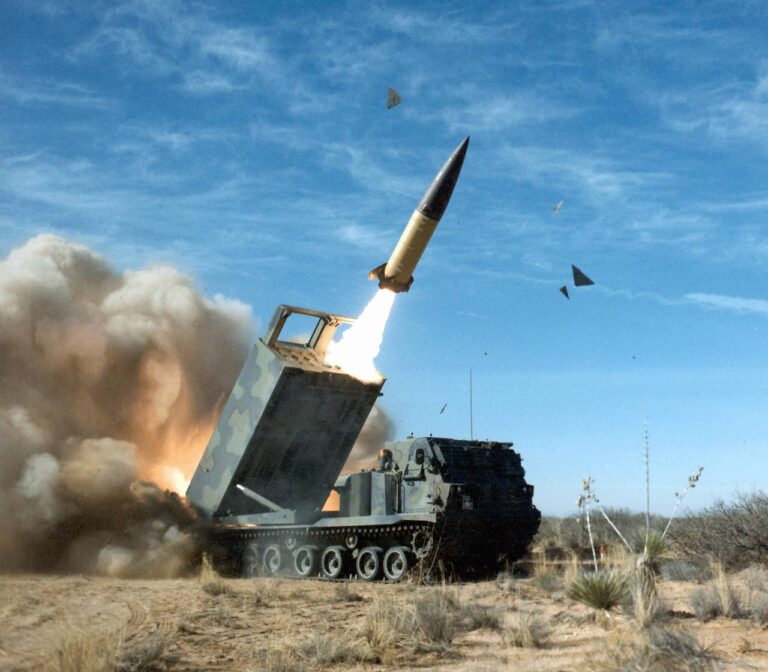
On the military side, the operation appears to have been designed to suppress Venezuelan air defences, strike key installations and create a narrow window for extraction. Reuters reported strikes on military installations alongside power outages in parts of Caracas. Other reporting described concentrated attacks around major military complexes, including Fuerte Tiuna, as well as communications and depot targets.
Open-source imagery and press photographs suggest at least some high-value air-defence equipment was hit. Photographs from La Carlota air base in Caracas show a destroyed anti-aircraft unit, and post-strike reporting has identified a Buk-M2 system among the losses. Satellite comparisons published by international outlets have shown damage at several sites, though these images do not, by themselves, confirm what was inside individual buildings.
Casualty figures are contested. Venezuelan officials and state-linked reporting have cited at least 40 deaths, without a breakdown that can be independently verified. Mr Trump said no Americans were killed, though some members of the US force were injured.
This is where the military clarity ends and the political ambiguity begins. Mr Trump has not explained how the United States intends to “run” a country whose state apparatus remains in place. Reuters noted that US forces “have no control over the country itself”, and that Maduro’s governing circle appears to retain power in Caracas.
Venezuela’s Supreme Court has ordered Vice President Delcy Rodríguez to assume the role of interim president “in the absence” of Mr Maduro, citing administrative continuity and defence of the nation. Yet Ms Rodríguez simultaneously denounced the seizure as a kidnapping and publicly insisted Mr Maduro remains Venezuela’s only president. The result is a legal stopgap that keeps chavista authority intact while treating Washington’s action as illegitimate.
In practice, governing Venezuela requires more than a declaration from Mar-a-Lago. A functioning state depends on ministries, courts, tax collection, customs, policing and intelligence services, and—crucially—armed forces that accept political direction. Reuters reporting has described a tight civilian–military alliance around senior figures including interior minister Diosdado Cabello and defence minister Vladimir Padrino López, with the military involved in key industries and smuggling routes.
Any attempt to replace that system would run into an additional layer of coercive power: pro-government armed civilian groups known as colectivos. Reporting over several years has traced the colectivos’ roots to left-wing urban groups, including organisations associated with the Tupamaros, which later became embedded in chavista street control. Their existence complicates any transition that relies on quickly stabilising neighbourhoods, preventing reprisals and controlling arms flows.
Mr Trump has floated the prospect of deeper military involvement. Asked about the limits of US action, he said he was “not afraid of boots on the ground”. That language matters because it implies a problem the air campaign cannot solve. Air and missile strikes can degrade infrastructure and pressure a leadership. They cannot, on their own, create a substitute administration, a reliable police force, or a chain of command that governs the capital day and night.
Nor is it clear what coercive leverage Washington can apply if Caracas refuses to cooperate. The US can strike again, but repeated bombing does not automatically produce a compliant bureaucracy. Meanwhile, Venezuela’s remaining air-defence network—built with Russian and Chinese systems and radars—may be degraded, but analysts note it was designed as a layered structure rather than a single point of failure.
The drug-trafficking justification also contains a practical complication. US government reporting has long described Venezuela primarily as a transit route for cocaine, rather than a major cultivation site, meaning the state’s role is often framed around protection, facilitation and corruption rather than production. If the aim is to reduce flows, Washington must either co-opt or dismantle networks that overlap with military and political elites—precisely the constituencies most able to resist a transition.
Internationally, the operation is already heading into the UN system. The Security Council is expected to meet on Monday, 5 January, after Colombia—backed by Russia and China—requested an emergency session; the UN Secretary-General has warned of a “dangerous precedent”. The diplomatic pressure does not resolve the operational question, but it raises the costs of an open-ended US role.
The raid achieved an immediate result: Mr Maduro is in American custody and key Venezuelan sites have been hit. What it did not produce is an agreed successor, a governing mechanism, or territorial control. Washington has removed a person. It has not yet demonstrated how it intends to manage a state.

Ukraine’s Defence Industry and Its European Future