The deployment, at the air base of Schönewalde/Holzdorf south of Berlin, marks a watershed moment for European air-defence, aligning Berlin’s ambitions with a broader push to harden the continent against Russian-era threats.
In a ceremony one December 3rd, defence officials declared the system’s “initial operational capability” (IOC), meaning radar, launchers and trained personnel are now ready to provide limited operational protection. The decision to acquire three Arrow batteries — a plan originally approved in 2023 — underlines just how seriously Germany now treats the missile threats emanating from what Berlin regards as a volatile Eastern frontier.
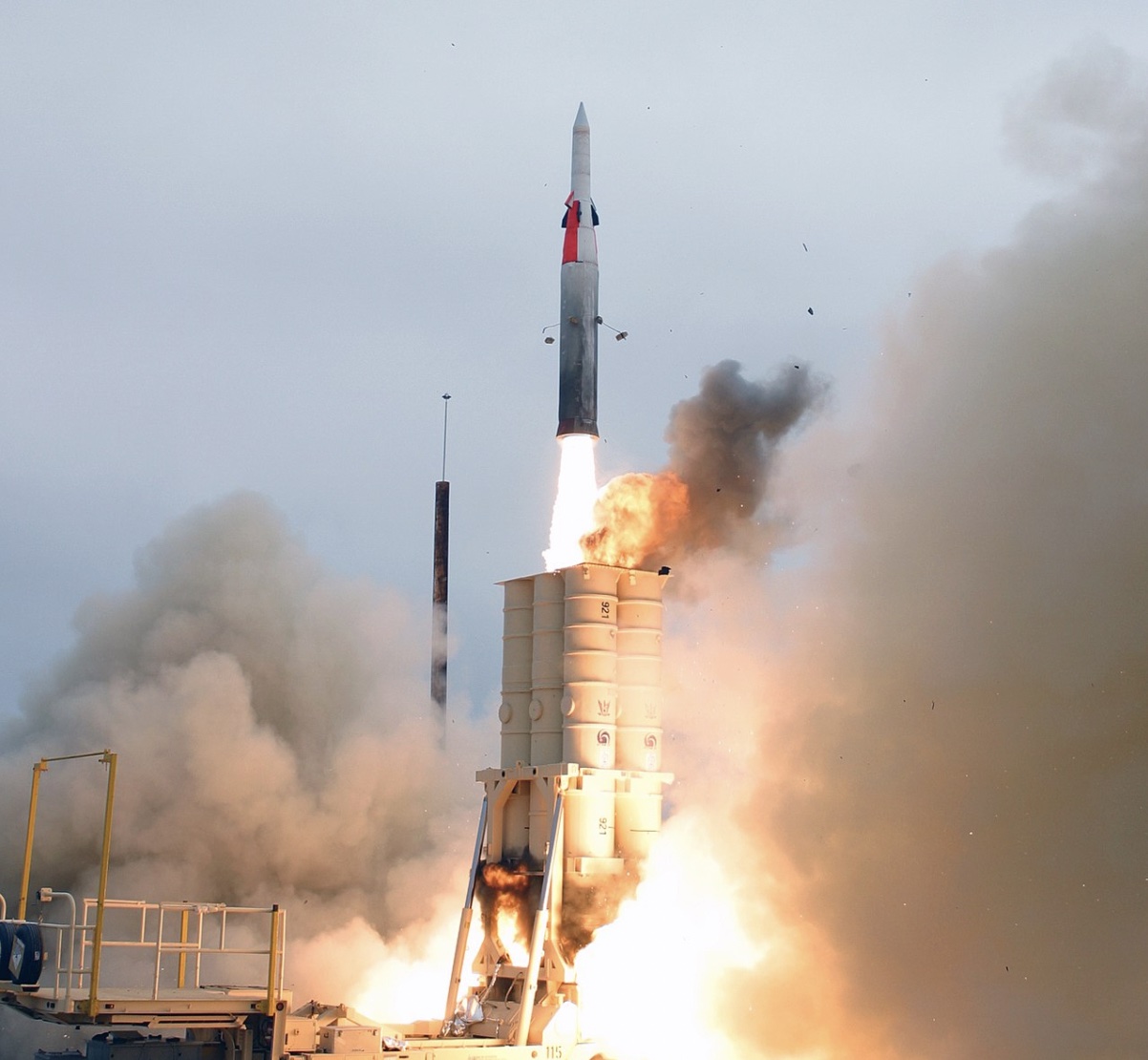
The Arrow 3 system, developed jointly by Israel Aerospace Industries (IAI) and the U.S. Missile Defense Agency, is among the few in the world capable of intercepting ballistic missiles while they travel through space — far above the atmosphere and well before warheads descend toward their targets.
According to details released by Berlin, the system will give Germany an early-warning and defensive envelope against long-range missiles, a capacity previously absent from the Bundeswehr’s arsenal. Defence Minister Boris Pistorius hailed the system as “unique among our European partners”, stressing that it strengthens Germany’s central role in European defence and underscores its commitment to safeguarding both its own territory and those of its allies.
Holzdorf is only the first site. Under the nationwide plan, two further batteries are expected over the coming years — one in the north and a third in the south — meaning that by the end of the decade, Germany will host a three-layered, nationwide missile shield capable of deterring long-range ballistic threats across the continent.
The abrupt shift towards missile defence is not surprising. Since Russia’s annexation of Ukrainian territory and the later full-scale invasion, Berlin has dramatically rethought its defence posture: halting years of relative neglect, boosting military spending, and reaching across the Atlantic and Mediterranean for new partnerships. The 2023 acquisition of Arrow 3 was justified explicitly as a response to the “changed security environment.”
In that context, the delivery of Arrow 3 — already combat-proven after intercepting missiles fired at Israel — offers a serious deterrent. Its mere presence in Germany may force potential aggressors into deeper strategic calculation before contemplating long-range missile strikes on European soil.
For allies inside the European Sky Shield Initiative (ESSI) — the wider air-defence project of which Germany is a pillar — Arrow 3’s activation is more than a national statement. It reaffirms Berlin’s ambition to play a leading role in continental security.
The system complements existing medium-range air-defence shields — such as those based on the American-made Patriot or the European IRIS-T — giving NATO what could effectively become a layered defence capable of resisting both conventional cruise-missile attacks and long-range ballistic threats.
In an era where missile proliferation — and threats from states like Russia or Iran — loom large, Arrow 3 represents a strategic bet: that Europe can, by combining national will and shared cooperation, shield its skies against the most dangerous forms of warfare.
Yet the shift is not merely technical. It carries political weight. By hosting Earth’s first operational Arrow 3 outside Israel, Germany reaffirms both a willingness to resist coercion and the readiness to lead NATO’s European pillar. This may well recalibrate the continent’s security calculus for decades to come.
Despite the ceremony and public pronouncements, analysts caution that “initial operational capability” does not mean “full deployment.” Additional infrastructure, personnel training, logistic support and integration with broader NATO command-and-control systems must still be layered in before Arrow 3 can be relied upon in a sustained conflict.
Moreover, like any missile-shield, Arrow 3 does not offer bulletproof security: advanced countermeasures, saturation attacks or other technical failures could reduce its effectiveness. Defence experts have warned that while the system dramatically raises the bar for attackers, it should be seen as part of an overall posture — not a guarantee.
Nevertheless, with the ground now shifting, Germany’s decision to stand under the Arrow’s wings may well mark the beginning of a new — and sobering — chapter for European defence. The age of complacency is over.
Main Image: US Navy News Service
Italy’s ‘Michelangelo Dome’ — Europe’s Next Big Bet on Air Defence