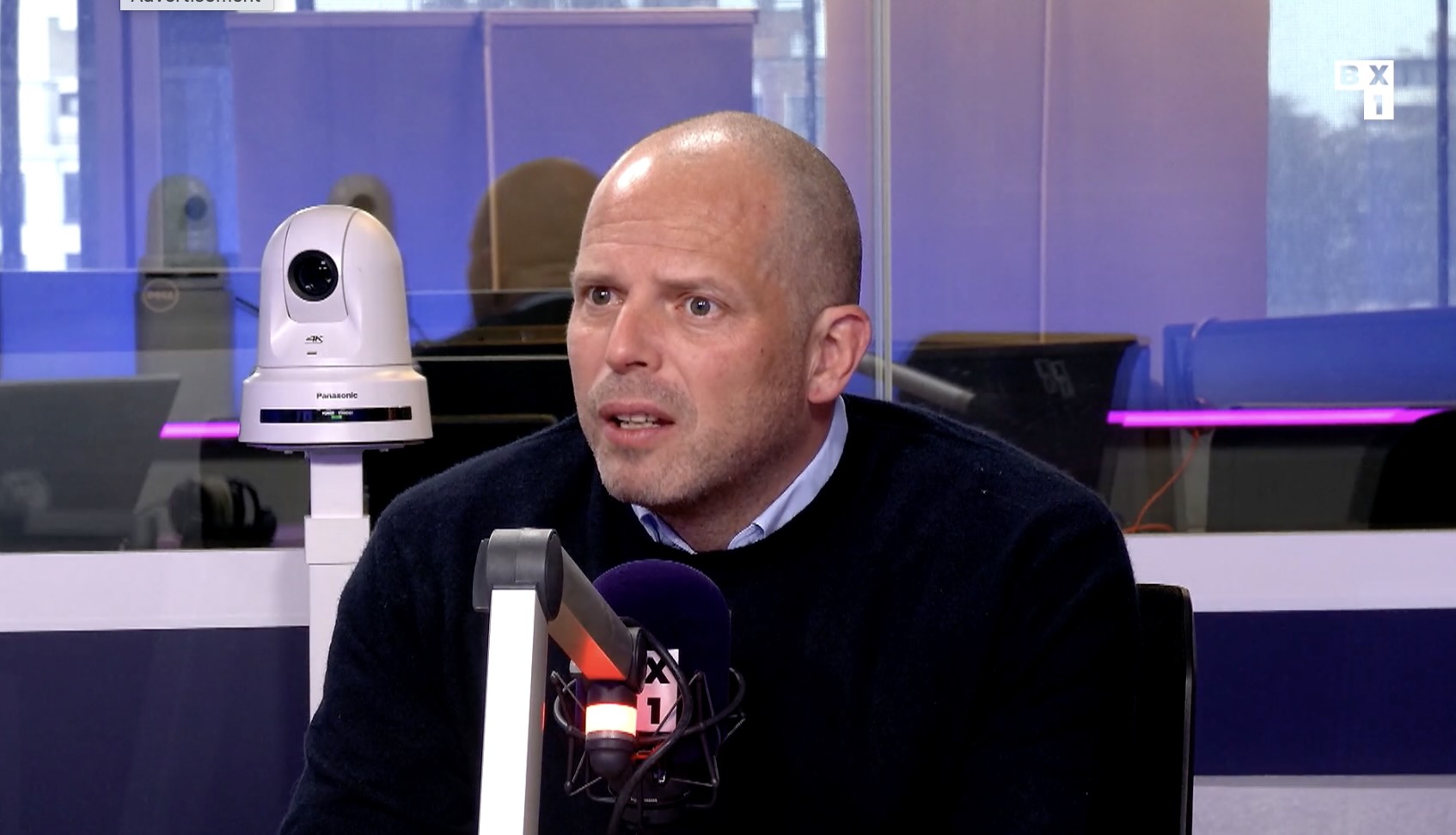
The announcement was made by Belgian Defence Minister Theo Francken during an appearance on the Bonjour Bruxelles programme on BX1. According to the BX1 coverage, Belgium intends to use Ukrainian technological expertise to establish production capacity on Belgian territory, covering both unmanned aerial vehicles and systems designed to intercept hostile drones.
The plan reflects a broader European trend: governments and defence companies are increasingly seeking to adapt lessons from Ukraine’s war with Russia into their own procurement and industrial strategies. Ukraine has become not only a major operator of drones, but also a source of innovation in unmanned systems and counter-UAV technologies, as noted in reporting by The Wall Street Journal and in statements from the Belgian defence minister’s office on counter-drone investment.
Francken said the Belgian government would sign a contract with a Ukrainian company to support the project. While he did not identify the company involved, his comments reported by BX1 indicated that Belgium wants to adapt Ukrainian know-how for local production, allowing it to develop a domestic industrial base rather than rely solely on imports.
The Belgian minister also acknowledged that the country’s armed forces remain short of the necessary volume of such systems. He said Belgium had already made purchases and investments to improve its equipment holdings, but added that substantially more investment would still be required, again according to BX1.
That assessment mirrors a wider challenge across Europe. The spread of low-cost drones and the growing sophistication of strike and reconnaissance systems have exposed weaknesses in short-range air defence and force protection. Belgium has already moved to strengthen this area through anti-drone measures and procurement programmes, as reflected in Reuters reporting on Belgian drone purchases, The Brussels Times coverage of anti-drone missile orders, and official Belgian defence statements on strategic counter-drone investment.
For Belgium, cooperation with Ukraine offers a relatively direct route into a rapidly developing sector. Ukrainian defence companies have been forced by wartime conditions to innovate quickly, producing systems that have been tested in combat rather than under laboratory conditions, a point reflected in reporting by both the Financial Times and The Wall Street Journal.
The move also has an industrial dimension. Establishing production in Belgium would not simply add equipment for the armed forces; it would also create a local manufacturing base linked to one of the fastest-moving segments of the European defence sector. Belgium has recently shown interest in developing national drone-related capability, including through Belgian-made systems for military training.
The announcement comes against the backdrop of a wider push to connect Ukrainian defence innovation with European industrial capacity. In December 2025, German company Quantum Systems announced a joint venture with Frontline Robotics, while the broader context of European industrial cooperation with Ukrainian drone developers has also been examined by the Financial Times.
That project was presented as part of the international Build with Ukraine initiative, which seeks to combine Ukraine’s wartime technological experience with the industrial depth and investment capacity of partner countries. The same framework is described in the Quantum Systems announcement and in coverage by TechUkraine.
This marks a wider shift in Europe’s approach to Ukraine. Kyiv is no longer seen only as a recipient of military support, but increasingly as a source of defence technology and operational experience with relevance for European security planning and procurement, as reflected in reporting by the Financial Times and in Quantum Systems’ later announcement on deliveries linked to the joint venture.
Although practical details remain unclear, including the production timetable, contract terms and output levels, the political message is clear: Belgium intends to strengthen its drone and air-defence capabilities by drawing directly on Ukrainian expertise while anchoring production within its own industrial base, based on Francken’s remarks to BX1.