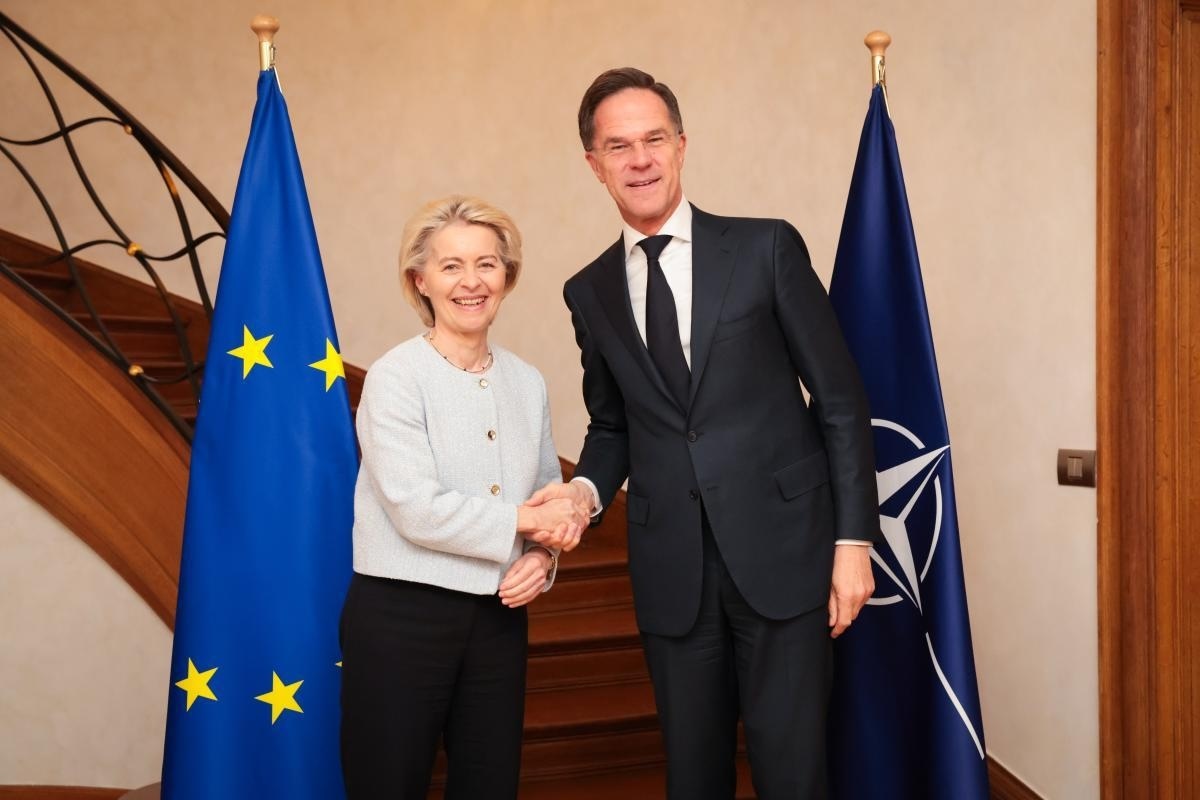
European Commission President Ursula von der Leyen and NATO Secretary General Mark Rutte used their Brussels meeting on 16 April to signal a more deliberate phase in EU-NATO coordination, with both sides placing defence production, investment and support for Ukraine at the centre of the agenda.
The immediate significance lies less in ceremony than in timing. Europe is under pressure to raise output from its defence industry, accelerate procurement and sustain military assistance to Ukraine while preparing for a NATO summit expected to focus heavily on burden-sharing, readiness and capability delivery. In reporting published on 16 April, von der Leyen said she and Rutte had agreed to work more closely in the coming weeks to strengthen the relationship between the European Union and NATO, while Rutte argued that a stronger Europe also means a stronger alliance.
That wording reflects a practical shift already visible across Brussels. The Commission has been pushing member states to move faster on industrial scale-up, while NATO has been pressing allies to translate political commitments into deployable force, munitions stockpiles and production contracts. The meeting therefore sits at the junction of two overlapping debates: how Europe equips itself more quickly, and how far the EU can support that process without duplicating NATO’s core military role. The language used after the talks suggests both institutions are trying to present those efforts as complementary rather than competing.
For EU institutions, the value of closer alignment is obvious. Brussels has tools in finance, regulation, procurement and industrial policy that can influence defence output even though NATO remains the central military framework. For NATO, stronger EU coordination can help turn political concern about security deterioration into actual production lines, cross-border supply chains and faster capability delivery. The outcome of the meeting does not amount to a formal new structure, but it does show both sides trying to align policy tempo before Ankara.
The real test will come in the weeks before the summit. If EU-NATO coordination produces faster procurement decisions, more visible industrial commitments and firmer support packages for Ukraine, the meeting will look like a meaningful operational step. If not, it will remain another example of institutional convergence expressed in broad terms but not yet matched by measurable delivery. On the evidence available so far, Brussels and NATO are clearly trying to avoid that outcome.