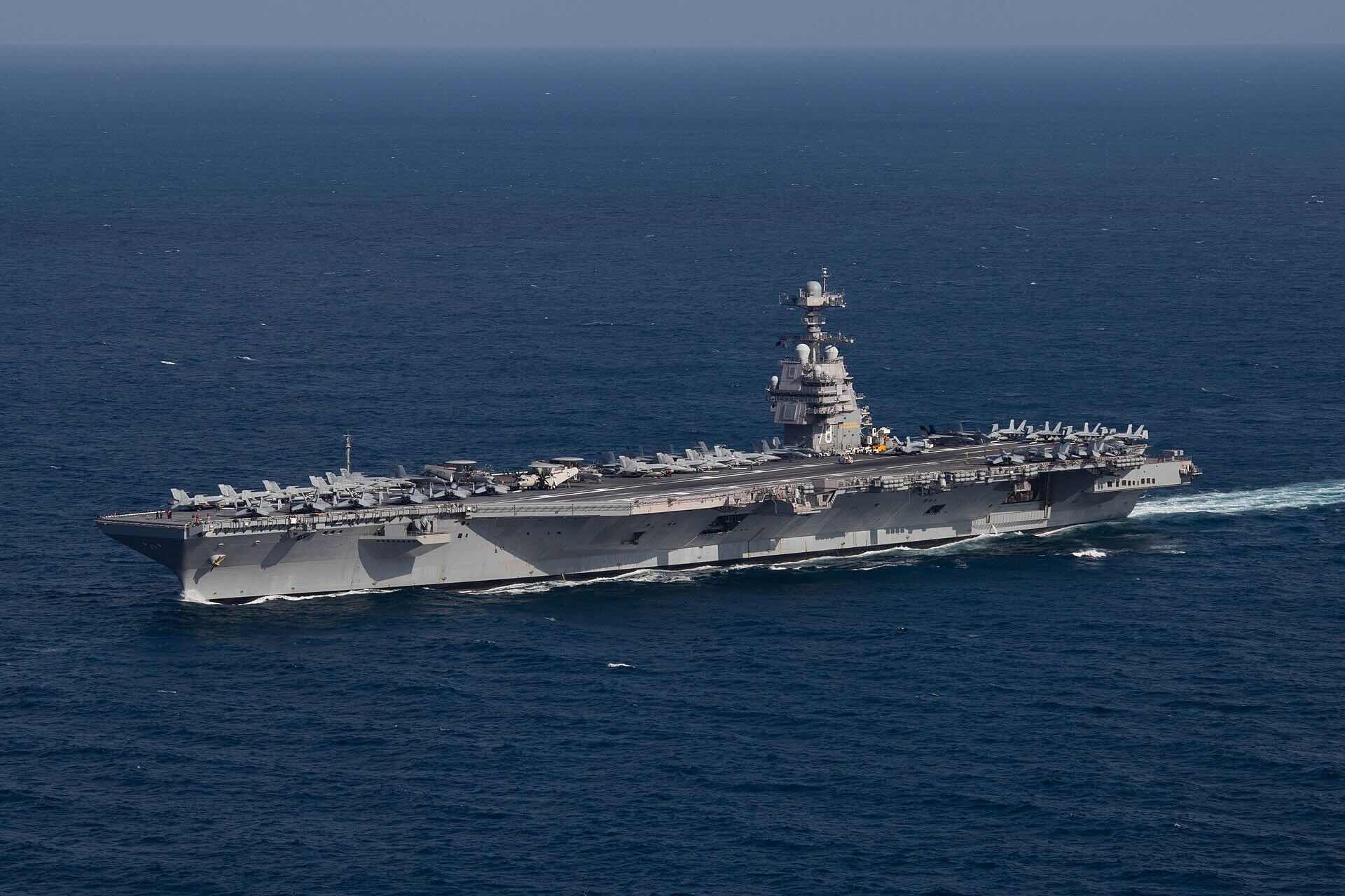
The immediate marker is the USS Gerald R. Ford, ordered from the Atlantic to US Central Command’s area of responsibility. USNI News, citing a Navy official, reported that the carrier and escorts were heading for the Strait of Gibraltar en route to the region. Once on station, Ford is expected to join the USS Abraham Lincoln strike group already operating in the Arabian Sea, giving the United States two carrier decks within operational range of Iran.
Iran crisis drives US military build-up as casualty claims and internet blackout fuel uncertainty
That naval reinforcement sits inside a broader build-up that the Wall Street Journal described as the largest concentration of US air power in the Middle East since the 2003 invasion of Iraq, including stealth aircraft, support platforms, command-and-control assets and strengthened air and missile defences. The significance is not simply numbers, but the menu of options the force package creates: the same reporting said Trump is being presented with choices ranging from limited strikes focused on nuclear and missile infrastructure to a more expansive campaign.
The deployment also increases Washington’s ability to sustain operations without relying on a single base or a single flight route. The Journal noted that the United States retains the capability to strike from long range, including via Diego Garcia, a factor brought into sharper focus by Trump’s renewed public criticism of the UK’s Chagos Islands arrangement. On Wednesday, Reuters reported Trump describing the UK’s decision to proceed with a 99-year lease framework for Diego Garcia, alongside a sovereignty transfer plan for the wider archipelago, as “a big mistake”, while emphasising the base’s relevance to potential action against Iran.
If the build-up is designed to provide credible coercion, recent incidents suggest the risk of miscalculation is increasing. On February 3, Reuters reported that a US F-35 shot down an Iranian Shahed-139 drone approaching the Abraham Lincoln “with unclear intent”, in what Central Command described as self-defence. The same day, Reuters reportedIranian gunboats approaching the US-flagged tanker Stena Imperative in the Strait of Hormuz, ordering it to stop before it continued under escort. These are the kind of close encounters that can rapidly compress decision time in a crisis, particularly when both sides are signalling resolve.
Diplomacy, meanwhile, appears to be running in parallel rather than offering an off-ramp. Axios reported that US and Iranian delegations in Geneva claimed “progress” and discussed returning within two weeks with more detailed proposals, a timetable that, in practice, overlaps with the Ford’s expected arrival in theatre. Yet the same channel of reporting has also carried a more dismissive internal assessment. A widely circulated remark attributed to a senior US official described the Geneva round as “a hamburger stuffed with nothing”, language that, at minimum, signals frustration within parts of the US system about the gap between process and substance.
The analytical question is whether the United States is trying to force a concessionary package quickly, or whether it is using talks primarily to test Iranian red lines while completing the military deployment. The structure of the American force package points to preparedness for more than a single-night strike. The Journal characterised the posture as capable of supporting a sustained air campaign and noted debate inside the US and among Israeli officials about objectives, including the degree to which action should focus on nuclear facilities, missile forces, leadership targets, or a combination.
Iran’s counter-leverage remains the region’s geography and its network of aligned groups, as well as its ability to threaten shipping. The AP described the current phase as a return to “gunboat diplomacy”, noting Iranian naval signalling, joint drills with Russia, and the strategic resonance of the Strait of Hormuz as a choke point. The market has responded to that risk: Barron’s reported oil prices rising on Thursday amid concern that escalation could endanger flows through Hormuz, which is routinely cited as one of the world’s most important oil transit routes.
Israel is the other variable that could reshape the sequence. A US-led strike might not require Israeli participation, given the concentration of American assets, but Iranian retaliation could still involve Israel directly, either through missile launches or proxy pressure from Lebanon and Yemen. The point for planners in Washington is that deterrence against Tehran is only part of the problem; deterrence against secondary escalation is the other. The February 3 incidents in the Arabian Sea and Hormuz illustrate how quickly a crisis can broaden even before a first strike is authorised.
By Thursday afternoon, the picture was of a US administration holding military tools in position while leaving the door open to talks, and of an Iranian leadership signalling that coercion will not produce quick capitulation. The proximity of the carrier timetable to the next mooted Geneva session means the coming days are likely to be read in capitals across the region as a narrowing window in which either side decides whether negotiation is a cover for mobilisation, or mobilisation a lever to rescue negotiation.