

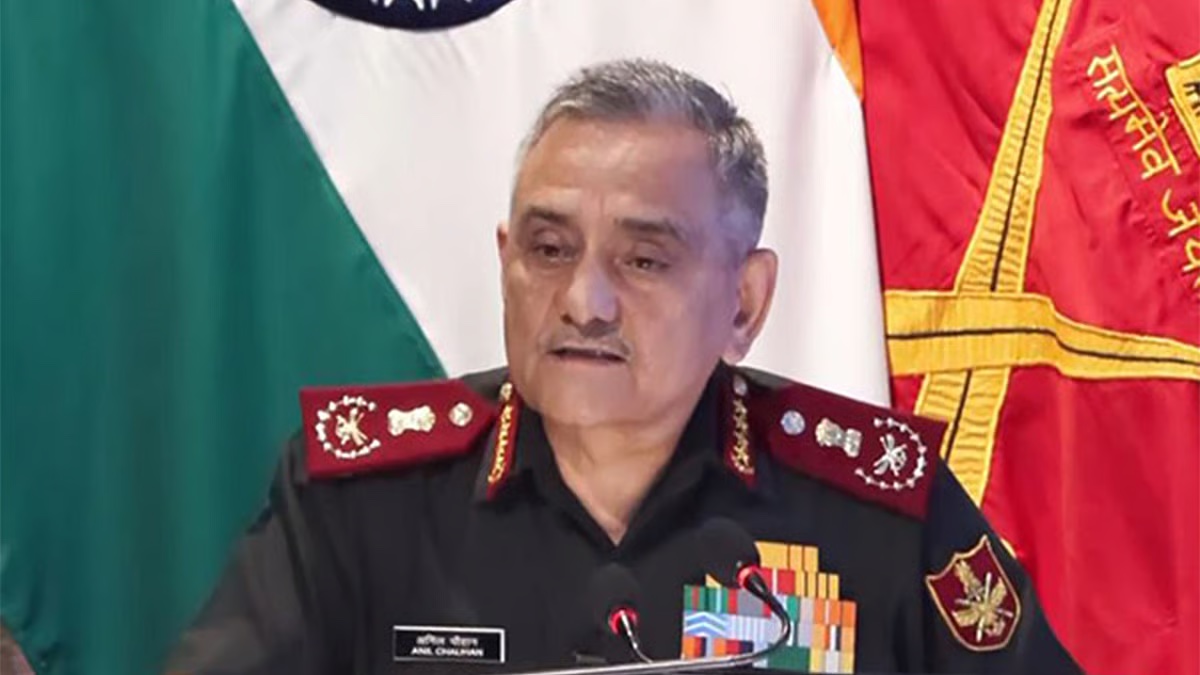
Hosted by Air Chief Marshal Sir Richard Knighton, the three-day visit is more than ceremonial. It is a signal—quietly delivered but unmistakably clear—that London and New Delhi are aligning their ambitions in a world that increasingly rewards cooperation between capable, like-minded powers.
At its heart lies a simple proposition: that Britain and India, each a military force of global reach, can achieve more together than apart. Talks during the visit will focus on deepening cooperation across training, operations and defence industry partnerships—areas that may sound technical, but which together form the backbone of modern military strength.
This is not a relationship starting from scratch. In recent years, ties between the two countries have grown steadily, bolstered by joint exercises, educational exchanges and an expanding dialogue between their armed forces. A ten-year defence industrial roadmap agreed in 2025 laid the groundwork for co-development and co-production of military equipment, embedding collaboration at the level where strategy meets industry.
Yet what distinguishes this moment is its pace. The visit marks the fifth senior military engagement between the two nations this year alone, following, among others, the trip to India by Britain’s Chief of the Air Staff in March. This is not diplomacy as theatre; it is diplomacy as momentum.
For Britain, the logic is compelling. As it seeks to define its role in a more contested international environment, partnerships beyond Europe are no longer optional—they are essential. India, with its vast scale, growing technological base and strategic position in the Indo-Pacific, is an obvious counterpart.
For India, the attraction is equally clear. The United Kingdom brings not only advanced defence capabilities but also a long tradition of military professionalism and a sophisticated industrial base. Cooperation offers a route to accelerate India’s own ambitions for self-reliance in defence production, while maintaining access to cutting-edge expertise.
There is also a deeper alignment at work. Both countries are committed to the idea of a “free, open and secure Indo-Pacific”—a phrase that has become shorthand for a rules-based international order in a region of growing geopolitical significance. As Britain extends its strategic gaze eastward, and India consolidates its role as a regional anchor, their interests increasingly converge.
Lindy Cameron, the British High Commissioner to India, captured the tone succinctly, describing the visit as evidence of the “trust and ambition” driving the partnership. Cooperation, she noted, is expanding not only in traditional military domains but also in innovation and interoperability—the ability of forces to operate seamlessly together.
That emphasis on interoperability may prove especially important. Modern conflict, as recent events have shown, demands coordination across air, land, sea, cyber and space. By training together and sharing operational insights, Britain and India are investing in a form of preparedness that cannot be improvised in a crisis.
The visit’s itinerary reflects this breadth. Meetings with senior British civil and military leaders will be complemented by engagements with industry figures, underscoring the increasingly blurred line between defence policy and economic strategy.
Indeed, the notion of defence as an “engine for growth” is becoming central to the relationship. Co-production initiatives promise not only enhanced capability but also jobs, skills and technological spillovers in both countries. In an era when economic resilience is inseparable from national security, such collaboration carries weight beyond the purely military.
There is symbolism, too, in General Chauhan’s visit to the Royal College of Defence Studies. There, among a multinational cohort of future leaders, the enduring value of professional military education—and the networks it creates—will be on display. These are the quiet foundations upon which enduring partnerships are built.
It would be easy to view all this through the prism of geopolitics alone. Yet there is a human dimension that should not be overlooked. The relationship between British and Indian armed forces is underpinned by decades of shared experience, mutual respect and, increasingly, a recognition of common purpose.
What is emerging is not an alliance in the formal sense, but something arguably more flexible and therefore more durable: a partnership rooted in pragmatism, capable of adapting to shifting circumstances while maintaining a clear strategic direction.
In a world where alliances can fracture and rivalries can harden with alarming speed, such adaptability is no small virtue.
The significance of this visit, then, lies not in any single agreement or announcement, but in the trajectory it represents. Britain and India are moving—deliberately, steadily—towards a closer alignment of their defence and security interests.
For London, it is a reminder that global influence in the 21st century will depend as much on partnerships as on power. For New Delhi, it is further confirmation that its rise is being recognised and matched by meaningful engagement.
And for both, it is an affirmation that, even in uncertain times, there remains space for constructive, forward-looking cooperation.
If diplomacy is often judged by its ability to manage crises, it should also be measured by its capacity to build confidence before crises arise. By that standard, the visit of General Anil Chauhan to the United Kingdom stands as a quietly significant success.
India-EU Security and Defence Partnership Heralds A New Era Of Industrial Diplomacy



The Hidden Strategic Costs of China’s New London Embassy