The blast occurred within the perimeter of RAF Akrotiri, one of two Sovereign Base Areas retained by Britain after Cyprus gained independence in 1960. Unlike overseas deployments leased from foreign governments, Akrotiri is British soil in law and administration — a constitutional anomaly that now places an act of hostile force squarely on sovereign British territory.
The UK Ministry of Defence confirmed that an unmanned aerial vehicle detonated on the base, causing what officials described as limited damage. No casualties have been reported among service personnel or civilians. Security measures were immediately elevated and an investigation launched into the origin and trajectory of the drone.
Residents in nearby Limassol reported hearing a sharp explosion followed by the whine of jet engines and the pulsing echo of sirens. Some described seeing flashes above the peninsula before the night sky returned to darkness. Though accustomed to the distant rumble of military aircraft, locals said this was different — sudden, violent and unmistakably close.
The constitutional status of Akrotiri gives the episode particular gravity. Together with Dhekelia on the island’s eastern flank, the peninsula forms one of Britain’s two Sovereign Base Areas — self-governing enclaves under British jurisdiction, complete with their own administration and policing. They are not colonial relics in the traditional sense but strategic footholds, long regarded in Whitehall as indispensable to operations in the Middle East.
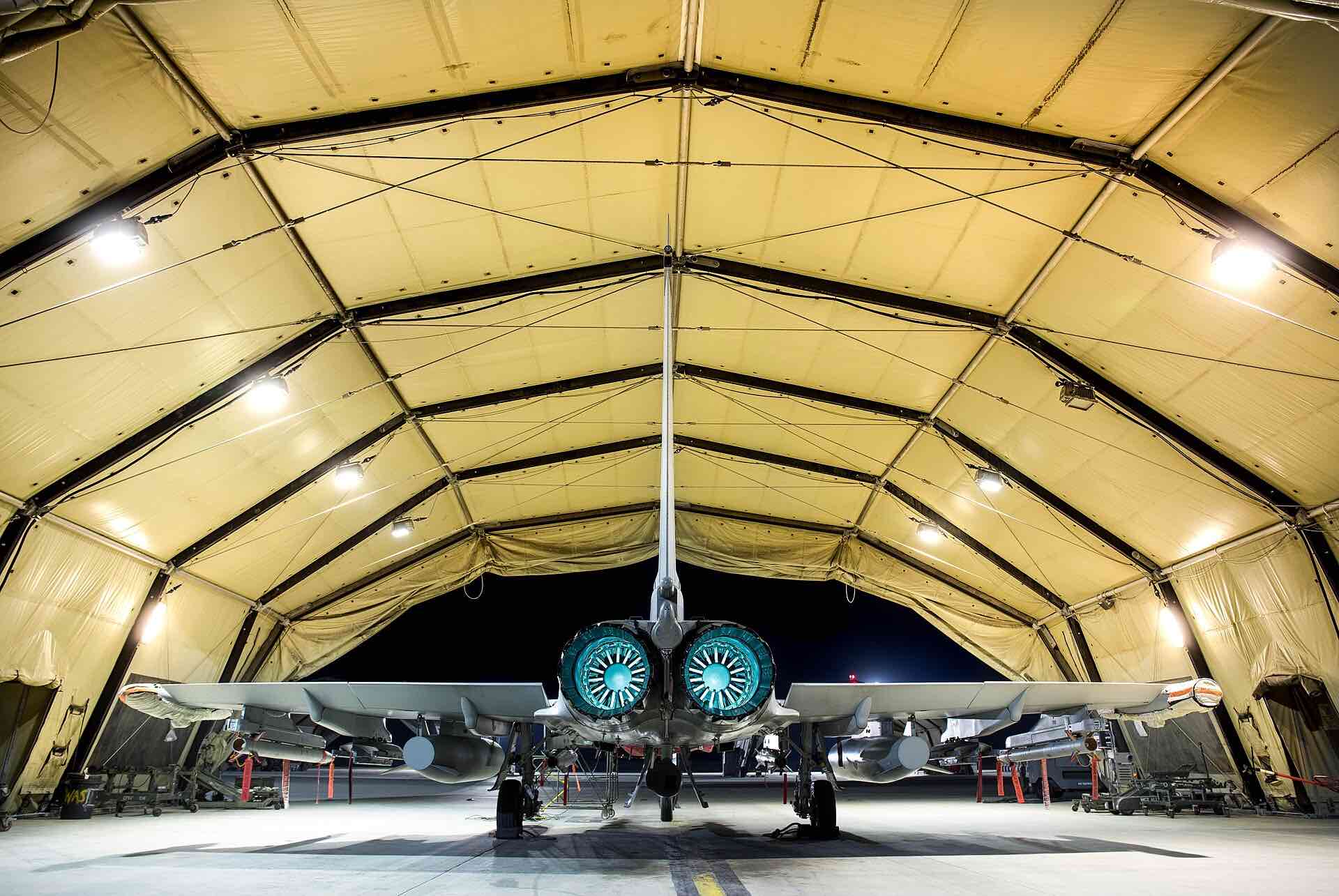
That strategic value has grown in recent years. RAF Akrotiri serves as a forward operating hub for surveillance aircraft, transport planes and, at times, combat missions linked to regional security operations. Its long runway and proximity to flashpoints across the Levant have made it a critical logistical node for allied activity.
It is this proximity that now appears to have erased any illusion of distance from the conflicts simmering beyond the horizon.
Officials have not publicly attributed responsibility for the drone, and caution prevails while forensic analysis continues. Yet the incident follows days of heightened tension across the region, with Western military assets placed on alert amid a deteriorating security environment. The fact that a drone was able to reach and detonate within a heavily protected sovereign base will prompt searching questions about perimeter defence and aerial surveillance.
In Nicosia, the Cypriot government stressed that the Republic was not directly involved in any military action and that the Sovereign Base Areas operate under British authority. That distinction is legally clear but geographically delicate. The bases occupy approximately three per cent of the island’s landmass, and while separated by fences and jurisdiction, they sit alongside Cypriot towns and villages whose residents inevitably feel the tremors of events within.
For London, the symbolism is stark. An attack — even one causing limited damage — on British sovereign territory carries different political resonance from a strike on an overseas deployment conducted with host-nation consent. The government will be conscious that any escalation risks broadening the frame of confrontation.
Across Europe, officials within the European Union reiterated calls for restraint and de-escalation, mindful that Cyprus is a member state whose soil — though in this instance British-administered — lies within the Union’s geographic space. Diplomatic language has, so far, been measured. But the unspoken concern is clear: drone warfare has a way of redrawing maps without moving borders.
Security experts note that the proliferation of relatively inexpensive unmanned systems has transformed the calculus of risk. Installations once considered secure by virtue of distance are now within reach of actors operating far beyond conventional front lines. The Mediterranean, historically a buffer between continents, has in recent years become a corridor of contestation.
At Akrotiri, daily operations resumed under tightened precautions. Additional patrols were visible along the perimeter fence by dawn, and non-essential movements were reportedly curtailed. Military aircraft could be seen taxiing as usual, an outward signal of continuity intended to project steadiness rather than alarm.
Yet beneath the choreography of normality lies a more unsettled truth. The Sovereign Base Areas were designed as strategic assets in an era of conventional warfare and Cold War rivalry. Today’s threats are diffuse, technologically agile and often unattributed. The explosion on the peninsula illustrates how even entrenched military infrastructure must adapt to an age in which the battlefield is no longer bounded by clear lines.
For the communities surrounding the base, the episode was a jolt — a reminder that geopolitics is not confined to distant news bulletins. For Britain, it is an inflection point: a moment that underscores both the utility and the vulnerability of its enduring Mediterranean outpost.
Whether the drone strike proves an isolated provocation or a harbinger of further incidents will depend on forces well beyond Cyprus’s shores. What is certain is that an explosion on sovereign British territory, however contained, reverberates far beyond the peninsula’s windswept cliffs.
Main Image: http://www.defenceimagery.mod.uk/fotoweb/fwbin/download.dll/45153802.jpg