A reported Iranian order for 300–400 Chinese QW-12 and FN-16 shoulder-launched missiles would not replace destroyed long-range systems, but it could rapidly distribute risk across hundreds of low-altitude firing positions.
Iran has reportedly agreed to buy between 300 and 400 Chinese-designed man-portable air-defence systems, a relatively modest acquisition in financial terms that could nevertheless alter the risk faced by aircraft, helicopters and drones operating at low altitude.
The proposed package is said to include QW-12 and FN-16 shoulder-launched missiles under a contract valued at between $60 million and $70 million. The first consignment could arrive within weeks, according to people familiar with the arrangement.
Reuters’ report said intermediaries and a route through western China and Pakistan were being considered. Beijing called the report groundless and Islamabad denied that Pakistan would be involved.
No contract, export notice or Iranian procurement statement has been made public. The quantities, price and route should therefore be treated as reported terms rather than confirmed government disclosures.
Even with that qualification, the military logic is clear. Iran needs a way to restore parts of its air-defence network more quickly than fixed radars and large surface-to-air missile batteries can be replaced. Man-portable systems offer dispersion, concealment and speed.
MANPADS do not perform the same task as long-range systems. They cannot provide a wide-area shield or engage high-flying aircraft at great distance. Their effective reach is much shorter, and their small seekers and warheads impose physical limits.
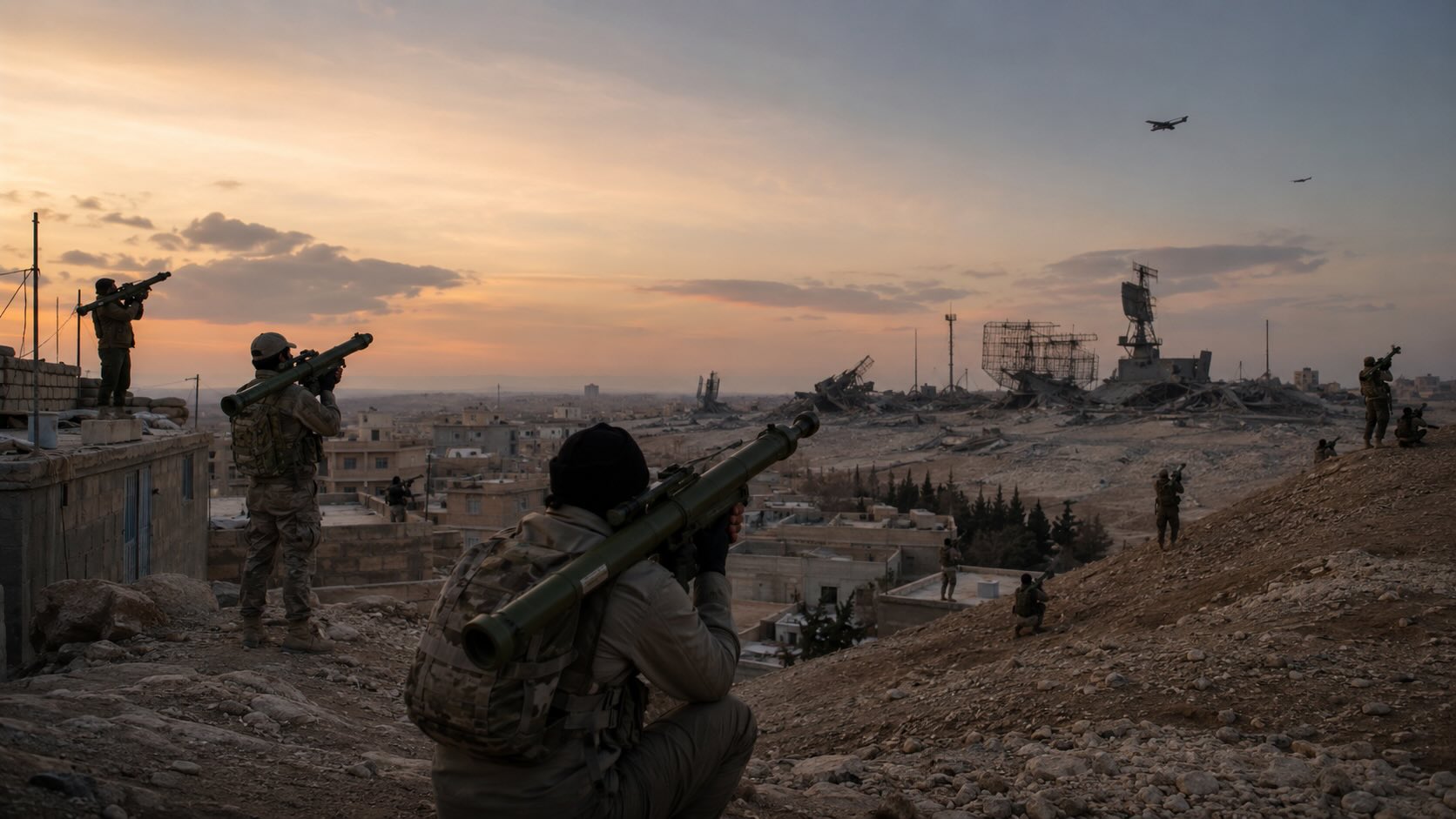
Their value lies close to the ground. Teams can be placed around airfields, command posts, missile sites, industrial facilities, ports and troop concentrations. They can threaten helicopters, transport aircraft, low-flying jets and some unmanned systems without emitting the persistent radar signature associated with a conventional battery.
That makes them difficult to eliminate pre-emptively. An attacker can map a large air-defence site from satellite imagery and plan to suppress its sensors and launchers. It is much harder to know which building, tree line or vehicle contains a two-person missile team.
Iran would still need command arrangements to prevent friendly-fire incidents and to allocate weapons rationally. A missile dispersed without communications, identification procedures and trained operators can become as much a hazard as an asset.
The systems also require batteries, maintenance, secure storage and recurring training. A purchase of 400 launch units or missiles does not create 400 permanently effective positions. Readiness depends on how the package is configured and whether Iran receives simulators, spares and instructor support.
The reported acquisition follows a period in which Iran’s air-defence weaknesses have been exposed by strikes and by the growing ability of adversaries to penetrate or suppress fixed networks.
Defence Matters previously examined Iran’s reported agreement with Russia for Verba shoulder-launched missiles. A Chinese deal would be significant because it suggests Tehran is seeking more than one supplier and more than one equipment family.
Supplier diversity can accelerate deliveries and reduce dependence. It can also create a fragmented force. Russian and Chinese systems may use different training programmes, test equipment, batteries, spare parts and identification procedures. Iran would need to decide whether they are assigned to separate services and regions or integrated within common units.
The new missiles would not solve the problem examined in Defence Matters’ assessment of Iranian threats to British bases and the wider air-defence risk. Long-range surveillance, resilient command networks and layered interception remain necessary.
What a large MANPADS inventory can do is raise the price of exploiting gaps. An attacker that has disabled a radar battery may still be unable to assume that the airspace below it is safe.
The spread of unmanned aircraft gives short-range air defence a larger target set, but it does not make every drone a sensible missile target.
A MANPADS round may cost far more than a small reconnaissance or one-way attack drone. Its heat-seeking guidance may also struggle against electrically powered systems with a weak infrared signature.
Against larger drones with hot engines, the calculation is different. A relatively inexpensive shoulder-launched missile can threaten an aircraft worth millions and force operators to fly higher, adopt less efficient routes or devote resources to suppression and countermeasures.
Iran will therefore need firing rules that distinguish priority targets. Expending limited missiles against every object in the sky would allow an opponent to exhaust defences with decoys and cheap systems.
The missiles may also be paired with guns, electronic warfare and passive sensors. A layered local defence can use jamming or gunfire against smaller drones while reserving guided weapons for helicopters, aircraft and higher-value unmanned platforms.
The reported transit plan is almost as consequential as the hardware. Moving weapons from western China through or near Pakistan would require diplomatic, customs and security arrangements across a politically sensitive corridor.
Pakistan has denied involvement, an important statement given its relationships with China, Iran, Gulf states and the United States. Any verified role could expose Islamabad to pressure from governments seeking to restrict Iran’s military recovery.
For Beijing, the issue is whether the weapons are supplied directly, through a licensed producer or by an intermediary holding existing stocks. Those are different legal and political situations. China could deny state participation while Chinese-origin equipment still reaches Iran through another actor.
The price may offer clues but not proof. A $60–70 million package divided across several hundred systems leaves room for missiles, launch equipment, training and logistics, but without a public breakdown it cannot establish the number of complete firing units.
Tracing serial numbers, packaging and transport aircraft would become important once deliveries begin. Until then, claims about the route remain less secure than the broader logic of Tehran seeking rapidly deployable short-range defence.
MANPADS are sometimes described as strategically decisive because they can impose risk with small teams. That overstates their reach. Modern combat aircraft can use altitude, stand-off weapons, electronic countermeasures and intelligence to reduce exposure.
The systems are more effective at denying freedom than at controlling airspace. They force planners to treat low altitude as contested, protect vulnerable sites against some forms of attack and complicate helicopter or drone operations.
For Iran, that may be precisely the near-term requirement. Rebuilding major batteries takes money, industrial capacity and time. Distributing hundreds of portable missiles can be done more quickly and creates a defence that is less dependent on a few visible nodes.
If the reported agreement is confirmed, it will also place China more visibly inside Iran’s military supply chain. The purchase would not by itself transform the regional air balance. It would show how Tehran intends to survive beneath it: with a cheaper, more dispersed and harder-to-map layer of defence.