

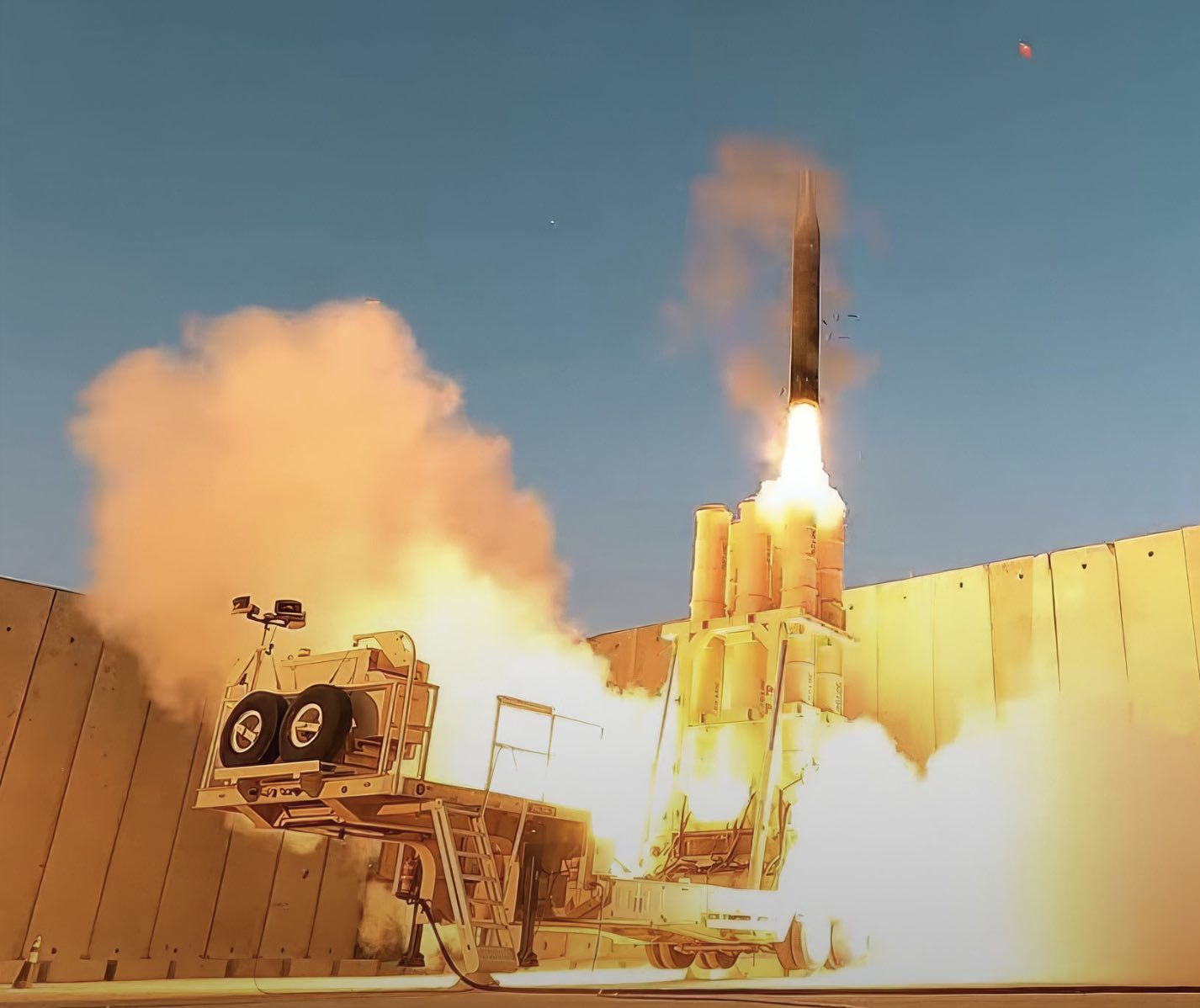
Israel’s defence industry is preparing for a fresh wave of European orders for advanced air and missile defence systems, as governments across the continent accelerate military procurement in response to heightened concerns over Russia’s long-term strategic intentions.
Speaking at a defence briefing, senior officials indicated that demand for systems such as Arrow, David’s Sling and Iron Dome derivatives is expected to rise further, with at least one significant new contract anticipated in the coming weeks. The expectation reflects a broader reassessment among NATO members of their vulnerability to ballistic and cruise missile threats exposed by Russia’s war in Ukraine.
The shift marks another stage in Europe’s rearmament cycle, which has gathered pace since 2022 but has recently broadened from traditional platforms such as tanks and fighter aircraft to include integrated air defence networks capable of intercepting fast, high-altitude and short-range threats. Israeli systems, battle-tested in multiple regional conflicts, are increasingly viewed by European planners as a proven and rapidly deployable solution.
Germany has already become a central customer. Berlin’s acquisition of the Arrow 3 system, developed jointly by Israel Aerospace Industries and the US Missile Defence Agency, was widely seen as a watershed moment in European missile defence strategy. Capable of intercepting ballistic missiles outside the Earth’s atmosphere, Arrow 3 offers a high-altitude shield designed to counter threats comparable to Russia’s most advanced long-range systems.
Finland, meanwhile, has opted for the medium-range David’s Sling system, while other NATO members are exploring layered combinations of US, European and Israeli technologies to build multi-tiered defensive coverage. The emphasis on integration reflects growing concerns that no single system is sufficient to address the diversity of missile and drone threats now shaping modern warfare.
Industry officials in Israel argue that the European market is entering a structural phase of demand rather than a temporary procurement spike. They point to persistent geopolitical uncertainty, the lessons drawn from Ukraine’s air defence shortages, and the rapid evolution of missile and drone capabilities as factors underpinning long-term procurement cycles.
The war in Ukraine has been central to this shift. Russia’s sustained use of ballistic missiles and large-scale drone salvos has exposed gaps in European stockpiles and underscored the difficulty of maintaining continuous air defence coverage during protracted conflict. In response, several European governments have increased defence budgets and accelerated joint procurement initiatives under NATO coordination.
At the same time, the commercial dynamics of the global defence market are shifting. Supply chain constraints, rising production costs and competing demand from multiple theatres have created bottlenecks in Western air defence manufacturing. Israeli firms, benefiting from established production lines and prior combat validation, are positioning themselves as flexible partners able to deliver systems more quickly than some of their competitors.
However, the expansion of Israel’s defence exports into Europe is not without political sensitivity. Arms procurement decisions are increasingly entangled with domestic debates over strategic autonomy, with some European policymakers wary of over-reliance on external suppliers. Others argue that interoperability with US and Israeli systems strengthens NATO’s overall deterrence posture at a time of renewed great-power rivalry.
Despite these tensions, momentum in favour of expanded missile defence investment appears firmly established. Analysts note that Europe’s evolving security doctrine now places greater emphasis on population protection, infrastructure resilience and rapid interception capability—areas in which Israeli systems have developed a strong operational reputation.
With further contracts expected before the end of the year, Israel’s defence sector is likely to remain a key beneficiary of Europe’s strategic recalibration. For governments on the eastern flank of NATO in particular, the calculus is increasingly driven by proximity to Russia and the perceived need to build credible, layered defences against a broadening spectrum of aerial threats.
As one European defence official recently observed privately, the focus is no longer on whether to expand air defence, but on how quickly it can be deployed. In that environment, Israel’s established systems are finding a receptive and increasingly urgent market.
Main Image: Administration for the Development of Weapons and Technological Infrastructure and Ministry of Defense Via Wikipedia.


Britain’s Consistent Message on Ukraine Carries Growing Weight at the OSCE