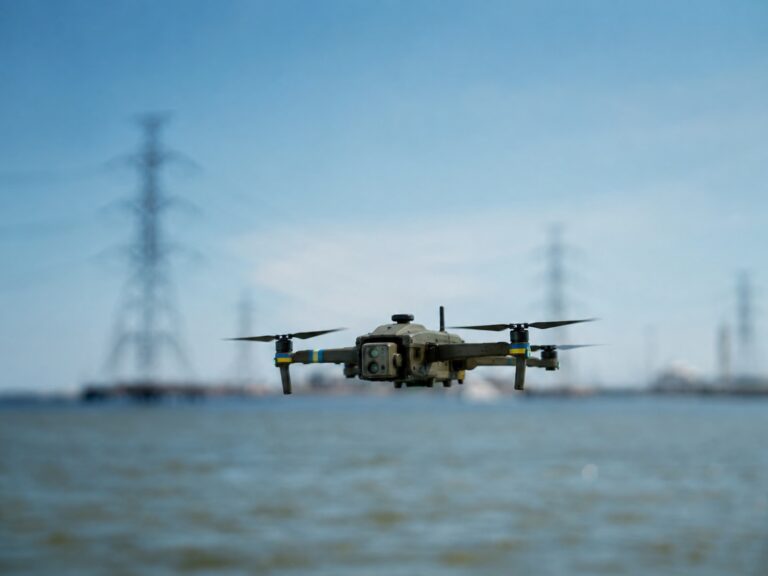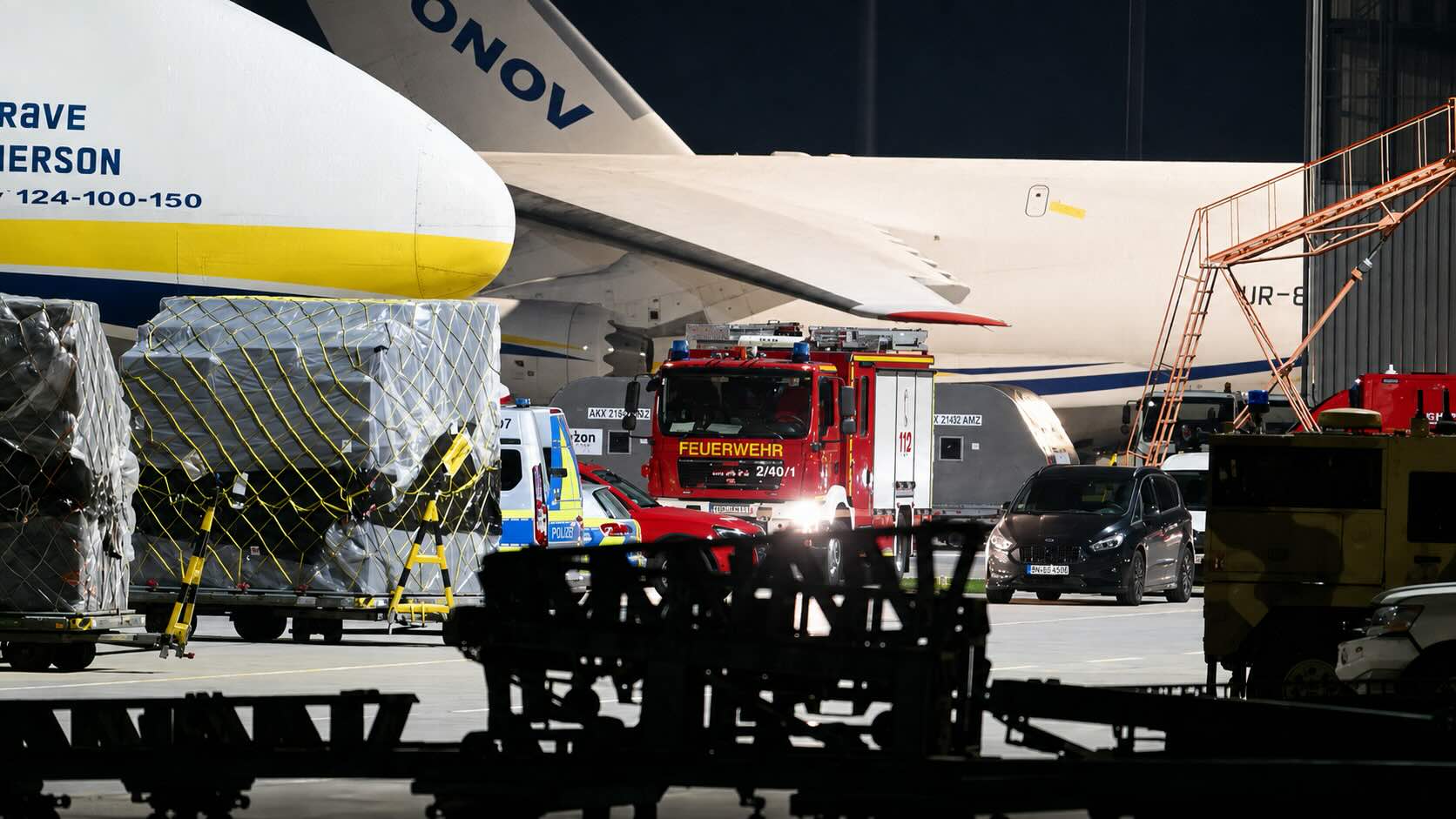
Germany’s federal prosecutor has taken control of an investigation into an explosive-laden drone found at Leipzig/Halle airport, turning an aviation-security incident into a national-security case at a hub used for NATO strategic airlift.
Germany’s federal prosecutor has taken over the investigation into a drone carrying professional explosives at Leipzig/Halle airport, raising the case from a local aviation incident to a suspected attack capable of affecting national security.
The federal authority said on 6 August that the unmanned aircraft carried an explosive charge and a detonator. Investigators are also examining a second suspected drone that collided with a cargo aircraft. No person, organisation or state has been publicly identified as responsible, and that absence of attribution is central to any responsible account of the case.
What is already clear is the significance of the location. Leipzig/Halle is one of Europe’s largest cargo airports and supports the Strategic Airlift International Solution, the multinational arrangement through which NATO members and partner countries obtain access to Antonov heavy-lift aircraft. These aircraft move loads that are too large or too heavy for conventional transport planes, including military vehicles and other outsized equipment.
The investigation therefore concerns more than the security perimeter of a commercial airport. It concerns a piece of dual-use infrastructure on which European defence planning depends.
Europe’s airports have become accustomed to disruptive drone sightings. Unauthorised aircraft can force runway closures, delay passenger services and create collision risks. The presence of a professionally prepared explosive device changes the character of the threat.
A drone equipped to detonate is not simply an aviation nuisance. It can be used against an aircraft, fuel installation, warehouse, communications system or other vulnerable point without requiring the operator to cross the airport fence. Even an unsuccessful attempt may reveal weaknesses in detection, command procedures and the division of responsibility between airport operators, police and military authorities.
The federal prosecutor assumes cases involving terrorism, espionage and offences directed against Germany’s internal or external security. Its intervention does not establish who was behind the incident, but it indicates that investigators consider the possible purpose and consequences serious enough to fall within the federal national-security remit.
That distinction matters. Speculation about a perpetrator may be tempting in the present European security climate, particularly after repeated warnings about Russian sabotage and hostile intelligence activity. Yet the evidence disclosed publicly does not support such attribution. The defensible conclusion is narrower: somebody appears to have brought an explosive-capable unmanned aircraft into the operating environment of a strategically important airport.
Leipzig/Halle’s role illustrates the blurred boundary between civilian and military infrastructure. Cargo terminals, roads, rail links, warehouses and fuel systems built for commercial traffic can become indispensable to defence mobilisation. Their openness and scale also make them difficult to protect like a closed military base.
The airport’s place in NATO logistics is particularly relevant because strategic lift is already a limited European resource. As Defence Matters reported in July, seven allies are pursuing a shared Airbus A400M fleet while NATO expands pooled tanker capacity. Those initiatives reflect a basic operational constraint: forces cannot reinforce Europe’s eastern flank if troops and heavy equipment cannot be moved quickly.
The Leipzig/Halle case exposes the other half of that equation. Aircraft availability is of limited value if the hubs through which equipment passes can be disrupted cheaply. Resilience therefore requires layered protection not only for aircraft but for runways, handling facilities, approach routes, data systems and the civilian contractors who keep the airlift chain functioning.
An attacker would not necessarily need to destroy a transport aircraft to produce a strategic effect. A credible explosive threat could close part of an airport while police search for additional devices. It could delay loading schedules, divert flights and impose costly checks across other hubs. The operational value of such disruption might exceed the physical damage caused.
European governments have invested heavily in sensors, electronic countermeasures and interceptors designed to defeat small drones. Airports, however, present unusually difficult conditions. Jamming can interfere with legitimate communications and navigation. Projectiles or interceptor drones can create hazards over populated areas. An unidentified aircraft may be harmless, criminal or hostile, and authorities must make that judgement in minutes.
The practical question is who owns the response. Civil aviation authorities manage flight safety; airport operators control much of the site; police investigate crimes; intelligence services assess hostile-state activity; and armed forces protect military missions. A dual-use hub sits across all of these jurisdictions.
The German investigation should therefore examine more than the origin of the devices. It should establish when they were detected, how information moved between agencies, whether a common operating picture existed and what authority was available to neutralise a threat. Those procedural details will determine whether similar incidents can be contained before they interrupt operations.
There is also a wider NATO issue. Strategic airlift depends on a network rather than a single airfield. Common protection standards, rapid incident reporting and alternative routing are necessary if an adversary can probe several civilian hubs at low cost. Exercises that test aircraft deployment without testing the security of the airports, roads and commercial systems supporting it would give an incomplete picture of readiness.
The federal inquiry may eventually identify a political, criminal or personal motive. Until then, officials and news organisations should resist turning the case into evidence for a preferred theory. Premature attribution could damage the investigation and obscure the immediate security lessons.
Those lessons are substantial even without a named culprit. A drone carrying professional explosives reached an airport embedded in NATO’s heavy-airlift system. A second suspected aircraft apparently struck a cargo plane. The event demonstrates that relatively accessible technology can threaten expensive and scarce logistics assets far behind any front line.
Europe’s defence debate tends to concentrate on weapons, ammunition and troop numbers. Leipzig/Halle is a reminder that deterrence also rests on the ordinary-looking infrastructure that allows those resources to move. Protecting it is now a national-security task in its own right.