The result may prove as consequential as the arrival of radar, stealth or nuclear deterrence.
While public attention remains fixed on drones and artificial intelligence, military strategists are increasingly preoccupied by a more profound technological shift — one that could alter the balance of power not through explosive force, but through information dominance. Quantum sensing, quantum navigation and quantum encryption are emerging as the foundations of a new strategic competition between the United States, China and Europe.
Unlike many fashionable defence concepts, the military logic behind quantum technology is straightforward. Modern warfare depends upon invisibility, precision and secure communication. Quantum systems threaten to disrupt all three.
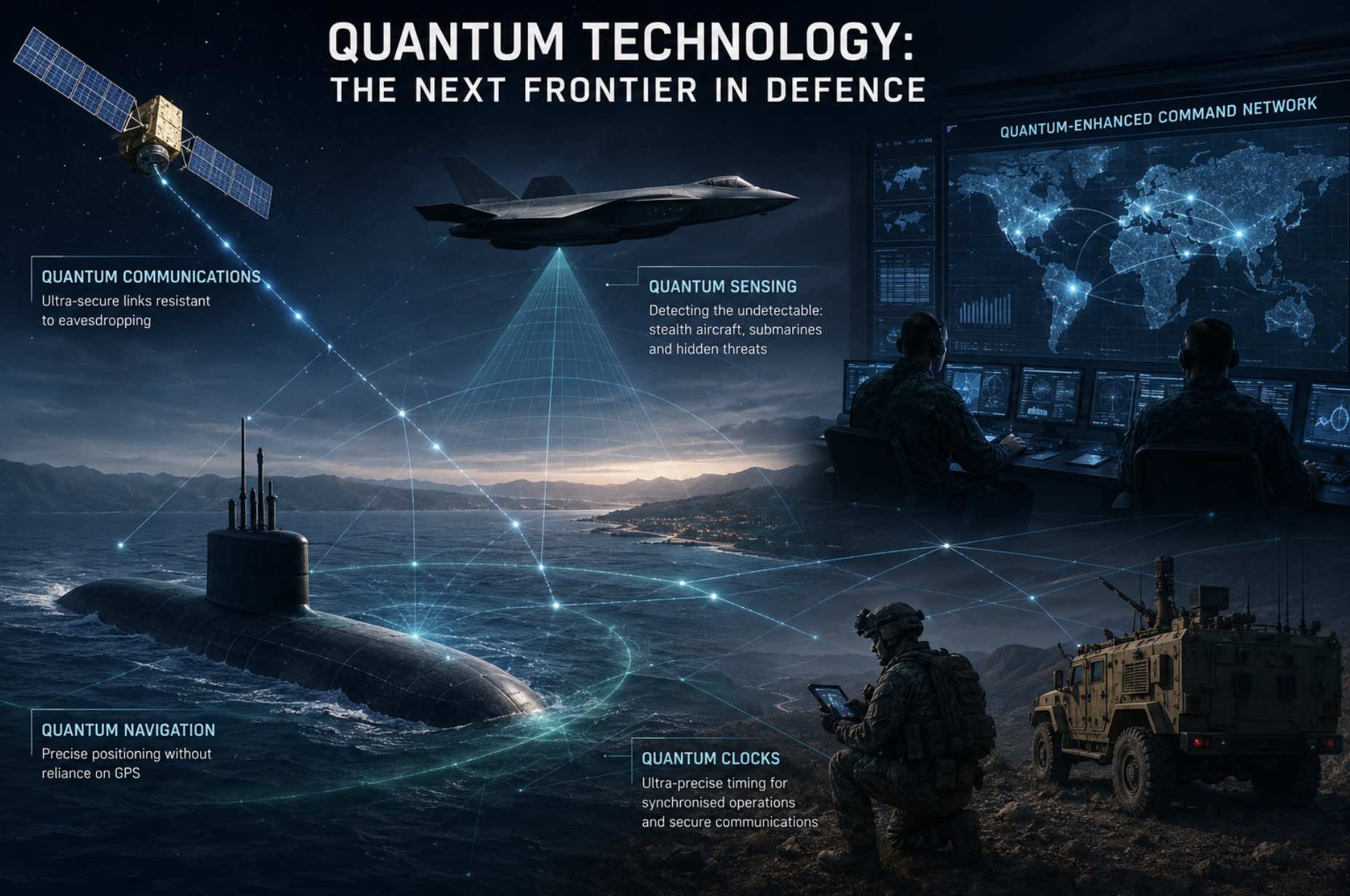
At the heart of the excitement lies quantum sensing. Traditional military sensors operate within the limits of classical physics. Quantum sensors exploit the behaviour of subatomic particles to achieve extraordinary levels of precision. In practical terms, this could eventually allow militaries to detect objects previously regarded as effectively invisible.
Submarines are an obvious example. The survivability of nuclear deterrence has long depended upon the stealth of ballistic missile submarines hidden beneath the oceans. If quantum sensors mature to the point where subtle gravitational or magnetic disturbances can be measured reliably, the strategic assumptions underpinning naval deterrence could be transformed.
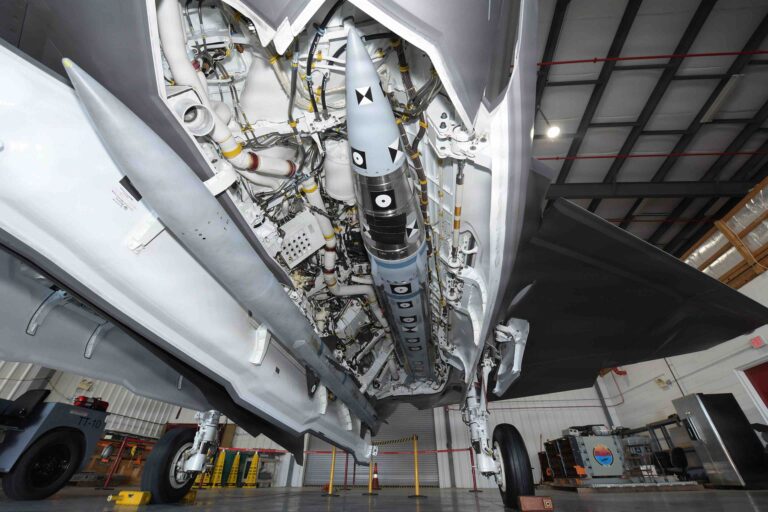
The same logic applies to stealth aircraft. Fifth-generation fighters such as the Lockheed Martin F-35 Lightning II rely heavily upon avoiding radar detection. Quantum radar systems, while still experimental, are being studied precisely because they may reduce the effectiveness of conventional stealth technologies.
China has invested heavily in this area. Beijing views quantum technology not merely as a scientific prestige project, but as a means of offsetting traditional Western military advantages. The country’s rapid progress in quantum communications and satellite systems has attracted close scrutiny in Washington. Meanwhile, the Pentagon has expanded funding programmes aimed at preventing strategic surprise in what American officials increasingly describe as a “post-GPS” battlespace.
That phrase is significant.
One of the most immediately useful military applications of quantum technology is navigation. Western armed forces have become deeply dependent upon satellite positioning systems such as GPS. Yet modern conflicts have demonstrated how vulnerable those systems are to jamming and spoofing. Russia’s extensive electronic warfare activity in Ukraine has reinforced concerns that satellite navigation may not remain reliable during a high-intensity conflict between advanced powers.
Quantum navigation systems aim to solve that problem by allowing submarines, aircraft and missiles to determine their position independently, without relying on external satellite signals. Using ultra-sensitive quantum accelerometers and atomic clocks, these systems could maintain remarkably accurate positioning even in heavily contested environments.
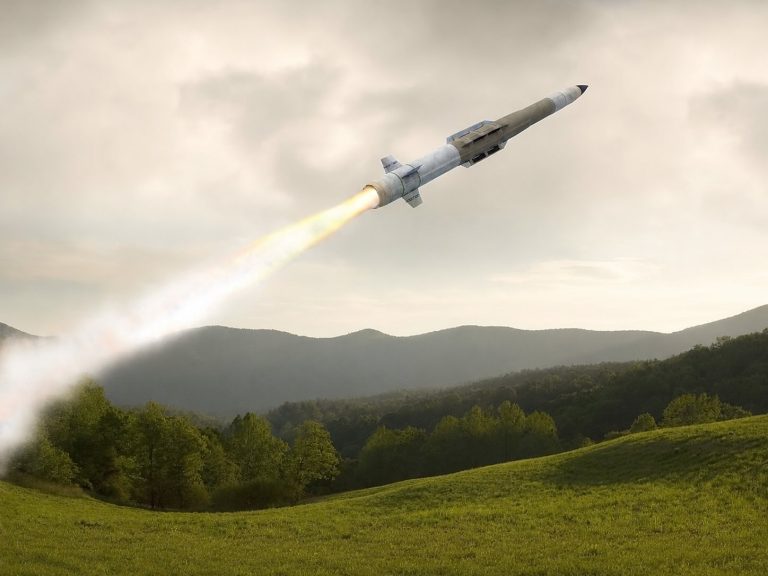
For naval powers in particular, the implications are enormous. A submarine capable of navigating silently for extended periods without surfacing or relying on satellite communication would gain a substantial operational advantage. Likewise, long-range missiles could become significantly harder to disrupt electronically.
The geopolitical consequences are difficult to overstate. Much of the modern Western military system rests upon the assumption of information superiority: better surveillance, better communications and better targeting. Quantum systems threaten to make those advantages less secure and potentially more widely distributed.
The race is therefore no longer confined to scientific institutions. It has become industrial.
Governments are now funnelling billions into national quantum strategies. The European Union, anxious not to be squeezed between American and Chinese technological ecosystems, has begun integrating quantum technologies into its broader defence industrial planning. Brussels increasingly views quantum research as a strategic sovereignty issue rather than merely a commercial opportunity.
Britain, too, retains important strengths. The UK possesses world-class university research capabilities in quantum physics and photonics, alongside a growing ecosystem of defence-oriented start-ups. Yet as with artificial intelligence and semiconductor manufacturing, the challenge may lie less in scientific excellence than in scaling industrial production quickly enough to remain strategically relevant.
There are, however, reasons for caution.
Quantum technology remains vulnerable to hype. Defence ministries have a long history of overspending on concepts that mature far more slowly than anticipated. Truly operational quantum radar, for instance, may still be years — perhaps decades — away. Many systems currently discussed in strategic circles remain experimental and commercially immature.
Moreover, quantum technologies are unlikely to produce a single dramatic “Sputnik moment”. Their impact will probably emerge gradually through incremental advantages in sensing, communications and navigation. In that sense, the comparison with artificial intelligence may be more useful than comparisons with nuclear weapons.
Still, the direction of travel is unmistakable. Warfare is becoming increasingly defined not by the size of armies or even the sophistication of individual platforms, but by the ability to gather, process and protect information faster than rivals.
Quantum technology sits squarely at the centre of that evolution.
The countries that master it first may not simply build better weapons. They may reshape the invisible architecture upon which modern military power itself depends.
Ukrainian Drone Maker Frontline Signs Strategic Agreement with Quantum Systems