That argument becomes harder to sustain when military cooperation with Moscow is not merely preserved but actively deepened.
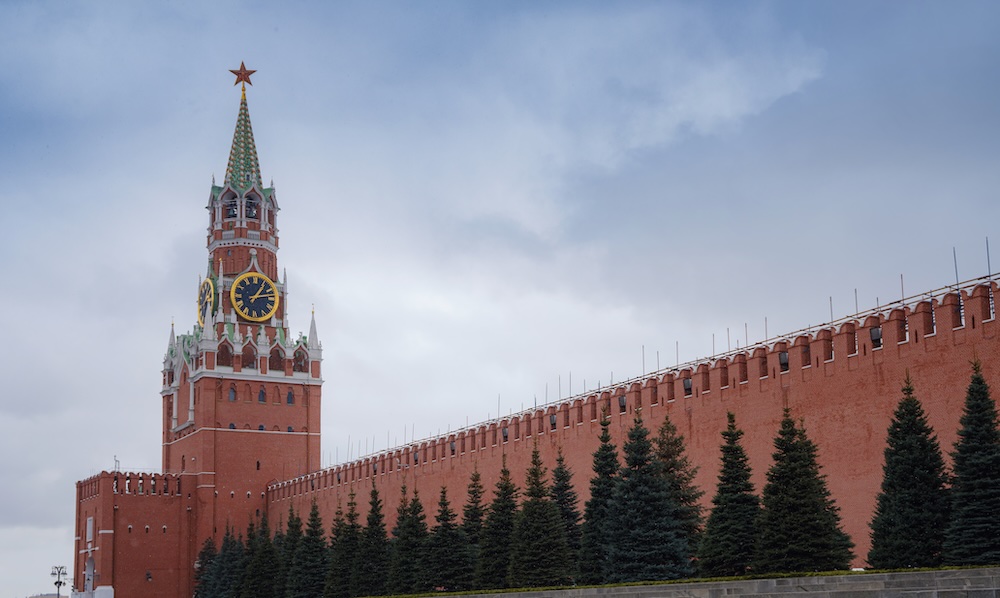
Lieutenant General Lawrence Mbatha, chief of the South African Army, has travelled to Moscow for talks that Russia says resulted in agreements to strengthen cooperation between the two countries’ land forces. The discussions reportedly covered joint projects intended to improve combat readiness, while the South African delegation was also scheduled to visit Russian military academies and defence companies. This was not an accidental encounter on the margins of an international conference. It was a deliberate military engagement, and reportedly Mbatha’s second official visit to Russia.
The Kremlin’s interpretation of the meeting is especially revealing. Colonel General Alexander Matovnikov, Russia’s deputy commander-in-chief of land forces, praised South Africa’s political and military leadership for what Moscow described as its firm position on Russia and for sharing a vision of a “multipolar world”.
That language should concern Western governments.
“Multipolarity” is often presented as an innocuous demand for a world in which power is distributed more evenly. In Moscow’s vocabulary, however, it frequently means something more politically consequential: resistance to Western institutions, dilution of the rules-based order and the creation of alternative networks through which Russia can retain influence despite diplomatic isolation and economic sanctions.
South Africa may believe it is balancing between competing powers. Russia appears to believe it is gaining a strategically important partner.
The distinction matters.
Pretoria is not an insignificant state on the periphery of global affairs. It is Africa’s most industrialised major economy, a leading member of BRICS and a country whose diplomatic choices carry influence far beyond its borders. It also occupies a strategically valuable position at the southern tip of Africa, adjacent to maritime routes connecting the Atlantic and Indian Oceans.
For decades, Western governments have regarded South Africa as a difficult but indispensable partner. Its democratic institutions, economic weight and regional influence made engagement preferable to isolation. Even when Pretoria adopted positions that frustrated Washington, London and Brussels, the assumption remained that the relationship rested on a broad foundation of shared interests.
The Moscow visit should prompt a reassessment of that assumption.
Reassessment does not mean treating South Africa as an enemy. Nor does it require demanding that Pretoria abandon its historical ties with Russia or surrender its sovereign right to conduct an independent foreign policy. Such demands would be counterproductive and would merely reinforce the argument that the West sees African states as geopolitical clients.
But independence carries responsibilities. A country cannot reasonably expect privileged access to Western security partnerships while simultaneously deepening military cooperation with a state engaged in a prolonged war against a European neighbour and confronting the West across multiple strategic theatres.
The question is no longer whether South Africa has the right to maintain relations with Russia. Of course it does. The question is whether Western governments should continue to treat South Africa as a trusted security partner without examining the risks created by its growing military relationship with Moscow.
Those risks are practical rather than merely symbolic.
Military cooperation can involve doctrine, training, operational methods, communications, logistics, procurement and access to defence-industrial expertise. Even apparently limited exchanges can create channels through which sensitive knowledge, technology or institutional insight may travel. The greater the overlap between Western and Russian defence relationships, the greater the need for scrutiny.
Western governments should therefore conduct a systematic review of defence engagement with Pretoria. Existing intelligence-sharing arrangements should be examined. Access to sensitive military technology should be assessed case by case. Joint exercises, training programmes and defence-industrial partnerships should be subjected to clearer security safeguards.
This need not be punitive. It is simply prudent.
The West routinely applies such caution when states develop close military relationships with China or Russia. South Africa should not receive an exemption merely because Western policymakers remain attached to an older image of the country as a natural democratic partner.
Indeed, the danger of complacency is that it encourages strategic ambiguity to become strategic dependence.
Russia has been expanding its security relationships across Africa, often presenting itself as an alternative to Western powers whose influence has declined in parts of the continent. Moscow’s broader approach has included military agreements, arms relationships and security cooperation designed to secure political access and long-term influence.
South Africa’s position is different from that of fragile or military-led states seeking immediate security assistance. It possesses established institutions and substantial diplomatic agency. That makes its decision to deepen military ties with Moscow more significant, not less.
Pretoria may argue that it is engaging Russia while retaining relationships with the West. Yet neutrality is not defined solely by diplomatic language. It is judged by conduct, particularly when military institutions are involved.
There is also a question of reciprocity.
If South Africa expects Western governments to respect its strategic autonomy, it should recognise that the West also has legitimate security interests. European and North American governments are entitled to decide which partners can be trusted with sensitive capabilities and which relationships require tighter controls.
Trust is not an entitlement. It is a calculation based on behaviour.
The appropriate response is therefore neither outrage nor disengagement. The West should maintain diplomatic contact, preserve economic ties and continue to work with South Africa on regional stability, trade and development. But security cooperation should no longer proceed on autopilot.
Pretoria should be asked to explain the scope of its military agreements with Moscow. Western governments should seek assurances regarding technology transfers, intelligence exposure and the protection of sensitive information. Future defence cooperation should be calibrated according to the answers received.
South Africa’s leaders may dismiss such concerns as evidence of Western arrogance. That would be a mistake.
The country has chosen to strengthen military relations with Russia at a moment when Moscow is actively seeking to construct alternative security networks and challenge Western influence. That choice has consequences.
Non-alignment cannot mean enjoying the benefits of every partnership while accepting none of the obligations that accompany them. If Pretoria wishes to position itself between competing geopolitical blocs, it must accept that other governments will reassess the level of trust they can reasonably extend.
South Africa is entitled to pursue its own interests. The West is equally entitled to protect its security.
The Moscow visit does not require a rupture. It does require a reckoning.
China, Russia and Iran join South Africa for BRICS naval drills off Cape Town