President Volodymyr Zelenskyy's demand that Belarus remove equipment used in attacks on Ukraine within a week highlights the continuing role of Belarus as a rear-area platform for Russian pressure on Ukraine and NATO's eastern flank.
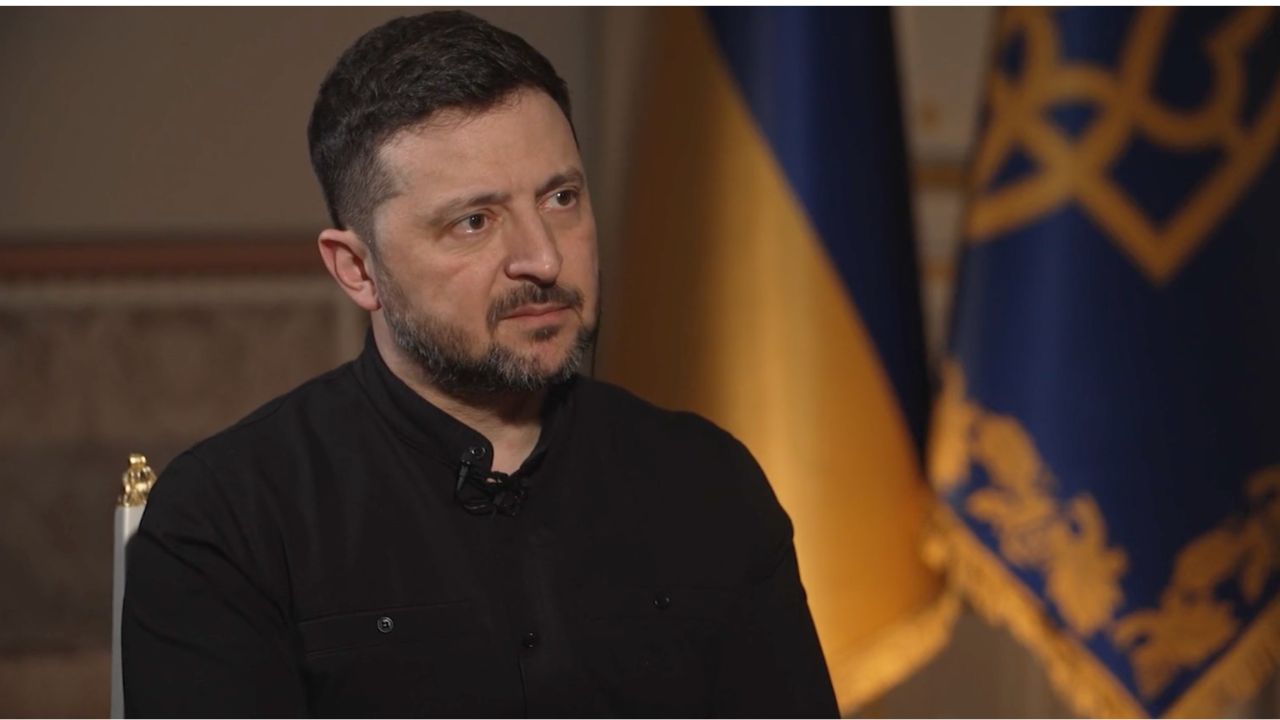
President Volodymyr Zelenskyy’s warning that Belarus should remove equipment used in attacks on Ukraine within one week has put the spotlight back on one of the war’s most important operational geographies: Belarus as a rear area for Russian pressure.
Reuters reported on 19 June that Zelenskyy issued the demand, making clear that Kyiv views Belarusian territory not as a passive neighbour but as an enabling platform for strikes against Ukraine. The warning comes as Russia continues to launch missile and drone attacks against Ukrainian cities and critical infrastructure, while NATO’s eastern members remain exposed to spillover risk.
The statement should not be read as a diplomatic quote alone. It is a signal about geography, air defence and escalation.
Belarus has been central to Russia’s war since the opening phase of the full-scale invasion, when Russian forces used Belarusian territory for the failed drive toward Kyiv. Even after Russian ground forces withdrew from northern Ukraine, Belarus remained part of Russia’s military pressure system.
The country’s airfields, radar sites, logistics routes and military infrastructure matter because they sit close to Kyiv, northern Ukraine, Poland and the Baltic region. Equipment positioned there can shorten warning times, complicate Ukrainian air-defence planning and force Kyiv to allocate sensors and interceptors away from other fronts.
For Ukraine, that creates a persistent rear-area threat. For NATO, it places pressure close to alliance borders without necessarily crossing the threshold of a direct Russian or Belarusian attack on allied territory.
Zelenskyy’s one-week demand matters because Ukraine’s air-defence system is already under continuous stress. Russia’s strike campaign forces Kyiv to defend cities, energy infrastructure, military sites and logistics routes with a limited number of interceptors.
If Belarusian territory is used to host or support strike assets, Ukraine must watch the northern axis more closely. That means radar coverage, fighter readiness, mobile air-defence placement and command attention. The cost is not only the weapons fired. It is the constant requirement to treat the Belarusian direction as live.
Defence Matters has previously warned that NATO’s rear areas can no longer be treated as safe assumptions, especially as long-range strikes, drones and hybrid threats reshape the European security environment. The Belarus issue belongs in the same category. It is not a front-line trench problem. It is a theatre-level warning problem.
Belarus also matters because of its position against NATO’s eastern flank. Poland, Lithuania and Latvia all have direct exposure to the Belarusian security environment. Any escalation involving Belarus would immediately affect allied air policing, border security, military mobility and political decision-making.
That does not mean NATO is about to enter the conflict. It does mean alliance planners must account for Belarus as a potential source of air, missile, drone and hybrid pressure. Russian and Belarusian forces do not need to cross NATO borders to force allied reactions. They can create alert conditions, test radar coverage, support strikes on Ukraine or generate border pressure.
For Poland and the Baltic states, the Belarusian rear area is not theoretical. It sits next to their territory and close to key reinforcement routes.
Zelenskyy’s demand is also an escalation signal. Kyiv is telling Minsk that enabling attacks has consequences and that the distinction between Russian and Belarusian responsibility cannot remain blurred indefinitely.
That message is aimed at several audiences. It warns Belarusian authorities. It tells Russia that Ukraine is watching rear-area infrastructure. It reminds NATO that northern air defence remains part of the wider war. And it signals to Ukrainian citizens that Kyiv is not ignoring the Belarusian dimension of the threat.
The challenge is credibility. Ukraine must decide what it is prepared to do if the demand is ignored. A direct strike on Belarusian territory would carry serious escalation risks. At the same time, repeated warnings without consequence could weaken deterrent value.
Belarus is unlikely to disappear from the war calculus. Even if Minsk avoids sending large ground forces into Ukraine, its territory can still support Russian operations. That is enough to keep Ukraine’s northern defence posture under pressure.
For NATO, the lesson is broader. Eastern-flank security cannot be understood only through Russian territory. Belarus, Kaliningrad, the Black Sea, occupied Crimea and the airspace around Ukraine all shape the warning picture.
Zelenskyy’s ultimatum is therefore less about one week than about a continuing problem: Russia’s war is supported by rear areas that sit close to NATO territory and force Ukraine to defend in multiple directions.
That is why the Belarus warning matters. It shows that rear-area air defence is not a secondary issue. It is becoming one of the core operational questions of the war.