

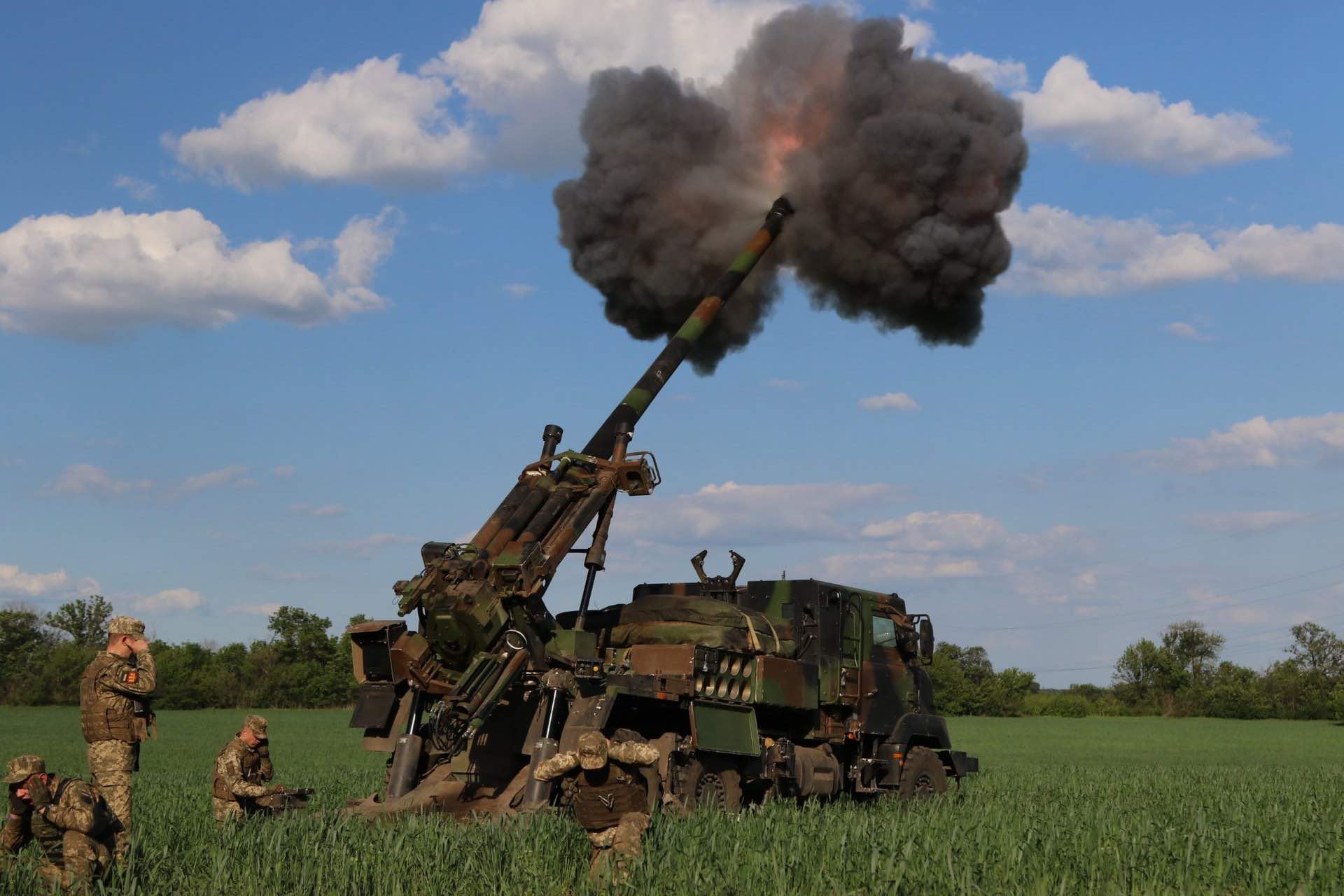
Yet wars are not sustained by deliveries alone. They are sustained by maintenance — the unglamorous, painstaking labour that keeps machines fighting long after their first encounter with the battlefield.
This week Britain quietly acknowledged a significant evolution in its support for Kyiv. For the first time, the government has confirmed the existence of British-backed military maintenance facilities operating inside Ukraine itself — a network designed to repair damaged equipment and return it swiftly to combat.
The disclosure, made by the Ministry of Defence, reveals that four such facilities are already functioning across Ukraine, with a fifth under development. Staffed by a combination of British contractors and Ukrainian engineers, these sites form part of a system intended to keep Western-supplied weaponry operational in the face of relentless battlefield attrition.
It is, in many respects, a practical response to the brutal arithmetic of modern war. Equipment breaks down. Vehicles are damaged by artillery fragments or drone strikes. Guns wear out after months of intensive firing. Without nearby repair capacity, such equipment must be transported abroad — a slow and cumbersome process that can take weeks or months.
By situating maintenance facilities inside Ukraine, Britain and its partners have sought to collapse that timeline. Armoured vehicles, artillery systems and support equipment can now be repaired close to the front and returned to service far more quickly.
The range of equipment being serviced illustrates the diversity of the Ukrainian arsenal. Engineers are repairing British-donated CVR-T armoured reconnaissance vehicles, Husky support vehicles, L119 light artillery pieces and AS-90 self-propelled guns. In addition, the facilities are capable of working on older Soviet-designed equipment still widely used by Ukrainian forces.
There is also a multinational dimension. British and Swedish cooperation allows the same repair network to service Sweden’s Archer artillery system — another weapon supplied to Ukraine in response to Russia’s invasion.
For Kyiv, the advantages are obvious. Ukraine’s armed forces operate in conditions of extraordinary strain, often pushing equipment well beyond its designed operational limits. Artillery pieces fire thousands of rounds in weeks. Armoured vehicles are driven continuously across harsh terrain. The difference between repairing a vehicle in days rather than months can determine whether a unit holds the line or withdraws.
The facilities also reveal how Western assistance to Ukraine has become steadily more embedded since Russia’s full-scale invasion in 2022. Initially, military aid largely consisted of weapons transfers and training programmes abroad. Over time, however, logistical and industrial support has grown increasingly sophisticated.
Britain has played a prominent role in that shift. Its military training programme for Ukrainian recruits — conducted largely on British soil — has already instructed tens of thousands of soldiers under the multinational initiative known as Operation Interflex.
The maintenance facilities represent another stage in the same trajectory: deeper involvement, but carefully calibrated to avoid direct combat deployment.
Such arrangements inevitably carry political and strategic sensitivities. Western governments have been cautious about revealing operational details that might expose facilities or personnel to Russian attack. That helps explain why the network has remained undisclosed until now.
Even so, the announcement underscores a broader truth about the war’s trajectory. Nearly four years after Russia’s invasion, the conflict has hardened into a protracted industrial struggle — one in which logistics and repair capacity can matter as much as firepower.
Indeed, military planners have long understood that maintenance is the quiet determinant of battlefield endurance. A tank or artillery piece that cannot be repaired quickly is, in effect, lost — even if its damage is minor.
In that sense, the British initiative mirrors lessons drawn from previous wars, where the ability to repair equipment close to the front proved decisive. During the Second World War, mobile repair units kept Allied armour fighting across Europe; today’s Ukrainian facilities are their modern equivalent, though operating amid the dangers of drone surveillance and precision missile strikes.
For Britain, the project also carries a domestic dimension. The facilities are run by British defence firms working alongside Ukrainian specialists, strengthening industrial links that London hopes will endure beyond the war.
There is, moreover, an implicit signal of long-term commitment. Establishing maintenance infrastructure inside Ukraine suggests that Western support is no longer conceived solely as emergency assistance but as part of a longer strategic partnership.
That partnership may yet evolve further. Plans under discussion among Western allies include deeper industrial cooperation and even the possibility of multinational security arrangements once hostilities eventually subside.
For now, however, the repair depots tell a simpler story. War, as ever, depends not only on courage and weaponry but on mechanics, engineers and supply chains.
Battles may capture headlines, but the quiet work of restoring damaged machines is what keeps an army in the fight.
Main Image: Ministry of Defence of Ukraine
England Hosts Ukraine’s First Overseas Drone Factory in Strategic Defence Move


Britain’s Consistent Message on Ukraine Carries Growing Weight at the OSCE