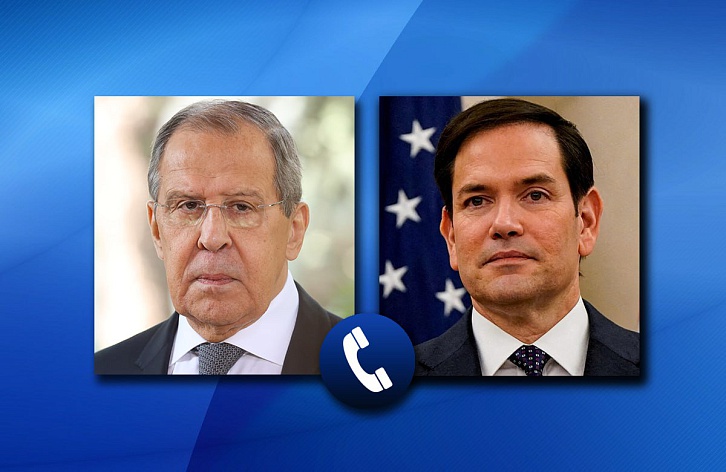
Russia’s Foreign Minister Sergei Lavrov has used a telephone call with US Secretary of State Marco Rubio to warn that Moscow is preparing further “systematic” strikes on Kyiv, while urging foreign diplomatic missions and citizens to leave the Ukrainian capital.
The call, held on 25 May at Lavrov’s request, followed a large-scale Russian attack on Ukraine overnight on 23–24 May. Ukraine’s Air Force said Russia launched 90 missiles and 600 drones during the assault, making it one of the largest combined attacks of the war. Kyiv suffered damage across multiple districts, with residential buildings, public infrastructure and cultural sites among those affected. Reuters reported that the barrage included missiles and drones, while the Kyiv Independent cited Ukrainian officials as saying four people were killed and almost 100 injured across Ukraine.
The Russian Foreign Ministry said Lavrov informed Rubio that Russian forces were beginning “systematic” strikes against facilities in Kyiv allegedly used by the Ukrainian Armed Forces, as well as “decision-making centres”. Moscow presented the move as a response to Ukrainian attacks on Russian-held territory and urged foreign citizens, including diplomats and staff of international organisations, to leave Kyiv.
The US readout of the call was brief. The State Department said Rubio spoke with Lavrov at the Russian minister’s request and that the two exchanged views on the war. It did not publicly adopt Moscow’s framing of the threatened strikes or endorse Russia’s call for foreign missions to leave Kyiv.
The timing of the call is significant. Moscow issued its warning after, not before, one of the heaviest attacks on Kyiv since the start of the full-scale invasion. This weakens any attempt to present the call as a conventional warning intended to reduce risk to diplomats. Instead, the language appears to serve two purposes: to test Washington’s diplomatic position and to build a political narrative around further strikes on the Ukrainian capital.
The reference to “decision-making centres” is also notable. The phrase has been used repeatedly by Moscow during the war, but it is not a precise legal term. International humanitarian law requires attacks to be directed at lawful military objectives and prohibits attacks that are indiscriminate or disproportionate. Russia’s statement did not provide verifiable details identifying specific military targets in Kyiv.
The immediate trigger cited by Moscow was a Ukrainian strike on Starobilsk, in Russian-occupied Luhansk region. Russian and Russian-installed officials described the target as a student dormitory and educational facility. Ukraine denied attacking civilians and said the strike targeted a Russian drone command unit. The competing claims have not been independently verified, although the incident has become central to Moscow’s justification for threatening further attacks on Kyiv.
Ukraine rejected Russia’s warning as coercive. In a statement, Ukraine’s Foreign Ministry said Moscow’s threats amounted to “shameless blackmail” and argued that Russia was effectively admitting that its strikes could endanger foreign diplomats and civilians in the capital. Foreign Minister Andrii Sybiha urged Kyiv’s partners not to yield to intimidation.
The European Union also rejected the warning. EU Ambassador to Ukraine Katarina Mathernova said the EU mission would remain in Kyiv, writing that Russia had again threatened diplomats and foreigners but that the EU was “not going anywhere”. Her comments were reported by EU Neighbours East.
Lavrov’s call is better understood as a political signal than as a legal warning. Its purpose appeared to be to test whether Washington was stepping back from mediation or merely pausing its involvement. By notifying the United States before further attacks, Moscow also appeared to be trying to shift part of the diplomatic burden onto Washington, making the US a direct recipient of Russia’s warning rather than a detached observer of subsequent events.
For Kyiv and its European partners, the larger issue is whether Moscow is trying to normalise attacks on the capital under diplomatic cover. For Washington, the call places renewed pressure on its role as intermediary. A restrained response risks being read in Moscow as diplomatic space for escalation, while a firmer response would signal that warnings to embassies cannot be used to legitimise strikes on a European capital.
The coming days will show whether Russia’s language was intended primarily as intimidation or as advance messaging before a broader campaign against Kyiv. Either way, the call has already served one Russian objective: it has moved discussion from the consequences of the 24 May attack to the terms on which Moscow says it may strike again.
First published on euglobal.news.