Rheinmetall's warning over a possible French exit from MGCS points to a wider problem: Europe's flagship defence projects are being weakened by industrial rivalry, budget pressure and national control disputes.
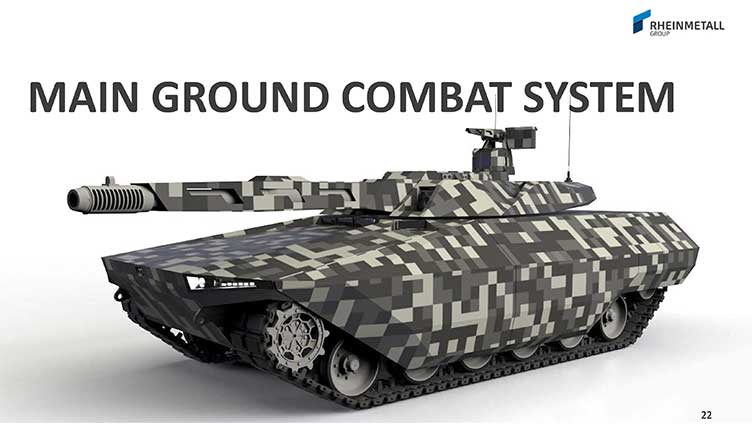
France could yet leave the Franco-German Main Ground Combat System programme, Rheinmetall chief executive Armin Papperger has suggested, raising fresh doubts over one of Europe’s most important future land warfare projects.
The warning, reported by Reuters on 13 June, came only days after the collapse of the Franco-German Future Combat Air System fighter project. Taken together, the two developments point to a deeper problem for European defence cooperation: governments agree on the need to rearm, but still struggle to share industrial control, intellectual property, export policy and procurement risk.
MGCS is not a marginal programme. It is intended to replace Germany’s Leopard 2 and France’s Leclerc main battle tanks, and to form the basis of a future European land combat architecture. If the project fractures, the consequences would reach beyond one vehicle. They would affect armoured warfare planning, industrial investment, interoperability and the credibility of Europe’s effort to build more sovereign defence capacity.
The logic behind MGCS is straightforward. France and Germany face the same broad security environment: Russia’s war against Ukraine has restored heavy land warfare to the centre of European military planning, while NATO’s eastern flank needs credible armoured forces, deep stocks, protected mobility and networked fires.
In theory, a shared next-generation tank programme should give Europe scale. It should reduce duplication, spread development costs, strengthen industry and create a common platform around which allies can organise future procurement. In practice, MGCS has repeatedly exposed the same tensions that have dogged other European defence projects.
Paris and Berlin do not always want the same thing from joint programmes. France tends to place high value on sovereign design authority, operational autonomy and export freedom. Germany, with Rheinmetall and KNDS Deutschland at the centre of its land systems base, has its own industrial priorities and a growing political interest in using rearmament to strengthen domestic production. Those priorities can be reconciled, but only if the governance model is clear and both sides believe they are receiving a fair industrial return.
Papperger’s comments matter because they make the risk explicit. A possible French exit is no longer only a background fear among analysts. It is being discussed by the head of one of Europe’s most important defence companies, at a moment when the continent is trying to convince itself that joint procurement can move faster than national programmes.
The timing is especially damaging because MGCS is now being judged in the shadow of FCAS. The fighter programme was supposed to show that France and Germany could build the next generation of air combat capability together. Instead, it became a case study in how strategic ambition can be undermined by disputes over leadership, workshare and technology control.
That pattern was already visible when Europe’s FCAS fighter jet ambitions crashed into national rivalries. Germany’s subsequent interest in alternative arrangements, including the politics around GCAP, has reinforced the impression that Europe is reorganising its defence-industrial map under pressure rather than by design.
MGCS now risks becoming the land-systems version of the same story. If France and Germany cannot hold together two flagship projects, the message to smaller European states will be simple: joint programmes promise strategic autonomy, but may also create delay, uncertainty and dependence on political compromises that can unravel.
The military stakes are real. The war in Ukraine has shown that tanks remain vulnerable but not obsolete. Modern armoured forces need active protection, drones, electronic warfare, secure communications, precision fires and integration with air defence. A future tank is therefore less a single platform than a node in a wider battlefield system.
If MGCS stalls, European armies may be forced into short-term upgrades of existing platforms or fragmented national purchases. That would keep production lines moving, but it would weaken the argument that Europe can consolidate its defence base around common systems. It would also complicate long-term procurement planning for states that need to decide whether to modernise Leopard fleets, wait for MGCS, or look elsewhere.
The industrial impact would be just as serious. Defence companies make investment decisions years ahead of production. They need clarity on requirements, funding and export prospects. A programme clouded by possible national withdrawal makes it harder to commit capital, retain skilled engineers and organise supply chains.
This is the same problem visible across Europe’s wider rearmament push. Funding is rising, but procurement remains politically fragmented. Defence Matters has reported how EU defence ministers are trying to strengthen the European Defence Agency as procurement pressure grows. MGCS shows why that pressure is so difficult to resolve: national governments still want European scale without surrendering decisive control.
The uncertainty around MGCS does not mean the project is doomed. Defence cooperation often survives crises, and public pressure can force governments back to the negotiating table. France and Germany still have powerful reasons to avoid another rupture, especially after the damage caused by FCAS.
But the warning is now part of the political record. If Paris walks away, Europe would lose more than a shared tank project. It would lose another piece of the argument that its largest defence-industrial powers can turn strategic necessity into practical cooperation.
That is why the MGCS dispute is stronger than a routine company story. It is a test of whether Europe’s defence revival can survive contact with budgets, factories, workshare and national pride. Rearmament is easy to announce. Building common systems is harder. MGCS may now show whether Europe has learned that lesson quickly enough.