Ukraine's wartime defence industry is forcing Europe to ask whether rearmament should be measured only by output, or also by whether factories can survive missile and drone attack.
Ukrainian defence firms and officials are urging European manufacturers to study Ukraine’s dispersed production model, arguing that centralised factories may be too vulnerable for the kind of missile and drone war now reshaping European security.
The warning, reported by Business Insider on 13 June, turns a familiar rearmament debate on its head. European governments have spent the past two years asking how to produce more shells, drones, missiles, air-defence systems and armoured vehicles. Ukraine’s experience suggests the next question is just as important: where should that production take place, and how exposed should it be?
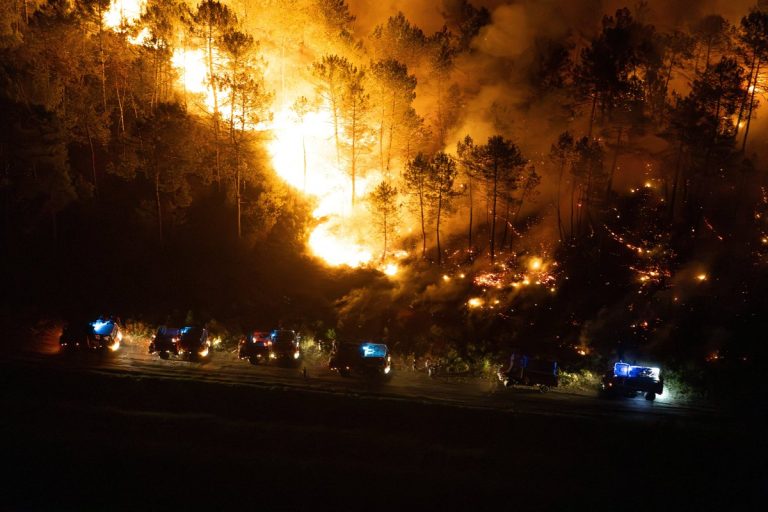
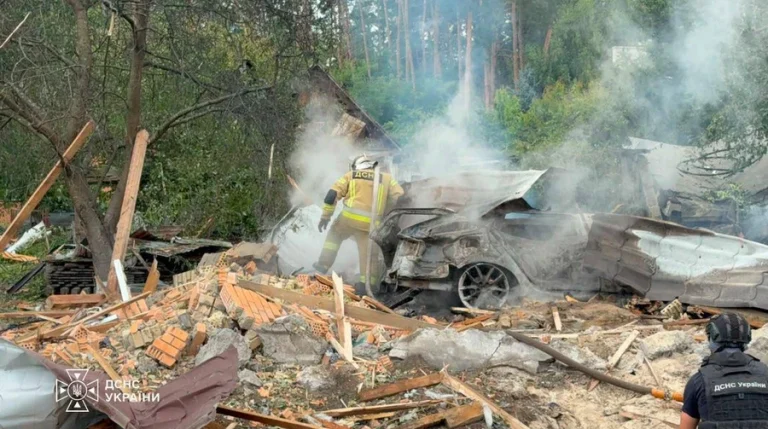
For Europe, this is no longer an abstract industrial-planning issue. Russia has repeatedly used missiles and drones to strike logistics hubs, energy infrastructure, repair facilities and defence-related sites. A future high-intensity conflict involving NATO territory would almost certainly include attempts to disrupt weapons production, transport routes and critical industrial nodes.
The dominant European conversation still focuses on output. Governments want more ammunition, faster procurement, larger framework contracts and production lines that can operate at wartime tempo. Those goals are necessary, but they assume that factories remain available once conflict begins.
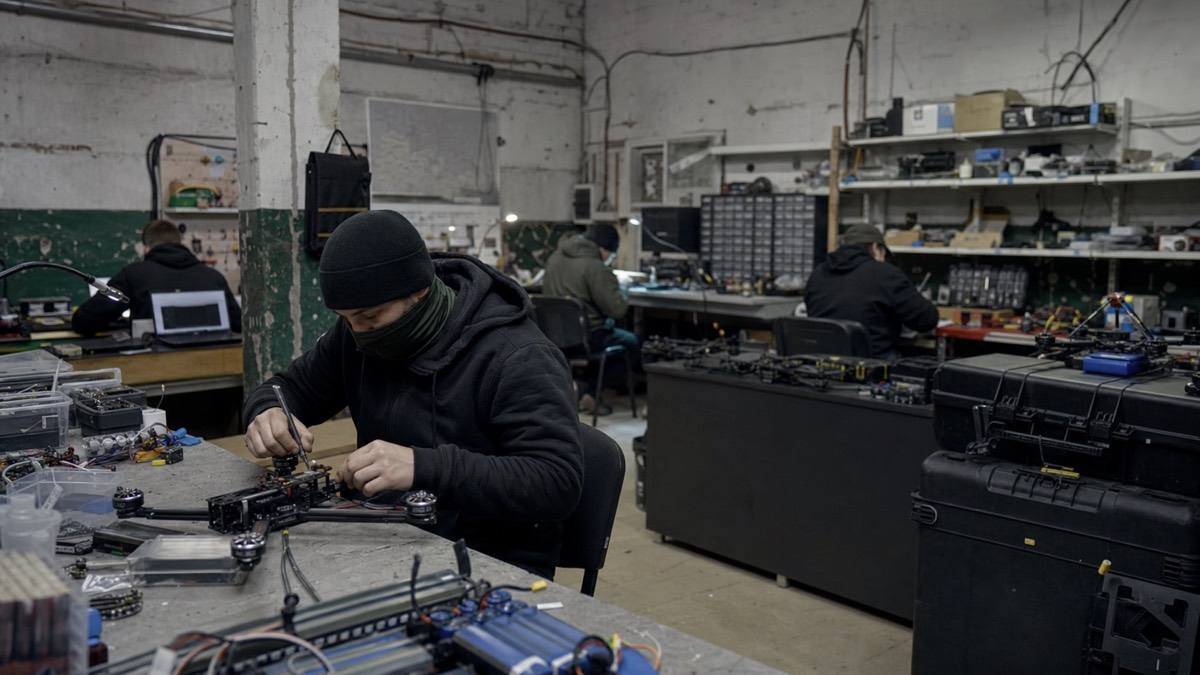
Ukraine’s model starts from a harsher premise. If an adversary can locate and strike a production site, that site may become a liability no matter how efficient it is in peacetime. Dispersed production, redundancy and rapid relocation are therefore not secondary design choices. They are part of survivability.
That has practical implications. A single highly efficient plant may make sense for cost control, quality assurance and workforce concentration. But in wartime, concentration creates target value. A more distributed network may be less elegant on a spreadsheet, yet harder to destroy in one strike. It can also allow production to continue even when individual facilities are damaged, electricity supply is interrupted or transport routes are under pressure.
This does not mean every European defence company should copy Ukraine mechanically. Western manufacturers operate under different regulation, labour rules, export controls and quality standards. Complex systems such as missiles, air defence radars or armoured vehicles cannot be scattered casually across improvised workshops. But Ukraine’s lesson is not improvisation for its own sake. It is resilience by design.
Ukraine has become a battlefield laboratory for defence adaptation. Its drone sector has expanded through a mixture of state demand, private engineering, battlefield feedback and rapid iteration. That experience has already changed allied thinking about cost, speed and scale.
Defence Matters has reported how Belgium moved to launch drone and interception-system production with Ukraine, and how Diehl’s talks with Ukraine point to a new phase in European missile production. The next stage of that learning process may be less about what Europe builds with Ukraine, and more about how Europe structures its own production base.
The distinction matters. European rearmament often treats Ukraine as a source of battlefield requirements or as a partner in fast-moving drone innovation. But Ukraine is also producing under attack. That makes its industrial experience relevant to the protection of European factories, not only to the design of battlefield equipment.
For NATO planners, the issue cuts across several categories: ammunition plants, drone assembly sites, missile production, repair depots, railway junctions, ports, fuel infrastructure and digital supply-chain systems. A production strategy that ignores survivability may increase peacetime capacity while leaving wartime sustainment exposed.
Centralisation is attractive because it reduces cost and simplifies control. It concentrates specialist workers, machinery, testing equipment and security procedures. It also helps governments monitor contracts and gives companies clearer investment logic.
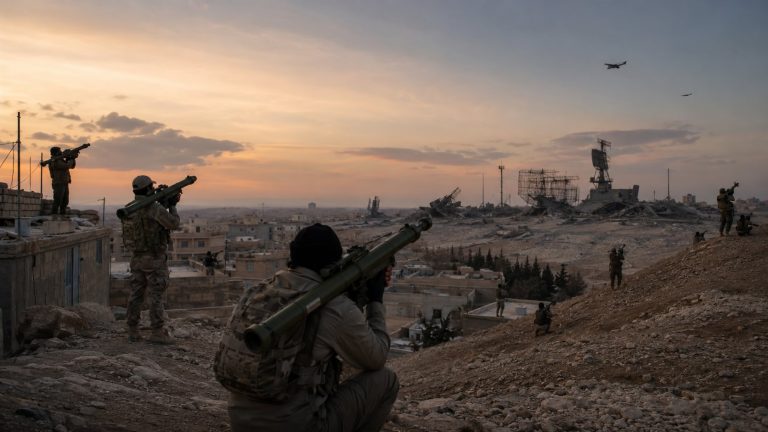
But modern strike systems are changing the risk calculation. Long-range missiles, cheap drones, commercial satellite imagery, signals intelligence and cyber reconnaissance make fixed industrial sites easier to identify and threaten. Even where air defence is strong, a defender may not be able to protect every critical node indefinitely.
Europe’s answer cannot simply be to surround every plant with missile interceptors. Air defence is expensive, scarce and already needed for cities, bases, ports, energy sites and deployed forces. Industrial resilience will require a broader approach: dispersed subassembly, duplicated tooling, protected storage, mobile repair capacity, hardened facilities, cyber protection and plans for rapid restart after attack.
This is where Ukraine’s experience collides with Europe’s procurement habits. Large defence programmes often reward scale, central management and long-term fixed infrastructure. Wartime resilience may require contracts that value redundancy, geographic spread and surge capacity even when those features look inefficient in peacetime.
The problem links directly to readiness. A European army can buy more systems, but if the factories that make spare parts, ammunition and drones are vulnerable, the force may not be sustainable in a prolonged conflict. The same logic applies to repair and maintenance. A damaged armoured vehicle is only useful if there is a resilient network capable of returning it to service.
The issue was visible in the wider debate over NATO readiness and industrial credibility. A recent Defence Matters analysis on the UK defence spending row argued that readiness now depends on factories, stockpiles and resilience as much as on headline budgets. Ukraine’s production model sharpens that point.
Europe’s rearmament debate is entering a more serious phase. Spending targets and procurement announcements are no longer enough. Governments must decide whether their defence-industrial base is built only for peacetime efficiency, or also for wartime survival.
Ukraine’s message is uncomfortable because it comes from practice rather than theory. A factory that cannot survive the first months of a missile and drone campaign cannot support a long war. If Europe is serious about deterrence, it must plan not only to build more, but to keep building under fire.