

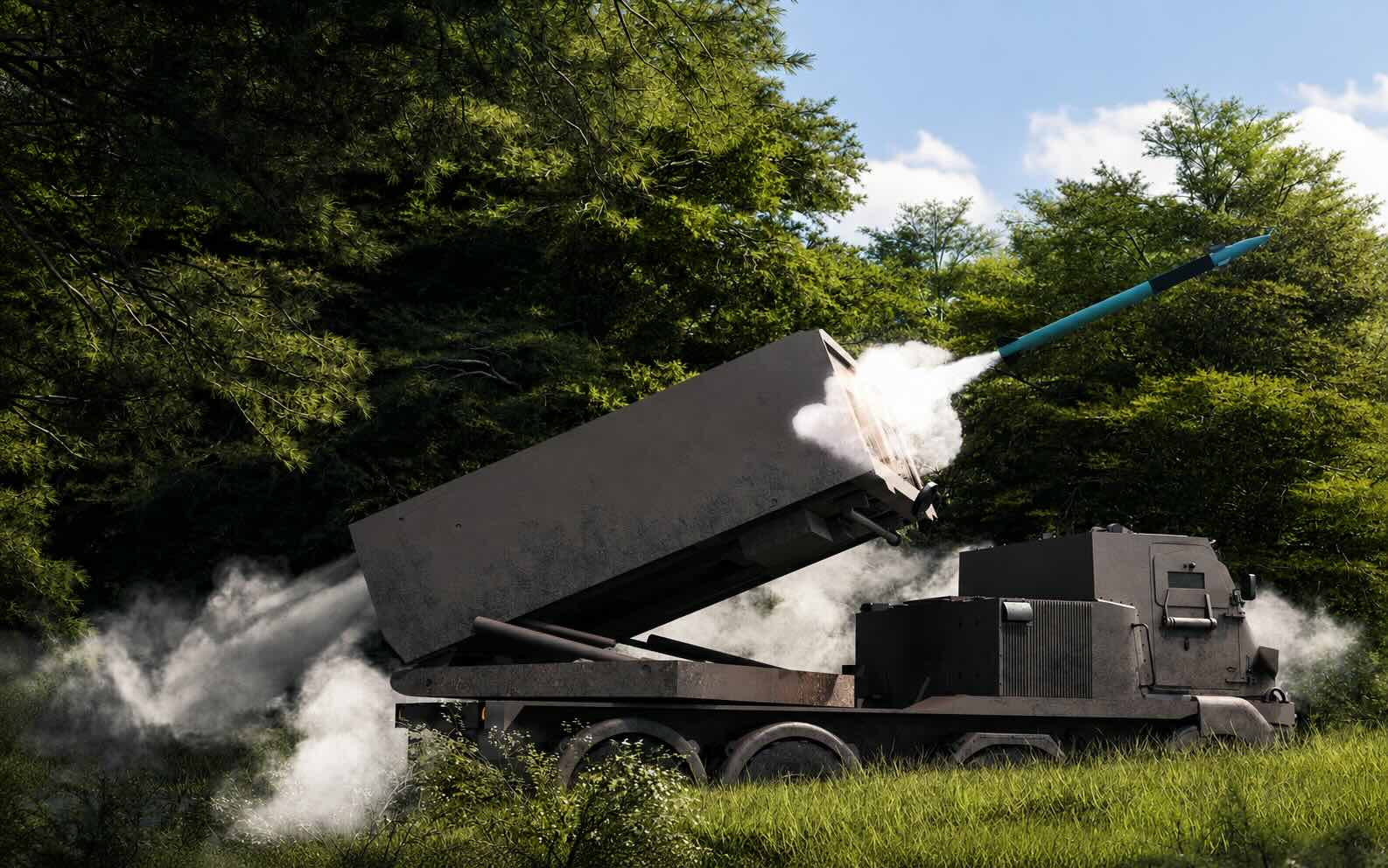
France’s move to enter exclusive negotiations with MBDA and Safran for a successor to its long-range rocket system signals that Europe’s deep-strike debate is moving from capability papers into procurement decisions.
France has entered exclusive negotiations with MBDA and Safran to develop a successor to its long-range rocket system, in a decision that points to a wider European shift from discussing deep-strike shortfalls to buying national capabilities.
Reuters reported on 15 June, citing France’s Armed Forces Minister at Eurosatory, that Paris had chosen the MBDA-Safran team for exclusive talks on the programme. The decision concerns the replacement of France’s existing long-range rocket capability and comes as European armies reassess land fires after Russia’s war against Ukraine exposed major gaps in range, stockpiles and industrial depth.
The importance of the decision is not simply that France has selected two national industrial champions. It is that long-range land fires are now moving into the same category as air defence, drones and ammunition: capabilities that European governments can no longer treat as future options. They are becoming procurement priorities.
Since 2022, European defence debates have repeatedly returned to the same problem. Ukraine has shown that long-range fires shape the battlefield far beyond the forward line. Missiles, guided rockets and drones have been used to hit ammunition depots, command posts, airfields, bridges, logistics routes and industrial targets. Russia has used depth fires to pressure Ukrainian cities and infrastructure. Ukraine has used its own long-range strike campaign to attack Russian supply chains and rear-area assets.
Many European armies entered this period with limited stocks, limited launcher numbers and a dependence on US systems for some of the most capable long-range land fires. That may have been acceptable in a lower-threat environment. It is harder to defend when NATO planning increasingly assumes that European forces must be able to deter Russia, sustain high-intensity operations and hold targets at distance.
France’s move therefore has a significance beyond its own army. It suggests that European states are beginning to convert the lessons of Ukraine into national procurement choices, even where broader multinational coordination remains unfinished.
The MBDA-Safran selection also reflects French industrial policy. Paris has long sought to preserve sovereign missile and precision-strike expertise, and both companies sit at the centre of France’s defence-industrial base. MBDA brings missile-system experience, while Safran’s background in guidance, propulsion-related technologies and precision weapons makes it a natural partner in a long-range fires programme.
That industrial logic matters because deep strike is not just about range. It requires guidance, survivability, warhead design, launch integration, targeting data, command systems and production capacity. A missile that exists only as a prototype does not solve a NATO shortfall. A system that can be built, stocked, maintained and integrated into alliance planning does.
This is where France’s decision connects to the wider European rearmament debate. Defence Matters recently examined how Diehl’s talks with Ukraine pointed to a new phase in European missile production. The French rocket decision sits in the same broader trend: Europe is trying to rebuild missile capacity not only by buying from allies, but by expanding its own industrial options.
Europe’s deep-strike problem is partly the legacy of post-Cold War assumptions. Many armies prioritised expeditionary operations, counter-insurgency, stabilisation missions and limited high-end stockpiles. The return of large-scale war has forced a different calculation. Rear areas are no longer safe, logistics hubs are targets, and long-range precision weapons are central to deterrence.
The result is a European deep-strike race that is less about prestige than necessity. France, Germany, Poland, the United Kingdom, Italy and other NATO allies are all examining how to build or acquire systems able to strike at greater range. Some initiatives are multinational. Others, like the French MBDA-Safran path, are strongly national in industrial character.
That creates both opportunity and risk. National programmes can move faster when governments are determined and industrial chains are clear. But too many disconnected systems could leave Europe with fragmented inventories, incompatible launchers and uneven stockpiles. The challenge for NATO will be to turn national procurement into usable alliance capability.
The war in Ukraine has also shown that exquisite systems are not enough. Long-range fires need mass. They need enough launchers, enough munitions, enough reloads and enough industrial surge capacity to remain relevant after the first phase of a conflict.
That is why France’s exclusive talks with MBDA and Safran should be judged not only by technical performance, but by production timelines and volumes. A successor system that arrives slowly, in small numbers, would do little to close Europe’s gap. A programme that can be produced at scale and linked to allied doctrine would be more strategically meaningful.
For France, the decision is a procurement milestone. For Europe, it is a signpost. The continent’s deep-strike shortfall has moved beyond seminar language. Governments are now choosing companies, shaping programmes and deciding how much sovereign industrial capacity they are prepared to fund.
The question is whether those decisions will add up to a coherent NATO fires architecture, or whether Europe will once again discover that national rearmament has moved faster than alliance integration.



Britain’s Consistent Message on Ukraine Carries Growing Weight at the OSCE