The United States’ push for what Defence Secretary Pete Hegseth has called “NATO 3.0” turns Europe’s burden-sharing debate into something more concrete: a force-planning test.
At a NATO defence ministers’ meeting in Brussels, Hegseth urged European allies to take greater responsibility for the defence of their own continent. The phrase “NATO 3.0” is politically useful, but the operational meaning is sharper. Washington is signalling that European governments should no longer assume that key US capabilities will automatically be available in every crisis.
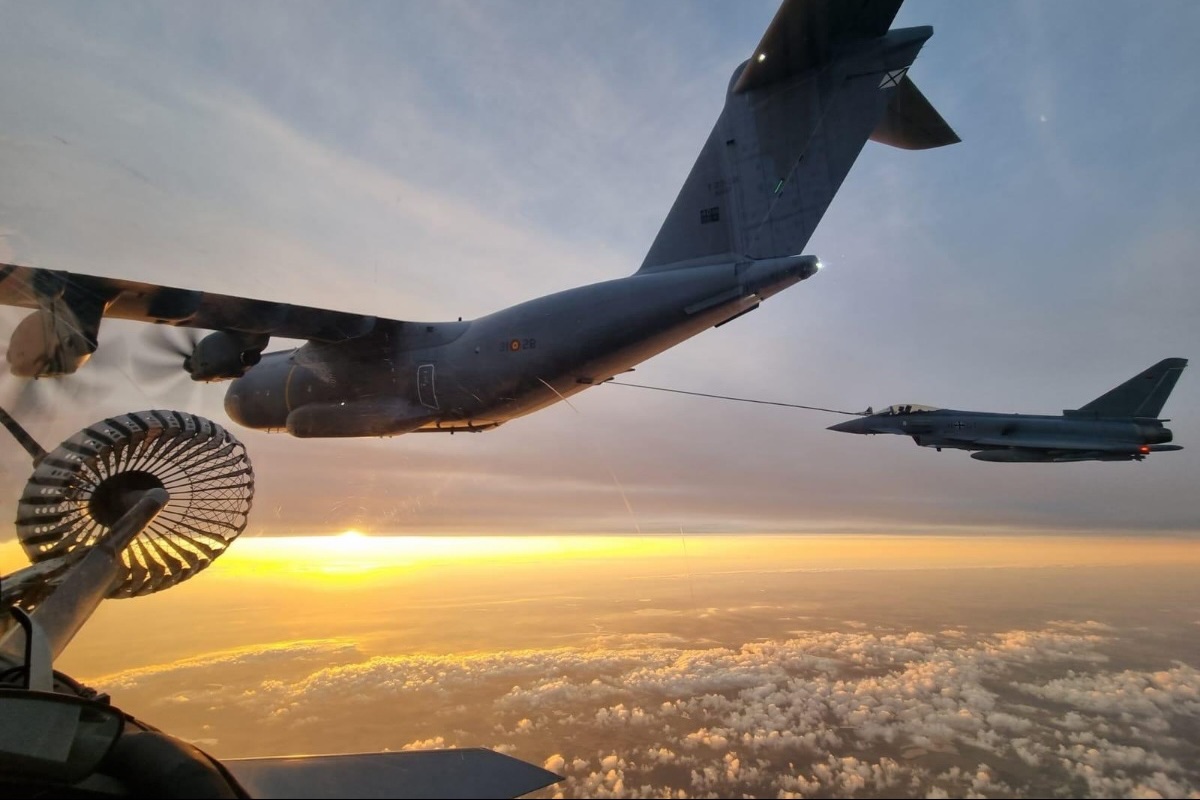
That does not mean the United States is leaving NATO. NATO Secretary-General Mark Rutte has downplayed the impact of US military cutbacks, stressing that no American troops are being withdrawn from Europe and that Washington’s nuclear deterrence remains in place. But the change affects planning assumptions. The US has indicated it will no longer automatically provide some high-value military assets, including aircraft carriers, fighter jets and refuelling aircraft, for NATO crises.
For Europe, that is a major shift. The issue is no longer whether allies can promise higher defence spending by a future summit deadline. It is whether they can generate the usable capabilities that make deterrence credible if US attention is divided between Europe, the Indo-Pacific and other theatres.
For decades, NATO’s European members benefited from a strategic comfort zone. The United States supplied much of the alliance’s most sophisticated enabling power: strategic airlift, aerial refuelling, intelligence, surveillance, reconnaissance, missile defence, command-and-control infrastructure, carrier strike capacity and high-end airpower.
European armies could therefore be smaller, less stocked and less integrated than the threat environment required, because US forces filled many of the gaps. Russia’s full-scale war against Ukraine already exposed the weakness of that model. Washington’s latest message makes the implication harder to avoid.
If US assets are no longer automatic, European allies must plan for the possibility that the first phase of a crisis could depend more heavily on their own forces. That means air policing, air defence, maritime security, logistics, munitions stockpiles, cyber defence, satellite support and reinforcement corridors can no longer be treated as secondary issues.
The “NATO 3.0” language should therefore be read less as branding than as an audit. It asks whether Europe can move from spending pledges to deployable military output.
The difference matters. A defence budget increase does not immediately create air-defence batteries, trained crews, ammunition reserves or spare parts. A procurement announcement does not guarantee maintenance capacity. A summit declaration does not move a brigade across Europe, protect a port, clear a rail corridor or sustain combat aircraft through repeated sorties.
That is why the US shift is uncomfortable for European capitals. It exposes the gap between political reassurance and force structure. European governments may be willing to spend more, but NATO’s deterrence problem is measured in readiness, depth and endurance.
AP reported that NATO’s Supreme Allied Commander, US Gen. Alex Grynkewich, is preparing contingency plans in response to the changes. That is the right level of analysis. The problem is not alliance rhetoric. It is what NATO can actually do if a crisis demands speed before political consensus and US reinforcement decisions are fully settled.
The consequences would be felt most immediately on NATO’s eastern flank. Poland, the Baltic states, Romania and other front-line allies already operate under the shadow of Russia’s long-range strike campaign against Ukraine, Belarus-based military pressure and recurring airspace risks.
Defence Matters has previously examined how NATO’s rear areas can no longer be treated as safe assumptions. The same logic applies here. If ports, logistics hubs, air bases, rail links and munitions depots are potential targets, Europe needs more than forward battlegroups. It needs the ability to defend, reinforce and sustain them.
That requires European air defence in greater density, more dispersed logistics, stronger military mobility, better protection for critical infrastructure and a defence industry able to replenish stocks quickly. These are not abstract ambitions. They are the foundations of deterrence if the US role becomes more selective.
There is a risk that the “NATO 3.0” debate becomes another argument about whether Washington is reliable. That would miss the more practical point. Europe does not need to replace the United States entirely to become more credible. It does need to reduce the number of missions that only the United States can perform.
That means buying and producing the unglamorous enablers: tankers, air defence, long-range fires, drones, electronic warfare, secure communications, ammunition, engineering units and transport capacity. It also means coordinating procurement so that Europe does not spend more money while producing fragmented fleets that cannot easily operate together.
The coming NATO summit in Ankara will likely be framed around burden-sharing and spending targets. But the deeper question is whether European allies can convert those pledges into forces that alter NATO’s planning assumptions.
“NATO 3.0” may be Washington’s phrase, but the test is European. If allies want the United States to remain committed, they must show that Europe can carry more of the conventional defence load. If they want deterrence to survive a more uncertain US posture, they must build forces that can act before reassurance arrives.