Defence budgets shrank, compulsory military service became increasingly symbolic, and armed forces across the continent were reshaped for overseas peacekeeping missions rather than territorial defence.
Those assumptions have now been comprehensively overturned.
This week, around 1,600 Danish recruits began an expanded 11-month period of military service, replacing the previous four-month model. The reforms also extend conscription to women and represent the first stage of a broader expansion that will increase annual intakes from around 5,000 to 7,500 by 2033. The new programme combines longer basic training with operational deployment and specialist skills, including drone operations, reflecting the changing character of modern warfare.
The immediate explanation lies in Russia’s continuing war against Ukraine. Yet Denmark’s calculations extend beyond the Baltic region.
The Kingdom now finds itself balancing two strategic pressures simultaneously: renewed Russian military activity in Northern Europe and increasing geopolitical competition in the Arctic. The decision to deploy conscripts to Greenland later this month, where they will assume operational duties from professional soldiers, illustrates how Copenhagen increasingly regards the Arctic as an integral part of its national defence rather than a distant dependency.
That deployment inevitably carries political symbolism.
Relations between Copenhagen and Washington have become more complicated following repeated statements by President Donald Trump expressing a desire for the United States to acquire Greenland. Danish Prime Minister Mette Frederiksen has responded unequivocally, insisting that Denmark stands ready to defend every inch of NATO territory, including its own kingdom.
The significance of Denmark’s reforms extends well beyond its borders.
Across Europe, governments are quietly abandoning the defence assumptions that dominated policy for a generation. Sweden has restored conscription after previously abolishing it. Finland has maintained universal national service throughout the post-Cold War period. Norway already drafts both men and women, while the Baltic states have steadily expanded their own mobilisation systems. Croatia has also moved to restore compulsory military service after a 17-year hiatus.
The common thread is straightforward. European governments increasingly judge that professional volunteer forces alone are insufficient to deter major conventional conflict.
Russia’s invasion of Ukraine has demonstrated not only the importance of advanced technology but also the enduring value of manpower, logistics and societal resilience. High-intensity warfare consumes personnel at rates few Western defence planners had anticipated. Stockpiles that once appeared adequate have proven alarmingly shallow, while recruitment difficulties have become widespread across NATO.
Denmark’s reforms therefore represent something larger than an adjustment to military administration. They signal a broader redefinition of citizenship and national security.
For decades, defence was increasingly viewed as a specialised profession undertaken by relatively small volunteer forces. Today’s strategic environment is encouraging governments to distribute responsibility more widely across society. National resilience now encompasses cyber security, infrastructure protection, drone operations and territorial defence alongside traditional military capabilities.
The inclusion of women within Denmark’s conscription system is equally notable. Although presented as an issue of equality, it also reflects demographic reality. Countries facing shrinking birth rates cannot afford to limit recruitment to half the population if they wish to build larger armed forces.
Economically, these choices carry substantial implications.
Longer periods of military service temporarily reduce labour market participation among younger citizens while increasing defence expenditure. Yet policymakers increasingly regard these costs as prudent insurance rather than unnecessary burdens. Denmark has already committed billions of euros to strengthening its armed forces and accelerating investment across multiple capability areas after decades of underinvestment.
There is also an industrial dimension.
Expanded military training supports domestic defence industries by creating a larger pool of technically skilled personnel familiar with increasingly sophisticated equipment. As unmanned systems, artificial intelligence and electronic warfare become central to military operations, conscription itself is evolving from basic infantry training into a broader investment in national technological competence.
The broader European lesson is difficult to ignore.
The so-called peace dividend that followed the Cold War allowed governments to redirect resources towards welfare, healthcare and infrastructure. That era is ending. Defence has once again become a core function of the state rather than an insurance policy that could safely be neglected.
Denmark’s decision may appear modest in numerical terms. A few thousand additional recruits will not transform Europe’s military balance overnight. Yet strategic change often begins with incremental adjustments that collectively redefine political priorities.
What Copenhagen has demonstrated is that European security policy is no longer driven by optimism about an increasingly peaceful continent. It is increasingly shaped by preparation for an uncertain one.
In that sense, Denmark’s new generation of conscripts is not simply beginning military service. They are entering the front line of Europe’s strategic transformation.
Denmark’s Latvia Deployment Turns NATO Baltic Reinforcement Into Troops on the Ground
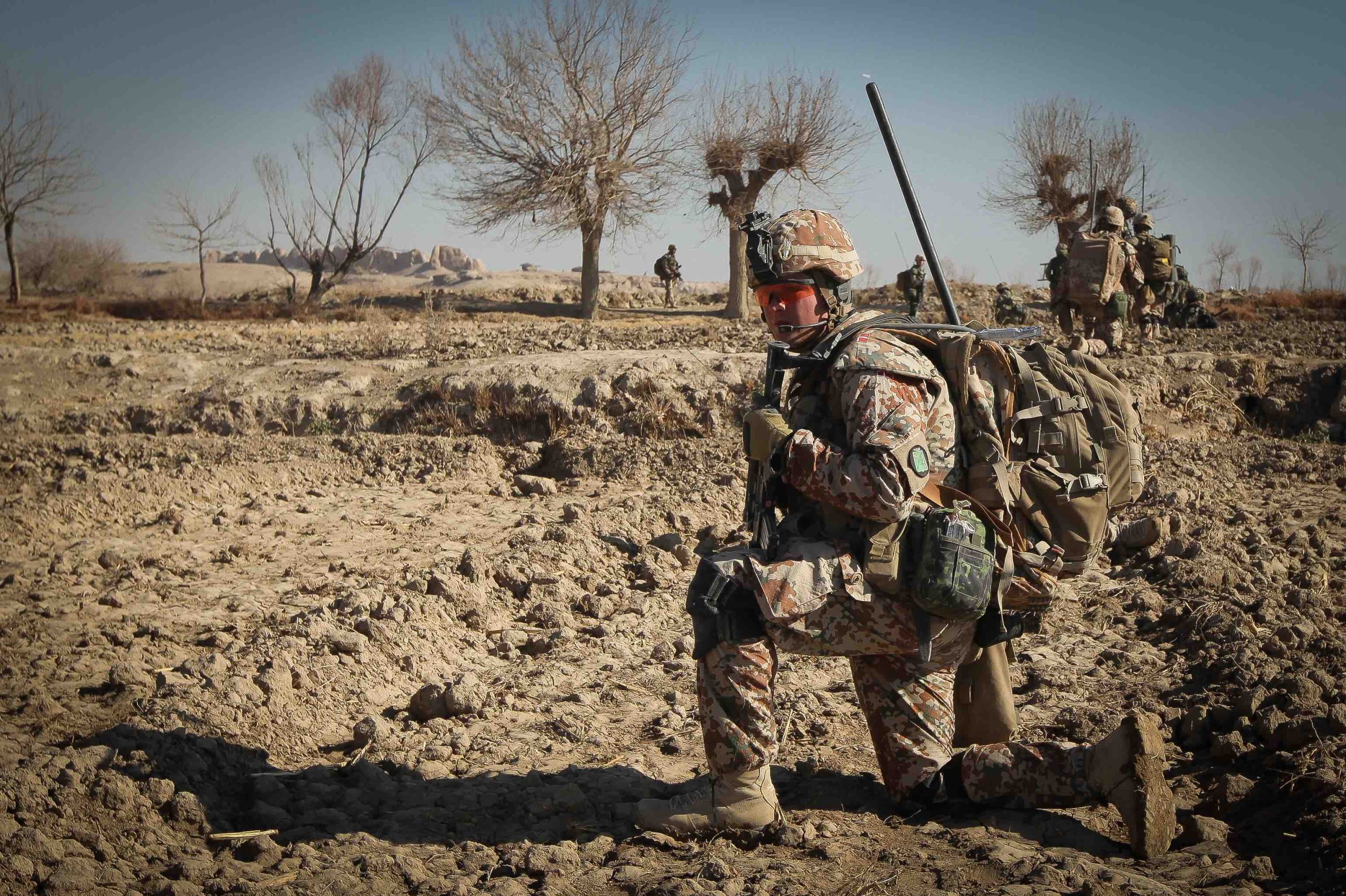
Main Image: By Corporal Timothy Solano, U.S. Marine Corps – https://www.dvidshub.net/image/514274 High-resolution image, Public Domain, https://commons.wikimedia.org/w/index.php?curid=40913673