A bus driver reportedly knocked down a drone carrying professional explosives inside the airport environment, raising urgent questions about protection at a hub supporting NATO’s strategic airlift.
The disclosure that an explosive-laden drone reached Leipzig/Halle airport before being knocked out of the air by a bus driver has exposed a security gap at one of Europe’s most important cargo hubs and a base supporting NATO strategic airlift.
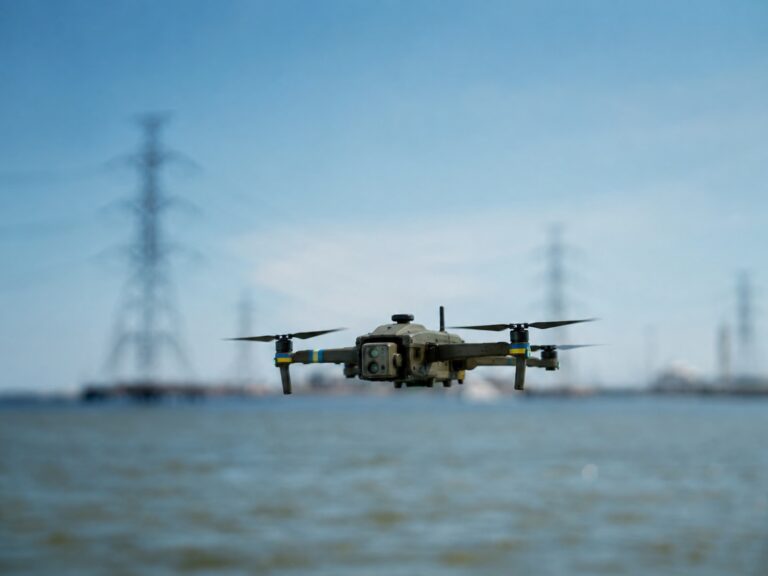
CDU member of parliament Detlef Seif provided the first detailed public account on 7 August, saying the drone carried professional explosives and a detonator. A second suspected drone may have collided with a DHL cargo aircraft. Germany’s federal prosecutor is investigating the incident as a potentially serious attack affecting domestic and external security.
No perpetrator has been established. German authorities have not attributed the incident to Russia or another state. Russia’s embassy has denied involvement and called the case a provocation. Those positions should remain separate from the operational question, which is already clear: an explosive-capable unmanned aircraft penetrated a restricted airport environment.
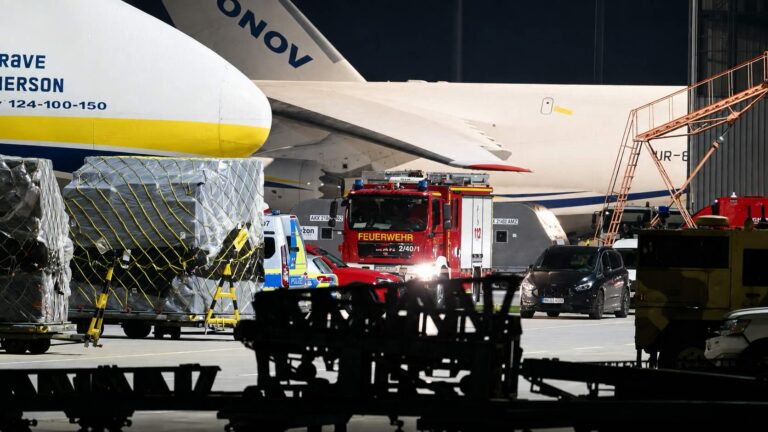
Leipzig/Halle is a major European freight airport and supports the Strategic Airlift International Solution. Under that arrangement, NATO members and partner states obtain access to Antonov An-124 aircraft capable of moving outsized cargo that conventional transport fleets cannot carry easily.
The airport’s value lies in more than runways. Specialist handling equipment, warehousing, trained personnel, surface connections and the ability to process unusually large loads make it part of the logistics architecture supporting allied reinforcement.
That dual-use character creates vulnerability. Civilian airports are open systems with employees, contractors, roads and commercial operations spread across large areas. They cannot be protected in precisely the same way as a closed military base.
An attacker does not need to destroy an aircraft to produce strategic effect. A credible explosive threat can close facilities, delay cargo, divert scarce heavy-lift capacity and force searches across several sites.
The reported role of a bus driver is extraordinary and troubling. It may have prevented detonation or further flight, but critical infrastructure cannot depend on an unprotected employee improvising against an explosive device.
The incident should prompt a detailed reconstruction. Authorities need to establish how the drone entered the area, whether sensors detected it, what warnings were issued and which organisation had authority to neutralise it.
Airports create difficult counter-drone conditions. Radio-frequency jamming may affect navigation or legitimate communications. Kinetic interception can produce falling debris. Autonomous drones may follow pre-programmed routes without an active operator link.
Protection therefore requires layered systems: radar and optical detection, radio-frequency analysis, electronic countermeasures, controlled interception and rapid explosive-ordnance response. No single technology covers every threat.
Airport operators manage the site, aviation authorities protect flight safety, police investigate offences, intelligence agencies assess hostile activity and armed forces defend military missions. A NATO-linked civilian hub sits across all of those responsibilities.
The most important weakness may be procedural rather than technical. Information must move quickly enough for a competent authority to decide whether to close airspace, intercept a drone or evacuate an area.
Germany’s National Security Council has discussed the case, recognising that the issue extends beyond a regional police investigation. The outcome should be a defined protection standard for dual-use logistics nodes, not only a review of one airport.
Defence Matters has previously examined suspicious drone activity around European infrastructure. The Leipzig/Halle case is different because it involves an explosive device at a specific strategic-airlift hub, not merely unidentified surveillance. That wider reporting is relevant context, but it is not evidence that the Leipzig device had the same origin.
Hardening the airport is only part of the answer. NATO planners must assume that a logistics node can be unavailable temporarily and prepare alternative routes.
That means identifying other airports capable of handling heavy cargo, pre-arranging permissions, ensuring specialist equipment is movable and exercising diversion procedures. Road and rail connections from alternate hubs must also support the loads involved.
Redundancy is expensive, but dependence on one efficient node creates a target. The operational measure of resilience is how quickly cargo can continue moving after disruption.
Exercises should include drone incidents, explosive threats and communications failure. A strategic-airlift exercise that tests aircraft availability without testing the security of the hub provides an incomplete picture of readiness.
Forensic work on components, explosives, guidance and communications may eventually identify responsibility. Premature attribution could damage the investigation and substitute geopolitical assumption for evidence.
Security improvements do not require waiting for that conclusion. The disclosed facts already demonstrate an unacceptable vulnerability: a drone reportedly carrying professional explosives reached an airport environment linked to NATO logistics, and an ordinary worker became the final physical barrier.
Europe’s rearmament debate focuses heavily on weapons and production. Those capabilities depend on the civilian infrastructure that moves them. Leipzig/Halle shows that protecting that infrastructure must be treated as part of deterrence rather than an auxiliary police task.