 ByDefencematters.eu Correspondents
The issue re-entered public discussion this month after senior US officials provided further details of an alleged event at China’s Lop Nur test site in June 2020. According to Reuters, a senior Trump administration official said US assessments linked a seismic event to a possible underground nuclear test and argued it was associated with Chinese work on a new generation of nuclear weapons. Beijing has rejected the allegation.
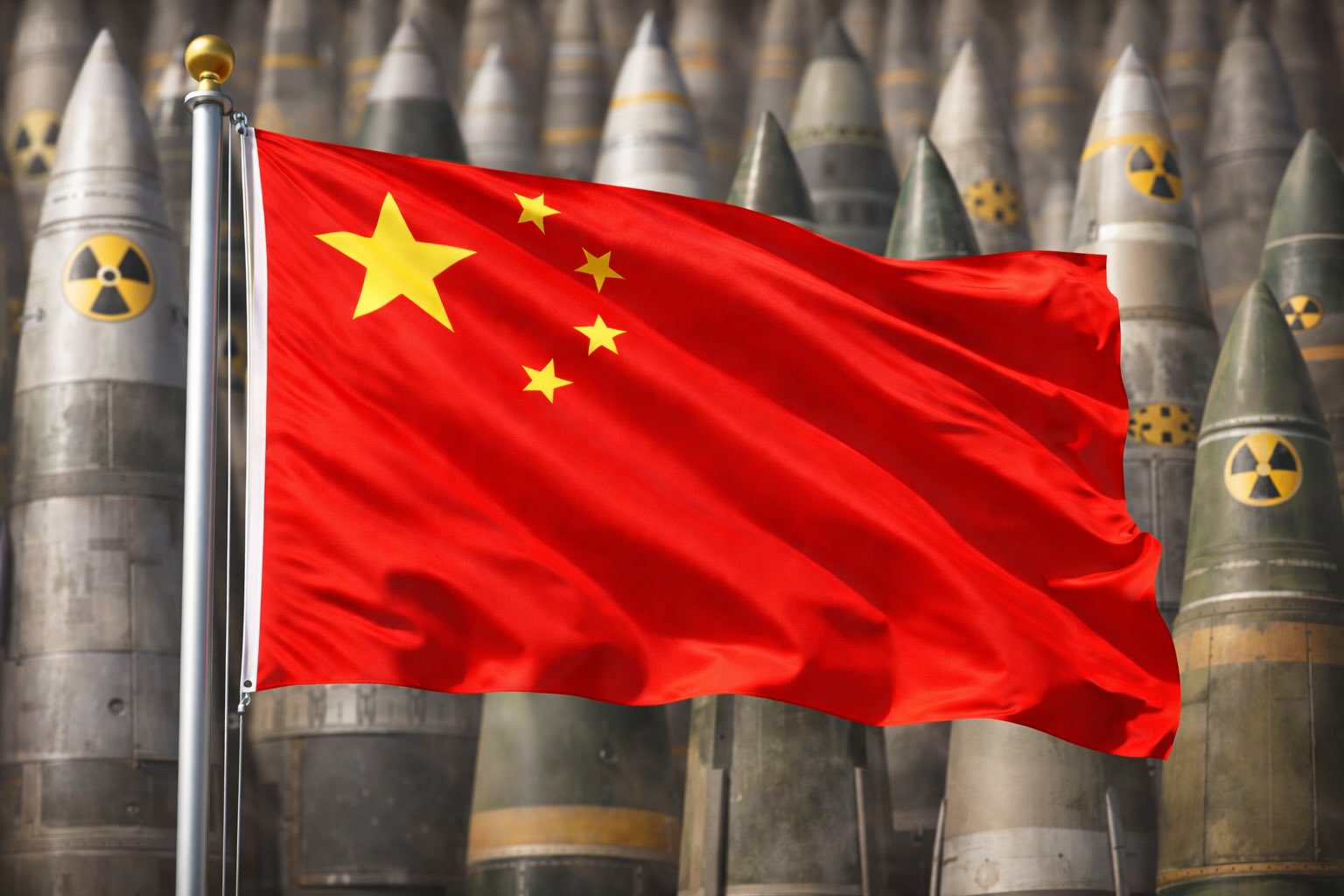
The central point in the emerging US argument is not simply that China is increasing the size of its nuclear arsenal, but that it is improving the sophistication and flexibility of that arsenal. Reuters reported that US officials tied the allegation to Chinese efforts to develop systems including warheads capable of more advanced delivery configurations, while also warning about broader Chinese nuclear expansion.
That distinction matters. China has long lagged the United States and Russia in total nuclear warheads and in the mature scale of strategic nuclear forces. But Washington’s concern has increasingly focused on trajectory rather than current parity: how quickly China is expanding, what kinds of systems it is building, and whether it is seeking capabilities designed for a wider range of conflict scenarios. Reuters notes that Pentagon assessments project China could surpass 1,000 warheads by 2030.
At the same time, the evidence surrounding the alleged 2020 event remains contested. Reuters reported that the Comprehensive Nuclear-Test-Ban Treaty Organization detected small seismic events but said the available data were too weak to determine whether the cause was a nuclear explosion. China has dismissed the US accusations as baseless and politically motivated.
This uncertainty is important. The allegations may affect policy debates in Washington even if independent confirmation remains limited. In practical terms, they provide ammunition to those arguing that the United States should accelerate nuclear modernisation and prepare for a three-way strategic competition with both Russia and China.
The timing is especially sensitive because the New START treaty between the United States and Russia expired in February 2026, ending the last major bilateral treaty limiting the two largest nuclear arsenals.
China has maintained its longstanding position that it will not join US-Russia arms reduction arrangements while its arsenal remains much smaller than those of Washington and Moscow. Reuters reported Beijing again describing the expiry of New START as regrettable while reiterating its claim that it keeps nuclear forces at a minimum level for self-defence and adheres to a no-first-use policy.
In Washington, however, that position is increasingly viewed as incompatible with China’s visible force expansion. The result is a policy gap: the United States wants China included in future strategic arms discussions, while Beijing sees no basis for entering a framework built around much larger US and Russian arsenals.
The debate is also unfolding alongside broader US-China tensions over Taiwan. Recent reporting indicates concern in Taipei and Washington after remarks by President Donald Trump suggesting he had discussed potential Taiwan arms sales with Chinese President Xi Jinping, a sensitive issue in US policy. Such comments raised questions about the handling of long-established US assurances to Taiwan. The United States has continued military support for Taiwan, including a large arms package announced in December and ongoing discussions linked to Taiwan’s defence spending plans.
Taken together, these strands — nuclear allegations, treaty expiry, and Taiwan tensions — are reinforcing a wider shift in strategic thinking. The question in Washington is no longer simply whether China is building more warheads. It is whether Beijing is constructing a more diversified nuclear force that could complicate US deterrence planning in a regional crisis and eventually alter the global balance of power.
That does not mean the most sweeping political conclusions now circulating are proven. Claims about covert tests and “next-generation” capabilities remain partly based on intelligence assessments and public statements, not independently verified technical findings. What is clear is that the allegations are already shaping the policy climate.
For the United States, this is becoming an argument for faster nuclear investment and a broader deterrence posture. For China, it is another front in a confrontation with Washington in which military modernisation, trade leverage and Taiwan policy are increasingly treated as parts of the same strategic contest.