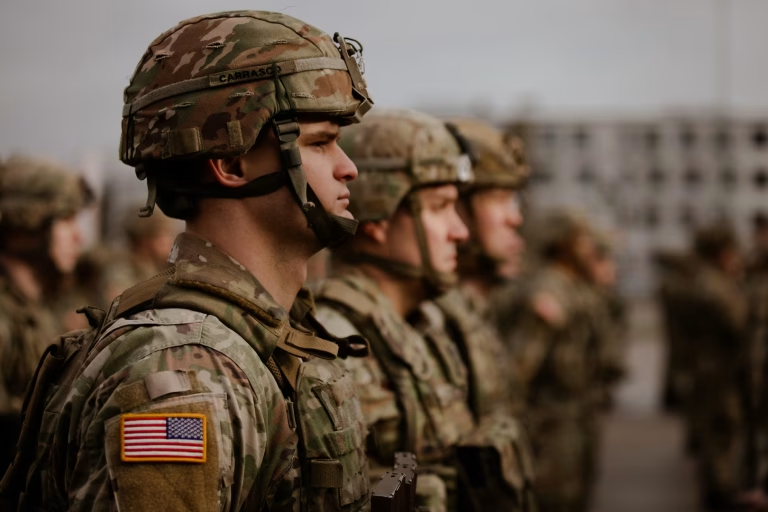
The recent NATO joint training deployment in France, where troops from the United Kingdom’s 1st Battalion of The Duke of Lancaster’s Regiment (1 LANCS) worked alongside their French counterparts from the 152nd Infantry Regiment, is a timely reminder that deterrence and readiness remain at the heart of Euro-Atlantic security.
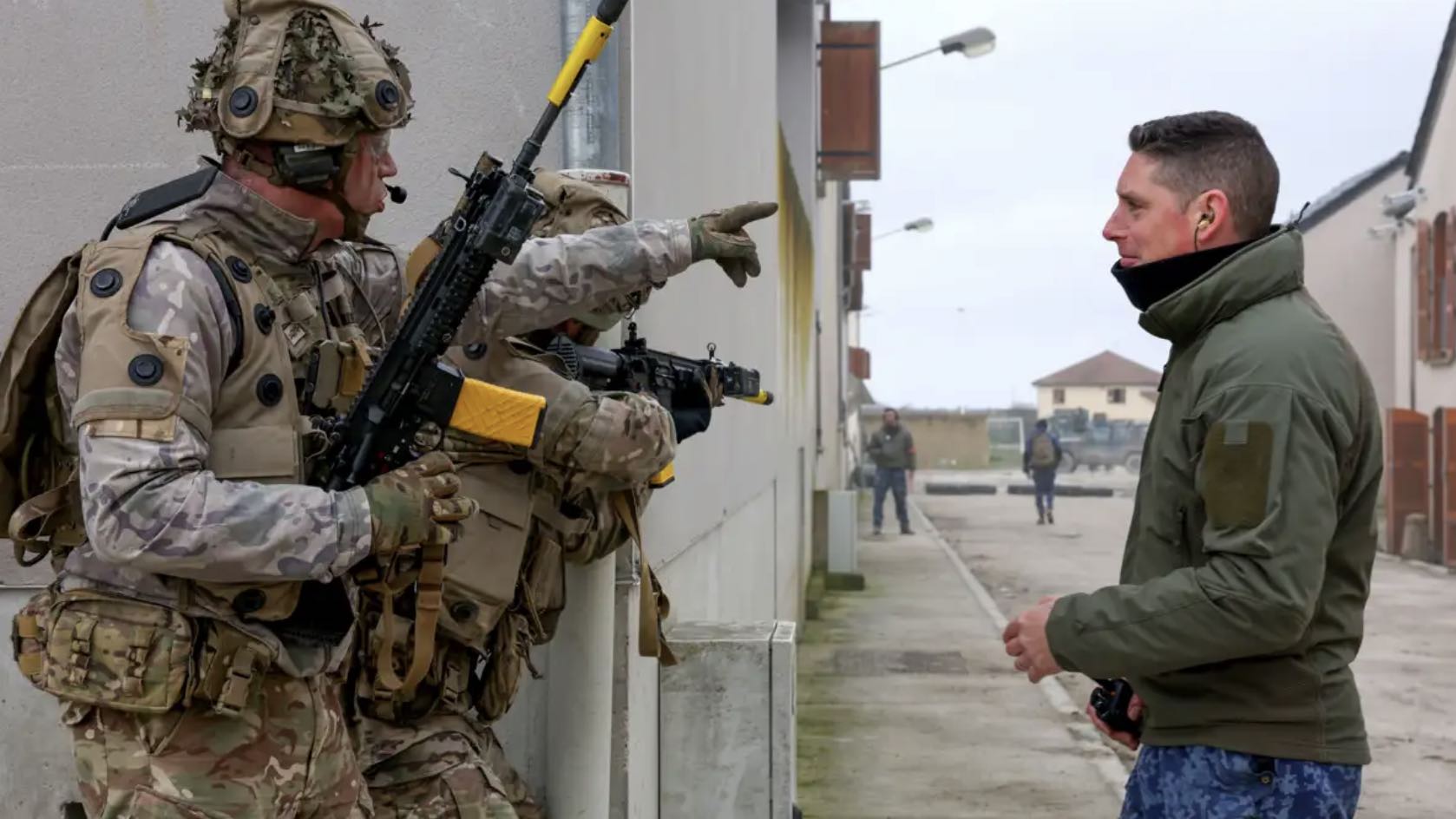
At a sprawling training ground northeast of Paris, the two allied battalions took part in Exercise Gaulish, a rigorous and realistic urban warfare scenario designed to prepare frontline troops for high-intensity operations. From realistic street fighting drills to dynamic tactical manoeuvres, the exercise provided British soldiers with an opportunity to assimilate French operational doctrine, weapon systems and tactics – a practical embodiment of interoperability in action.
For Britain’s Forward Land Forces Strategic Reserve, this collaboration is more than an abstract commitment to collective defence: it is a working demonstration of the solid bonds that hold Europe’s military framework together. Units such as 1 LANCS are held at high readiness precisely to respond swiftly and decisively should NATO’s eastern members require reinforcement. With global flashpoints multiplying and the security environment continuing to evolve, such preparedness — built on training, trust and shared expertise — sends a powerful message of solidarity.
“NATO partnership and working together is what makes us stronger,” said Major Lance Morris, Officer Commanding Burma Company, 1 LANCS. “Our French partners are absolutely critical to that. This exercise demonstrates just how lethal the fighting spirit of our soldiers is.” His remarks capture both the gravitas and the camaraderie that underpinned the fortnight of intense training.
The British contingent has also been undertaking other versatile forms of preparation. Alongside their efforts in France, detachments of around 200 personnel are training in Estonia, undergoing extreme cold-weather conditioning and mastering drone operation and battlefield data systems. This kind of multifaceted readiness is central to how modern land forces operate and illustrates the breadth of capability developed within NATO’s ranks.
In many respects, this kind of bilateral army cooperation sits within a wider mosaic of Allied commitment. NATO’s Forward Land Forces and the Allied Reaction Force (ARF) concept ensure that multinational cooperation is not a headline aspiration but a practical, deployable reality. The ARF — composed of land, maritime, air, cyber and special operations elements from member nations — stands ready to respond at short notice to crises wherever they may arise.
For British defence planners, the focus remains clear: to ensure that the UK’s commitments to NATO are not merely nominal but resilient, tested and robust. Centring parts of the British Army in forward deployment zones and frequent exercises with partners reinforces deterrence — the fundamental purpose of NATO’s collective defence clause. For nations on the eastern flank, whose history tells a vivid story about the costs of isolation, this signal of unity and preparedness carries profound strategic reassurance.
Equally, the French contribution to these exercises is a testament to Paris’s longstanding role as one of Europe’s chief guarantors of security. France has been a linchpin within NATO’s high-readiness forces for decades and has repeatedly showcased a readiness to integrate its own military assets — from infantry to armour and aviation — within the alliance’s broader strategic framework.
What sets this latest exercise apart is not merely the sophistication of the training or the professionalism of the troops involved, but the clear demonstration of strategic interoperability. When British and French soldiers operate side by side — learning from one another, sharing doctrine and tactics, and aligning operational thinking — they strengthen not just their bilateral relationship, but the very framework of collective security that underpins the North Atlantic Treaty Organisation.
Political and military leaders in London and Paris alike recognise that a credible deterrent depends on more than territorial pledges. It depends on the readiness to mobilise with precision and agility, to stand shoulder-to-shoulder in defence, and to demonstrate to potential adversaries that Europe’s defence commitments are not abstract, but concrete and sustained.
In an era where geopolitical tensions and hybrid challenges persist, the unity shown by Britain and France in exercises such as Gaulish reaffirms a core truth about the NATO alliance: its strength does not lie solely in numbers or hardware, but in cohesion, trust and a shared sense of purpose. For those who value peace through strength, this is a powerful indicator that the defence of NATO territory remains an absolute priority for its foremost members.
NATO rehearses Baltic amphibious landing near Kiel amid renewed focus on Kaliningrad and sea lanes