The Treasury smiled, ministers congratulated themselves on “modernisation”, and the British Army was quietly stripped of the very tools needed to fight and win a conventional war.
Now reality has arrived with a vengeance.
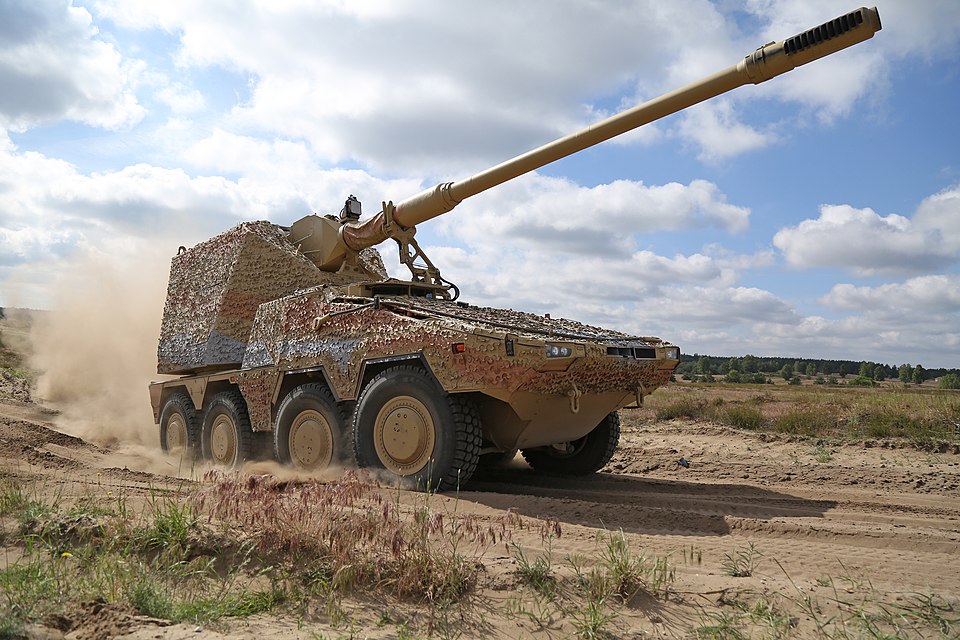
This week’s announcement that Britain will spend £1 billion on 72 new RCH 155 self-propelled howitzers is undeniably welcome. The system is highly capable, mobile, deadly accurate and designed for the brutal realities of modern warfare. Mounted on Boxer vehicles, the guns can strike targets more than 40 miles away and rapidly reposition before enemy counter-fire arrives. Deliveries are expected from 2028.
Yet behind the triumphant rhetoric lies a far darker truth: Britain is buying these guns because it has dangerously few artillery systems left.
The crisis did not emerge overnight. It is the result of decades of strategic negligence by successive governments — Conservative, Labour and coalition alike — that steadily reduced Britain’s armed forces while insisting the nation remained a global military power.
The British Army once possessed formidable artillery strength. During the Cold War, Britain maintained hundreds of self-propelled guns in Germany as part of NATO’s front line against Soviet aggression. Firepower mattered because serious military planners understood an uncomfortable reality: wars are won not with words, but through overwhelming destructive capability.
That understanding evaporated after the fall of the Berlin Wall.
Governments raided defence budgets to fund domestic priorities. Politicians convinced themselves that precision air strikes and special forces could replace massed artillery. Entire capabilities were cut in the name of “efficiency”. The Army shrank year after year while ministers boasted about fiscal prudence.
The consequences have become brutally obvious since Russia’s invasion of Ukraine.
The war has demonstrated beyond doubt that artillery remains king on the modern battlefield. Vast quantities of shells are fired daily. Positions are pulverised. Front lines are shaped by sustained firepower. Ukrainian commanders repeatedly stress that guns and ammunition determine survival.
Britain, meanwhile, discovered it had handed much of its artillery capability to Kyiv because its own stockpiles were already perilously thin. The AS90 systems donated to Ukraine created what officials themselves admitted was a serious “war-fighting capability gap”.
That phrase ought to alarm every taxpayer in the country.
A major military power should not find itself scrambling to replace essential battlefield systems after transferring a relatively modest number of guns abroad. Yet that is precisely where Britain stands today. According to publicly available defence data, the Army currently operates only a tiny number of interim Archer artillery systems alongside ageing Light Guns and rocket systems.
This is not merely embarrassing. It is strategically dangerous.
Britain still speaks as though it is capable of projecting decisive military force across the globe. Ministers lecture allies about security commitments and European stability. Yet rhetoric means little if the underlying military capability no longer exists.
An army without sufficient artillery is an army that cannot sustain high-intensity warfare against a peer adversary. No amount of political spin can conceal that fact.
Nor should ministers escape scrutiny simply because they are now spending money to correct previous failures. Rebuilding lost capability is vastly more expensive than maintaining it in the first place. Britain is now paying billions to restore systems that should never have been allowed to disappear.
Worse still, the procurement timetable exposes how vulnerable the country remains. The first RCH 155 deliveries are not expected until 2028. In military terms, that is an eternity. Europe is already in its gravest security crisis since the Second World War. Russia continues to expand arms production. NATO allies are rapidly increasing defence spending. Even traditionally cautious European states now speak openly about preparing for major conflict.
Britain should be leading that effort from a position of strength. Instead, it is rebuilding from weakness.
The blame lies squarely with a political class that treated defence as a secondary concern for far too long. Governments preferred the appearance of military power to the costly reality of sustaining it. Troop numbers were cut. Equipment programmes delayed. Ammunition stockpiles neglected. Entire generations of politicians convinced themselves that hard power was somehow unfashionable.
History has delivered its verdict on that fantasy.
The purchase of new howitzers is necessary and overdue. But it should also serve as a national warning. Great powers do not remain great by dismantling their armed forces during moments of relative peace and hoping emergencies never arrive.
Britain spent decades hollowing out its military while dangerous rivals armed themselves. The bill for that complacency is now arriving — and it will be measured not merely in pounds, but in national security itself.
Main Image: Krauss-Maffei Wegmann GmbH & Co. KG – https://www.kmweg.de/news-media/fotos/bildmaterial/category/rch-155-1/
The Decline of British Military Power Is Europe’s Greatest Security Risk