

Oman has confirmed that US and Iranian officials are due to meet again in Geneva, with Washington awaiting an Iranian counterproposal on the nuclear file. The talks are being mediated by Oman and are centred on Tehran’s nuclear programme rather than a broader regional settlement.
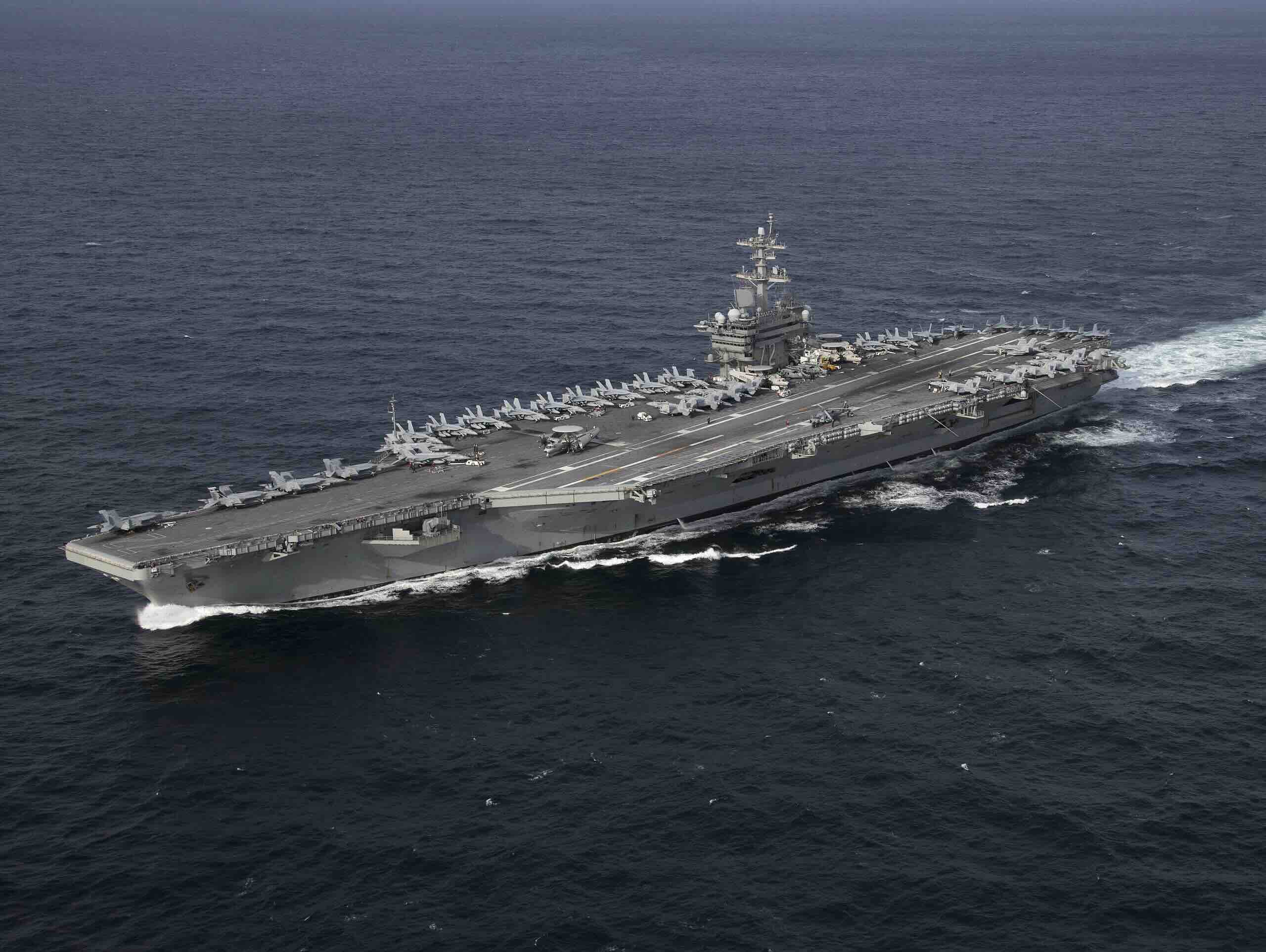
The immediate backdrop is a sharp rise in US military pressure and increasingly explicit public messaging from President Donald Trump and his team. Trump recently gave Tehran roughly 10 to 15 days to make a deal or face “really bad things”, while US military planning had advanced amid a significant regional build-up.
This has created a dual-track dynamic: diplomacy is still active, but it is taking place under the visible threat of force.
Washington Tightens the Noose: Ford Heads East as Iran Rejects US Red Lines
A central point in the current debate is the narrowing of the negotiating agenda. Public reporting suggests the main focus remains the nuclear programme, while the more politically and militarily difficult issues – Iran’s ballistic missile programme and its support for regional armed groups – remain contentious and may not be fully integrated into the current round. Iran is preparing a proposal that emphasises nuclear confidence-building measures and sanctions relief.
That matters because, in strategic terms, Tehran may judge nuclear concessions – especially reversible or limited ones – to be less costly than concessions on missile capabilities or regional networks. In practice, this raises the prospect of a partial deal that reduces immediate escalation risk without resolving the wider security dispute.
At the same time, rhetoric on both sides has hardened. Steve Witkoff, Trump’s envoy, publicly questioned why Iran had not “capitulated”, while Iranian Foreign Minister Abbas Araghchi responded defiantly on social media, signalling that Tehran would not negotiate under pressure.
The result is a familiar pattern: both sides continue to talk, but neither side is publicly positioning itself for a visible climbdown.
Regional military calculations are also becoming more central. Israeli officials have been conducting security consultations on Iran and possible escalation scenarios, including developments linked to Lebanon and Hezbollah. While details remain limited in public, the concern is straightforward: if US-Iran diplomacy collapses and military strikes begin, Iran could seek to widen the theatre through direct retaliation or through allied groups.
This is one reason why current discussions in policy circles are not limited to the nuclear programme itself. Even if the Geneva talks produce movement, the wider deterrence problem – missiles, proxies, maritime disruption and covert operations – would remain.
Another issue now under scrutiny is Iran’s air defence recovery. Reuters, citing a Financial Times report, said Tehran had agreed a deal with Russia for Verba man-portable air defence systems, with deliveries reportedly scheduled from 2027 to 2029. Reuters noted it could not independently verify the FT report. If accurate, the timeline suggests the arrangement is strategically relevant but unlikely to alter the immediate military balance in the current crisis window.
That has fed a broader assessment in many commentaries: the present confrontation is likely to be decided, if it is decided soon, by political choices in Washington and Tehran rather than by any near-term shift in Iran’s defensive capabilities.
Four broad scenarios are now being discussed.
The first is a diplomatic outcome: Iran submits terms that Washington considers sufficient to keep talks moving, and military action is deferred. The second is a limited strike designed to increase pressure while preserving a path back to negotiations. The third is wider escalation, in which a limited strike triggers sustained US-Iran confrontation and potential Israeli involvement. The fourth is prolonged brinkmanship – talks continue intermittently while the US maintains a costly forward military posture.
For now, that decision point appears to be this week’s Geneva meeting.
If the talks produce a workable framework, the crisis may shift into a slower and still fragile negotiating phase. If they fail, the argument for military action – already present in Washington and Jerusalem – is likely to strengthen quickly. Either way, the next 48 hours look less like a final deadline than another stage in a confrontation that remains unresolved.


The Hidden Strategic Costs of China’s New London Embassy