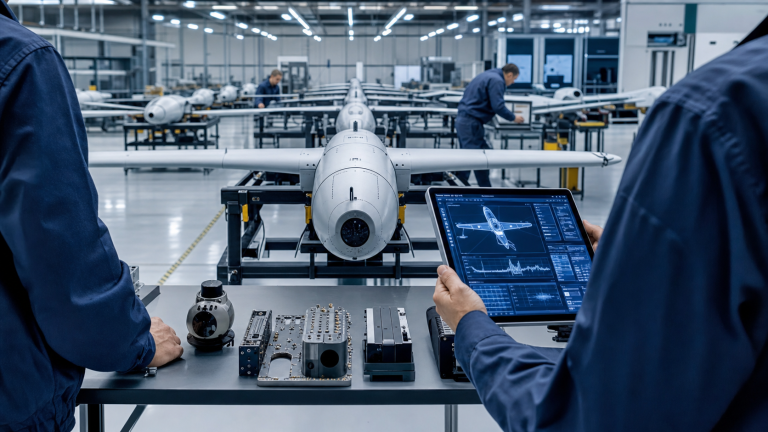
According to Reuters, administration officials are preparing discussions with major defence manufacturers aimed at accelerating production rates and replenishing stockpiles that have been diminished by recent military operations. Yet beneath the urgency of the moment lies a broader and potentially transformative objective: restoring America’s capacity to manufacture at scale.
For decades, policymakers across the political spectrum have expressed concern about the fragility of Western defence supply chains. The post-Cold War “peace dividend” encouraged efficiency and consolidation, but often at the expense of resilience. The assumption that conflicts would remain limited and predictable has increasingly been challenged by events in Eastern Europe, the Middle East and the Indo-Pacific.
Against this backdrop, Washington’s latest initiative represents a recognition that industrial preparedness remains inseparable from national security.
The meeting is expected to bring together representatives from some of the largest names in the sector, including Lockheed Martin, RTX and other key suppliers. Discussions are likely to focus not only on increasing output but also on identifying bottlenecks in procurement processes, workforce shortages and the challenges associated with expanding specialised manufacturing capacity.
These conversations matter because defence production extends well beyond the factory gates of prime contractors. Aerospace engineers, precision manufacturers, software developers, logistics providers and thousands of small and medium-sized enterprises form part of an intricate industrial ecosystem. Investment in defence manufacturing therefore has the potential to generate wider economic benefits, particularly in regions seeking to revitalise high-skilled employment.
Recent years have demonstrated that democratic nations cannot assume unlimited access to critical capabilities when crises emerge. Building additional production capacity for missile systems, interceptors and advanced technologies requires sustained commitment, long-term contracts and regulatory certainty. Industry leaders have repeatedly argued that predictable demand is essential if companies are to justify substantial capital expenditure.
The White House appears increasingly attuned to that reality.
Rather than relying solely on emergency measures during periods of heightened tension, policymakers are exploring how to create a more durable framework that rewards readiness and incentivises expansion. Such an approach could help bridge the longstanding divide between government expectations and industrial planning cycles.
Critics will inevitably question the costs involved. Defence budgets compete with numerous domestic priorities, and public scrutiny of major procurement programmes remains both legitimate and necessary. Yet there is also a growing appreciation that deterrence depends upon credibility, and credibility depends, in part, upon the ability to sustain military capability over time.
America’s allies are watching closely. European governments, many of which are reassessing their own defence postures, face similar industrial constraints. A stronger American manufacturing base may therefore contribute not only to domestic resilience but also to the security architecture of the broader transatlantic community.
History suggests that periods of strategic challenge often catalyse technological advancement and industrial renewal. The aerospace breakthroughs of previous generations emerged from precisely such moments of national focus and investment.
Whether this latest effort achieves its ambitions will depend on execution. Expanding production lines, training skilled workers and reforming procurement practices are complex undertakings that cannot be accomplished overnight.
Nevertheless, the willingness of government and industry to engage directly with these challenges marks an important step. At a time of heightened uncertainty, the pursuit of preparedness may prove not merely prudent but essential.
The United States has repeatedly demonstrated an extraordinary capacity for reinvention when confronted by changing circumstances. If approached thoughtfully, the current push to strengthen defence production could become another example of that enduring national characteristic: the ability to transform challenge into opportunity.
US Pressure on NATO Exposes Europe’s Air and Naval Capability Gap