Mastery of the briefing box, familiarity with Whitehall procedure and an aptitude for media appearances are apparently sufficient qualifications for almost any department of state.
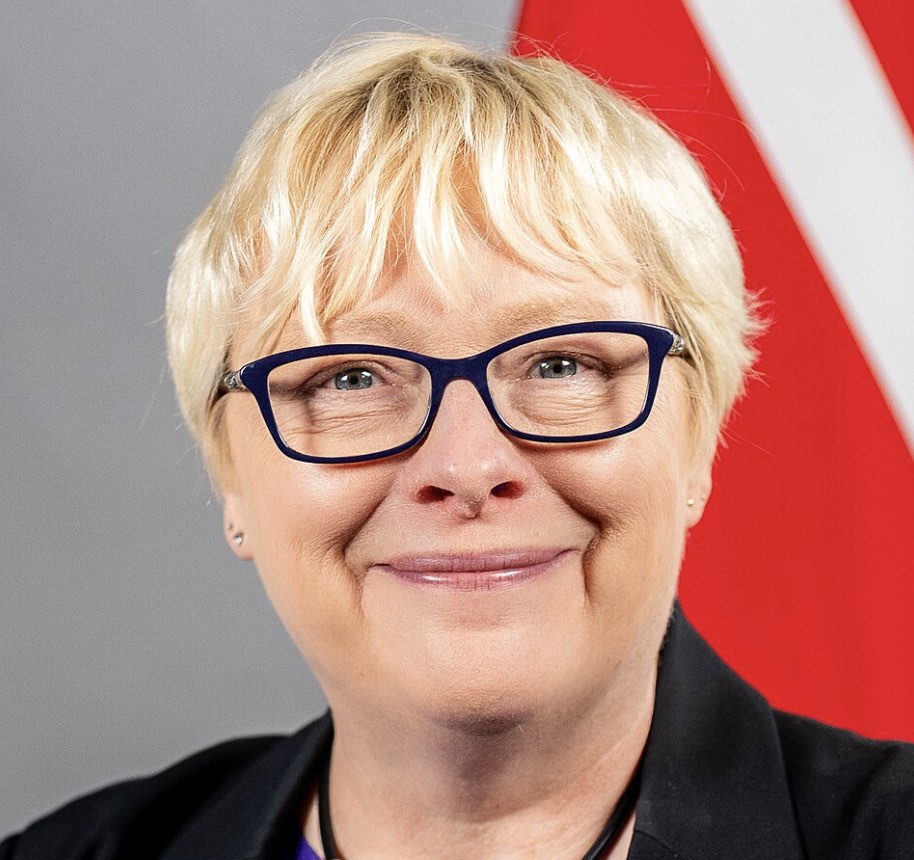
Angela Eagle’s appointment as Security Minister suggests that Keir Starmer remains firmly attached to this view. Whether the public shares it is another matter, the military certainly will not.
Eagle is an experienced parliamentarian. Few would dispute that. She has served in the House of Commons for decades, occupied several ministerial positions and survived the factional warfare that has consumed Labour at various points over the past fifteen years. She is undoubtedly resilient, politically astute and well acquainted with the machinery of government.
But none of these qualities addresses the more obvious question raised by her appointment: why has responsibility for one of the country’s most sensitive security portfolios been entrusted to someone with no substantial background in defence, intelligence or national security? Is Starmer really so desperate?
Britain faces an increasingly complex threat environment. Cyber attacks have become routine instruments of statecraft. Espionage concerns have intensified. Terrorism has evolved rather than disappeared. Organised criminal networks operate across borders with unprecedented sophistication. Public confidence depends upon the belief that those charged with protecting national security possess not merely political experience but relevant expertise.
Eagle brings extensive Westminster experience to the role. She does not bring recognised specialist knowledge in the fields over which she now presides.
Her defenders will argue that ministers are managers rather than technicians. Civil servants and intelligence professionals provide expertise; politicians provide leadership and accountability. There is some truth in this. Democratic government cannot be reduced to technocracy.
Yet there remains a distinction between a minister who arrives with at least some grounding in the subject matter and one whose qualifications appear to rest primarily upon longevity within party structures.
The appointment therefore raises broader questions about Starmer’s approach to government.
Labour came to office promising competence, seriousness and professionalism. The contrast with the turbulence of recent Conservative administrations formed a central component of its appeal. Voters weary of improvisation expected a government that would prioritise expertise.
Instead, there is a growing impression that the pool from which senior appointments are drawn has become remarkably narrow.
Too many contemporary politicians have spent their entire adult lives within politics itself. University is followed by research positions, advisory roles, party employment, think-tank appointments and eventually parliamentary selection. The experience acquired through this route is undoubtedly valuable. But it is also specialised and self-reinforcing.
The consequence is a political class increasingly detached from the professions and industries it seeks to regulate.
This criticism extends beyond Labour. It has afflicted all major parties to varying degrees. Yet Starmer had an opportunity to challenge the pattern. He could have demonstrated a willingness to elevate individuals whose backgrounds reflected the complexity of the portfolios they would oversee.
Eagle’s appointment suggests continuity rather than change.
None of this is intended as a personal indictment. Eagle has served in public life for many years and has every right to argue that ministerial adaptability is itself a form of expertise. She may well prove diligent and effective.
But appointments inevitably carry symbolic significance.
At a moment when national security dominates strategic thinking across Europe, although clearly not in 10 Downing Street, the elevation of another career politician without an obvious connection to the field risks reinforcing public cynicism about how Westminster operates. It feeds the perception that senior offices circulate among a relatively small group of insiders whose principal qualification is experience within the political system itself, and loyalty to the party leader.
Starmer‘s supporters frequently describe him as pragmatic rather than ideological. Pragmatism, however, should involve recognising that expertise matters.
The public expects surgeons to understand medicine and engineers to understand infrastructure. It is not unreasonable to hope that those occupying sensitive security positions possess more than administrative versatility.
Politics will always involve compromise. Cabinet appointments inevitably balance talent, loyalty, experience and internal party considerations. But there are occasions when the symbolism of an appointment becomes difficult to ignore.
Angela Eagle‘s promotion may ultimately succeed on its own terms. For now, however, it stands as an uncomfortable reminder of how insulated Britain’s governing class has become. The route to high office increasingly runs not through distinguished experience in the outside world, but through mastery of Westminster itself.
That may satisfy the requirements of party management, but whether it satisfies the demands of government is another question entirely.
The Defence Crisis That Could Define – Or End – Starmer’s Premiership