During the 1970s and 1980s, when Soviet divisions stood across the Iron Curtain and the prospect of confrontation remained ever-present, there was little ambiguity about who carried the greatest responsibility for Europe’s defence. Hundreds of thousands of American troops were stationed across the continent. The United States provided not only manpower but also the strategic umbrella that underpinned Western Europe’s security. American taxpayers funded capabilities that many European governments either could not or chose not to provide themselves.
The remarkable aspect of today’s debate is not that Washington is questioning this arrangement. Rather, it is that so many European leaders appeared to believe it could continue indefinitely.
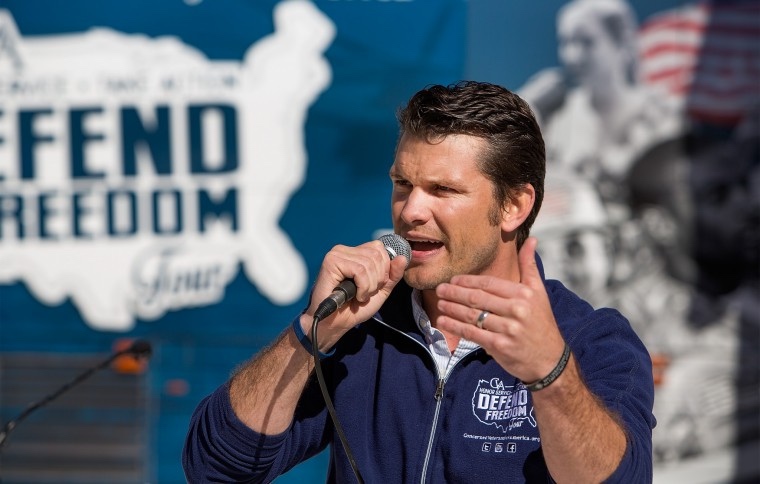
Hegseth’s suggestion that the United States should reassess its military commitments in Europe has generated predictable concern. Yet his central argument is difficult to dismiss. Europe should be responsible for defending Europe. That principle ought not to be controversial among nations that routinely speak of sovereignty, strategic autonomy and geopolitical maturity.
For decades, however, Europe enjoyed what amounted to a generous security subsidy. Defence spending was often treated as a convenient source of savings whenever governments sought additional funds for domestic priorities. Military recruitment declined, force structures shrank and procurement programmes were repeatedly delayed or cancelled altogether. While European leaders spoke increasingly about independent strategic capabilities, they continued to rely heavily upon American military power to guarantee the continent’s security.
The consequences are increasingly visible.
Despite Russia’s invasion of Ukraine and the return of major war to the European continent, many European armed forces continue to face shortages of personnel, ammunition and critical equipment. Defence industries that were allowed to contract after the Cold War now struggle to increase production at the pace required by a deteriorating security environment.
Meanwhile, the strategic priorities of the United States are changing.
America remains committed to NATO, but it also faces growing challenges elsewhere. The rise of China, tensions in the Indo-Pacific and instability in other regions demand resources and attention. It is therefore entirely reasonable for American policymakers to ask why a continent of more than 450 million people remains so dependent upon a transatlantic ally thousands of miles away for its fundamental security.
Europe’s response should not be one of indignation. It should be one of urgency.
The continent must rearm, and it must do so quickly.
There are encouraging signs. Defence budgets are rising in several NATO member states. Governments that once regarded military spending as politically difficult now openly discuss expanding armed forces and strengthening domestic defence industries. Yet the scale of the challenge remains immense, and progress continues to be slowed by bureaucracy and hesitation.
Most importantly, European governments must not allow themselves to be constrained by the inertia of the European Commission.
The Commission undoubtedly has an important role in many aspects of European integration. Defence, however, remains fundamentally a matter of national survival. If governments conclude that accelerated procurement, expanded industrial production or increased military expenditure are necessary, they should act with determination rather than wait for lengthy consultations, regulatory reviews and institutional consensus-building exercises.
History rarely provides extensive warning before major strategic shifts occur. Europe today faces a security environment that is becoming more dangerous, not less. Russia remains openly hostile. The United States is signalling that it expects allies to assume greater responsibility. The assumptions that shaped European security policy for much of the post-Cold War era are rapidly eroding.
In that context, Hegseth’s intervention should be regarded not as an insult but as a final wake-up call.
Veterans of the Cold War will recall that American servicemen frequently expressed frustration with allies who seemed content to benefit from security guarantees without bearing a proportionate share of the cost. Nevertheless, Washington continued to shoulder the burden because the strategic realities of the time demanded it.
Those realities have changed.
The transatlantic alliance remains indispensable, and NATO continues to be the most successful military alliance in modern history. Yet strong alliances depend upon equitable contributions from all members. They cannot endure indefinitely when one partner carries a disproportionate share of the responsibility.
Europe possesses the economic strength, industrial capacity, technological expertise and population necessary to defend itself. What has been lacking is political resolve.
Pete Hegseth is therefore correct on one essential point. The era in which Europe could rely upon the United States to underwrite its security while neglecting its own defence capabilities is drawing to a close. The question is no longer whether Europe should assume greater responsibility for its own protection.
The question is whether European leaders will act before circumstances force them to do so.