The reported strike on the Crimea Titan plant in Armyansk matters less as a symbolic Crimea attack than as part of Ukraine's expanding campaign against industrial inputs behind Russia's war machine.
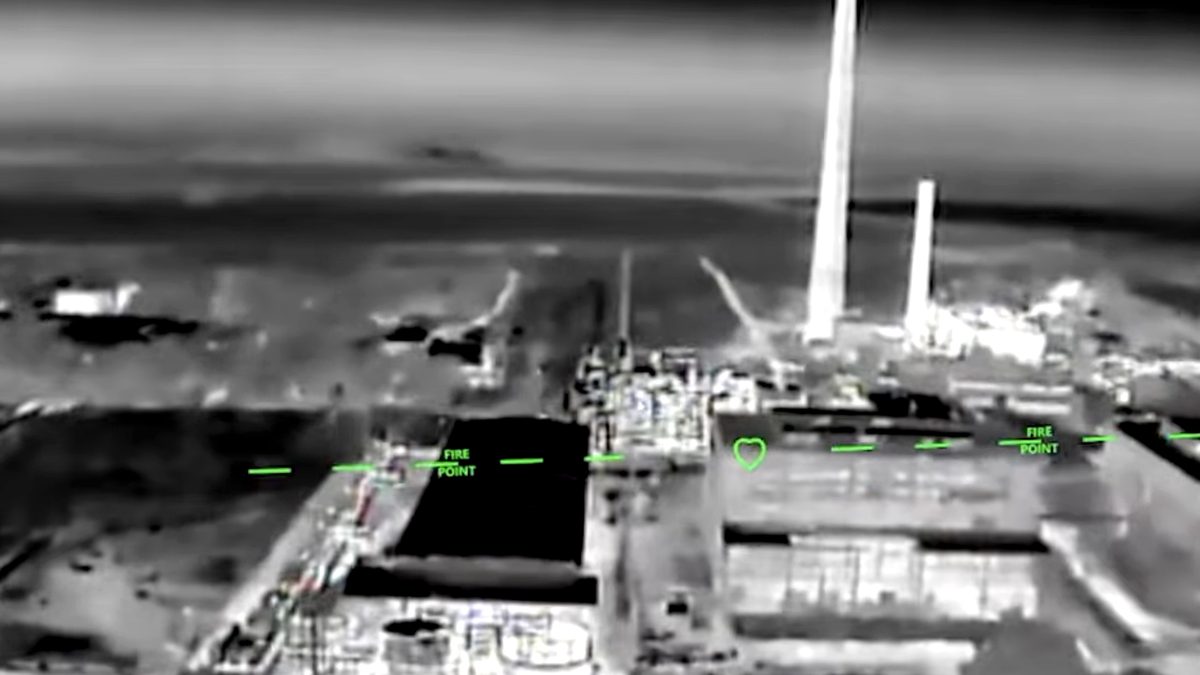
Ukraine’s Unmanned Systems Forces reportedly struck the Crimea Titan plant in Armyansk overnight on 13 June, with production at the facility said to have been suspended after the attack.
Crimea Titan is significant because the site is associated with titanium dioxide and chemical production. Such materials are not weapons in themselves, but they sit inside a wider industrial ecosystem that can support coatings, specialised chemicals and military-related production processes. The strategic issue is therefore not only whether one plant was damaged, but whether Ukraine is deliberately widening pressure on the inputs that help sustain Russian weapons manufacturing.
Crimea carries obvious political and military symbolism. Any Ukrainian strike on the peninsula attracts attention because Russia uses occupied Crimea as a military hub, air-defence zone, logistics corridor and base area for operations in southern Ukraine and the Black Sea.
But the Crimea Titan report should not be read only through that symbolic lens. Armyansk sits near the northern entrance to Crimea, close to the land routes linking the peninsula with occupied southern Ukraine. A strike on an industrial facility there would point to a more precise logic: weakening Russia’s ability to use Crimea as an industrial and logistical rear area.
That distinction matters. A routine drone-strike story asks what was hit. A military-industrial analysis asks why that target was worth hitting. In this case, the answer may lie in materials, chemicals and production continuity rather than in immediate battlefield effects.
The reported suspension of production is also important if accurate. Ukraine does not need to destroy every facility outright to create operational friction. Interruptions, safety shutdowns, repairs, worker disruption, insurance pressure, transport delays and the need to reallocate air defence can all impose costs on Russia’s war economy.
Ukraine’s long-range strike campaign has increasingly moved beyond traditional military targets. Fuel logistics, railway junctions, storage sites, naval support infrastructure, air-defence positions and industrial facilities have all come under pressure. The campaign appears designed to stretch Russian protection capacity while complicating the movement and production of military supplies.
Defence Matters has reported how Ukraine expanded its drone campaign against Russian naval and logistics assets near Crimea. The reported Crimea Titan strike would be a narrower follow-up to that pattern: not another general attack near the peninsula, but a possible attempt to hit a chemical-industrial node linked to Russia’s broader war supply chain.
The logic is consistent with Ukraine’s broader adaptation. Lacking the mass of Russia’s missile arsenal, Kyiv has invested heavily in unmanned systems that can impose asymmetric costs. Long-range drones may not match cruise missiles in destructive power, but they can force Russia to defend a vast geography of refineries, depots, factories, ports and military infrastructure.
Industrial targeting also changes the rhythm of war. A damaged radar or air-defence launcher has an immediate tactical meaning. A disrupted chemical plant has a slower effect, but one that may matter over time if it reduces availability of inputs, increases replacement costs or forces Russia to reorganise supply chains.
Modern defence production depends on civilian-looking materials. Coatings, binders, chemical intermediates, fuels, plastics, metals and industrial gases can all sit behind weapons systems without appearing dramatic in their own right. That makes the supply chain both broad and vulnerable.
Titanium dioxide is widely used as a pigment in paints, coatings, plastics and other industrial products. Titanium-related and chemical production chains can also intersect with defence requirements, including protective coatings, specialised materials and processes connected to munitions and aerospace production. The point is not that a single plant determines Russia’s entire war effort. It is that Russia’s military machine depends on networks of industrial inputs that Ukraine is now learning to identify and pressure.
That pressure can have a cumulative effect. If strikes force facilities to suspend work, increase security, disperse inventory or change transport routes, Russia must spend resources defending and repairing its rear. Even limited damage can create uncertainty for managers, suppliers and military planners.
The same logic applies to fuel infrastructure, railway links and port facilities. Ukraine’s campaign is becoming a contest over systems rather than single targets. Each strike tests whether Russia can keep the war economy connected under sustained pressure.
The reported Crimea Titan strike also reflects a wider lesson from the war: industrial resilience is now a combat factor. Ukraine has had to disperse production, repair damaged infrastructure and keep military supply chains functioning under constant attack. Russia faces a version of the same problem as Ukrainian drones reach deeper into rear areas.
That makes the strike relevant for European planners as well. Defence policy often focuses on platforms, ammunition output and procurement budgets. But high-intensity war also turns factories, chemicals, fuel nodes and repair networks into military terrain. A state that cannot protect or quickly restore its industrial base may struggle to sustain operations even if it has large forces on paper.
For Russia, Crimea’s military value depends on more than bases and bridges. It depends on the peninsula’s ability to support logistics, air defence, repair, storage and industrial activity. If Ukraine can make those functions more expensive or less reliable, it can weaken Crimea’s usefulness without needing to capture ground immediately.
For Ukraine, that is the strategic value of the reported strike. The target was not merely in Crimea. It was part of the industrial geography behind Russia’s war. That is why Crimea Titan matters: it points to a campaign increasingly aimed at the materials and systems that keep Russia’s military production moving.